
DOMINANT ANGLE
Canberra fears that artificial intelligence and Taiwan's security will be settled bilaterally in Washington, without the involvement of mid-sized powers that will suffer the consequences.
Dominant angle identified — does not reflect unanimity of this country’s media
KEY POINTS
- 01
More than twenty countries, including Australia, have signed a statement calling for international safeguards on AI (mandatory security tests, independent assessments, supervision of "frontier" models) ahead of the Trump-Xi meeting.
- 02
Chinese Ambassador Xie Feng wrote in the People's Daily that Taiwan and human rights are two of the four Chinese "red lines" that cannot be crossed.
- 03
Trump holds a package of arms for Taiwan worth around $14 billion "in waiting", which he described as a "very good negotiating chip" after the May summit in Beijing.
ANALYSIS
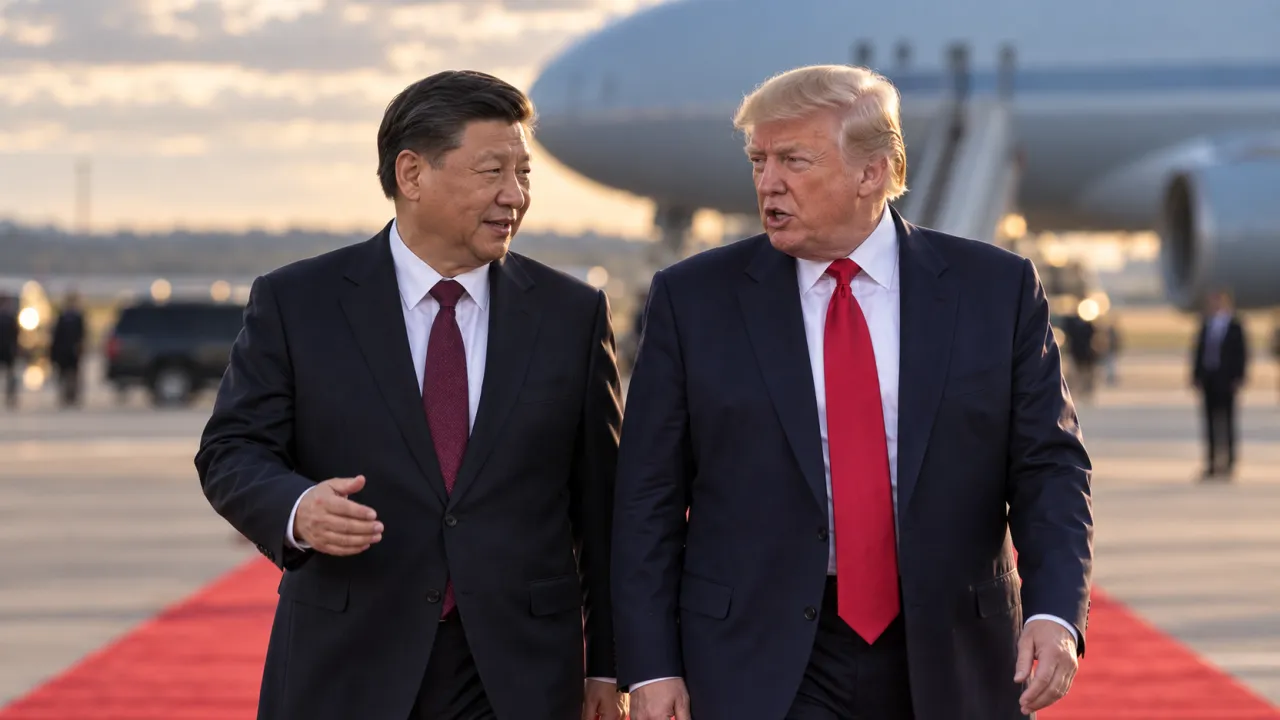
Canberra, Wednesday, September 23, 2026. Xi Jinping has arrived in Washington for a three-day state visit, with a personal welcome from Donald Trump on the Joint Base Andrews tarmac on Thursday, a rare protocol gesture that the Australian press describes as a "spectacle" rather than a substantive summit. Kurt Campbell, former deputy to the State Department under Joe Biden, sums it up: "This is less a summit and more a spectacle." His former colleague Evan Medeiros, long in charge of the Chinese file at the National Security Council, adds: "There's been no serious preparation - expectations are incredibly low."
On substance, three issues dominate according to Crikey: trade, technology, and Taiwan. The tariff truce concluded last year in Busan must be renewed, and Beijing could agree to buy more American soybeans. But it's on artificial intelligence that Canberra is focusing its attention: more than twenty countries, including Australia, have signed a statement calling for international safeguards - mandatory security tests, independent evaluations, and enhanced supervision of so-called "frontier" AI models - just before the meeting between the two presidents.
Beijing, for its part, has set the tone before the summit. In the Party's daily newspaper, Ambassador Xie Feng warned that Taiwan and human rights are among four "red lines" that Washington cannot cross, alongside China's development paths and rights. Trump still holds a package of arms for Taiwan worth around $14 billion, which he himself described as a "very good negotiating chip" after the May summit in Beijing. A Taiwanese security official estimates that any delay in these deliveries directly slows down the island's military modernization.
For Canberra, the concern goes beyond Taiwan: it's the fear of seeing AI rules and Indo-Pacific security balance being negotiated in a tête-à-tête between Washington and Beijing, without the medium powers that would suffer the consequences. Engaged the same week at the UN General Assembly, Australian diplomacy is counting on the coalition of twenty signatories to weigh in despite its absence from the Washington table.