
DOMINANT ANGLE
Rome is gauging the Trump-Xi summit in light of the US electoral calendar and the November expiration of the trade truce, rather than a spectacular deal on Taiwan.
Dominant angle identified — does not reflect unanimity of this country’s media
KEY POINTS
- 01
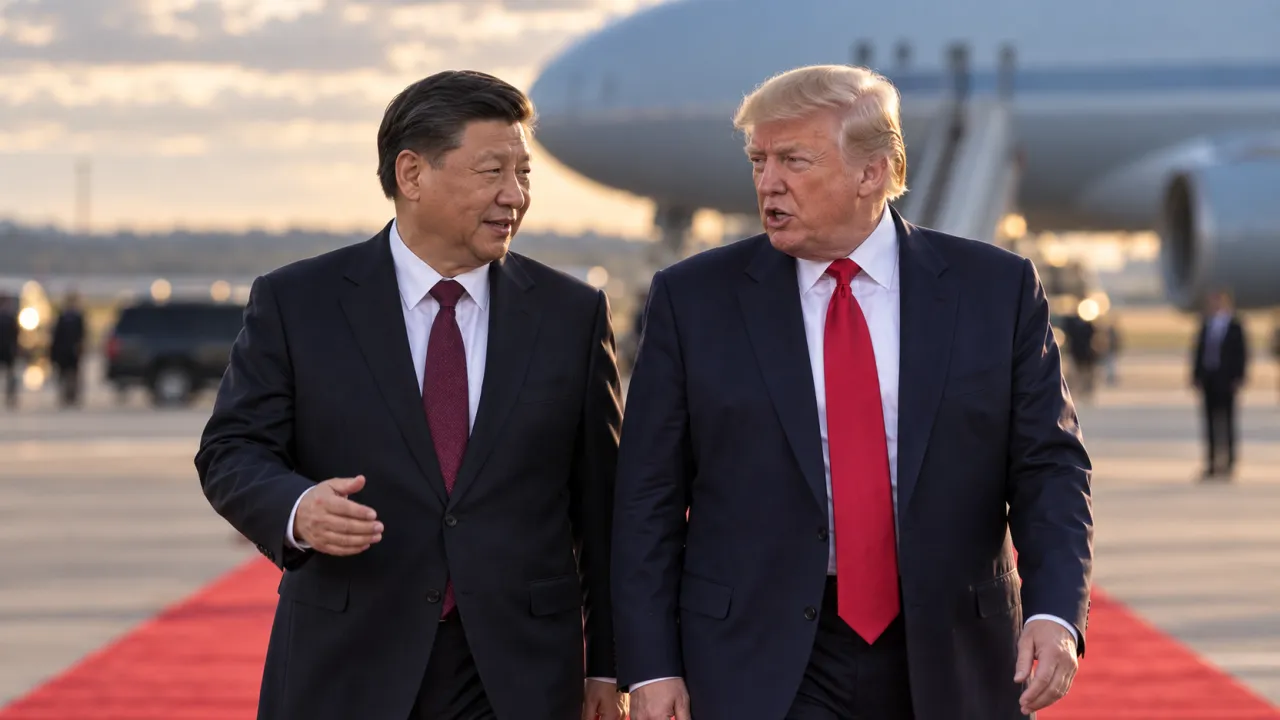
The summit is being held on Thursday, September 24 in Washington: third Trump-Xi face-to-face in less than a year, according to Adnkronos, which does not expect concessions from Xi Jinping
- 02
The trade truce concluded last October expires in November; Chinese Vice Premier He Lifeng and Treasury Secretary Scott Bessent met in New York just before the summit
- 03
In Busan in October 2025, Washington had postponed for a year the extension of its blacklist of Chinese companies and reduced its tariffs on fentanyl, while Beijing resumed its soybean purchases; in Beijing in May, China had promised $17 billion in agricultural purchases and 200 Boeing aircraft
ANALYSIS
Rome, September 23, 2026. The Italian press is approaching the Trump-Xi summit on Thursday, September 24, in Washington more as a stage in a suspended trade negotiation tied to the American electoral clock than as a spectacular diplomatic meeting. For Adnkronos, this is the third face-to-face between the two leaders in less than a year, after the meeting in Beijing in mid-May and more than nine years after their first summit — but, according to observers, few concessions are expected from Xi Jinping. The talks are taking place as, in the words of the daily, "the Midterm vote is approaching" for the American president, a deadline considered central by Italian commentators to understand Washington's caution.
Attention is focused on a possible extension of the trade truce concluded last October, which expires in November, discussed a few days earlier in New York between Chinese Vice Premier He Lifeng and Treasury Secretary Scott Bessent. A new trade war and counter-measures on critical minerals, highlights the New York Times analysis relayed by Adnkronos, would penalize American consumers ahead of the elections — a risk Trump cannot afford —, while a status quo would give Xi time to relaunch the Chinese economy and "recompose" his staff after the anti-corruption purges.
Internazionale places the meeting in the continuity of Busan, South Korea, in October 2025: Washington had agreed to postpone for a year the extension of its blacklist of Chinese companies, Beijing was pushing back its new regime on exports of critical minerals and batteries, obtained a reduction in tariffs related to fentanyl, and resumed its purchases of American soybeans. In Beijing in May, the results had been more modest: China had promised $17 billion in additional agricultural purchases and two hundred Boeing planes, on condition of also obtaining spare parts.
According to American media cited by Adnkronos, artificial intelligence is at the top of Thursday's agenda, alongside the Iranian dossier and the Boeing dossier, but expectations remain low on AI security and trade imbalances. For the Italian press, this shared caution — no revolutionary agreement is expected — measures the summit: what has not happened before counts more than what will be announced after.