
DOMINANT ANGLE
Seoul gauges the risk of being the major absentee from the Xi-Trump summit, between American silence on North Korea and its own showdown over $350 billion in investments
Dominant angle identified — does not reflect unanimity of this country’s media
KEY POINTS
- 01
Trump made no mention of North Korea in his speech to the UN General Assembly on Tuesday, instead referencing Iran, Russia-Ukraine, AI, Cuba, and Venezuela, while saying he hopes to meet Kim Jong-un later this year (Korea Times).
- 02
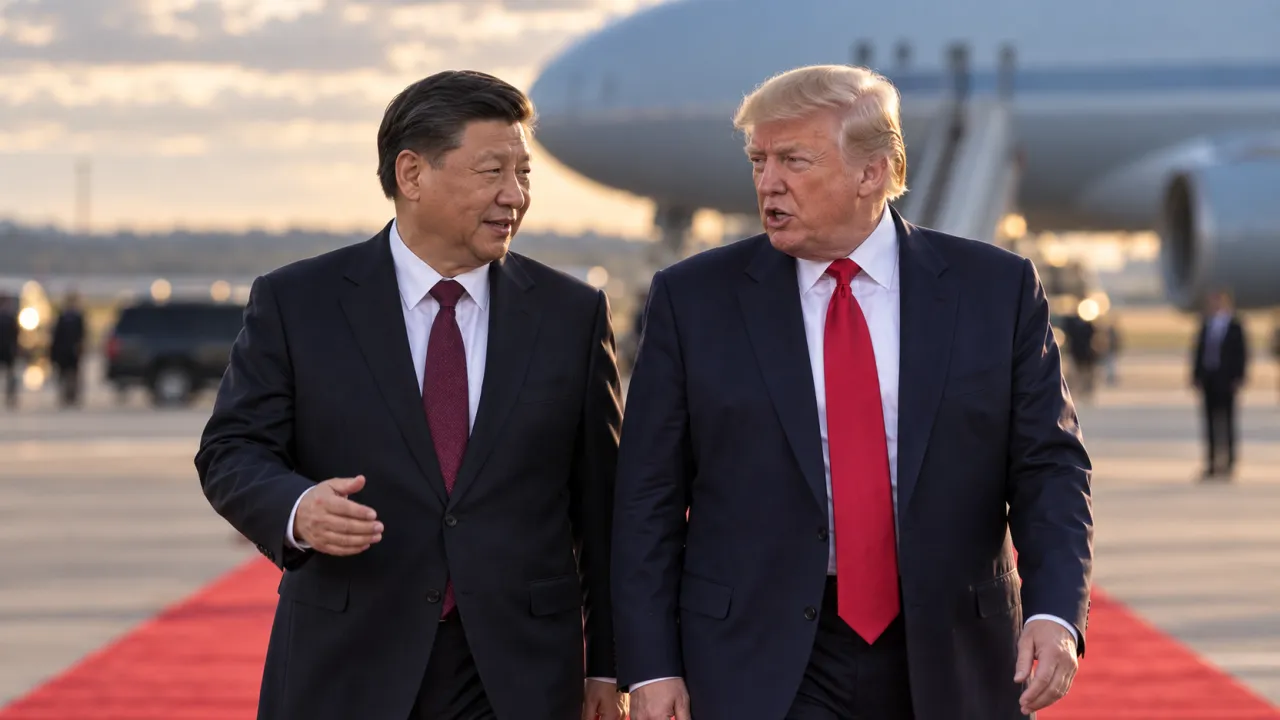
Xi Jinping is set to be greeted by Trump on the tarmac at Joint Base Andrews on Wednesday for his first state visit to the US in over a decade, with a state dinner on Thursday and a private tea/meet at the National Archives on Friday; Senator Roger Wicker has criticized the pomp (Korea Times).
- 03
President Lee Jae Myung is refusing to send troops or military assets to the Strait of Hormuz while separately negotiating a $350 billion investment package with Washington (Korea Pro).
ANALYSIS
Seoul, September 23, 2026. On the eve of Xi Jinping's arrival in Washington, South Korean diplomacy is initially silent: on Tuesday, during his second speech to the UN General Assembly since his return to the White House, Donald Trump made no mention of North Korea, according to Korea Times, instead discussing Iran, the war in Ukraine, artificial intelligence, Cuba, and Venezuela. The US President, however, reaffirmed his intention to meet Kim Jong-un later this year, a path that Seoul is following closely, as it has so far set the tone for the personal diplomacy between the two men, since their first summit in Singapore in 2018.
Xi Jinping is set to arrive on Wednesday at Joint Base Andrews, where Trump will greet him in person on the tarmac rather than waiting for his arrival at the White House, a rare protocol gesture that Korea Times describes as the first Chinese state visit to the United States in over a decade. Xi and his wife Peng Liyuan are expected to attend a state dinner on Thursday, followed by a private tea and a visit to the National Archives on Friday. Washington has provided little detail on the program, but Senator Roger Wicker has publicly criticized the pomp, judging that Trump should not have invited Xi given the persistent bilateral differences.
For Seoul, this diplomatic display is not neutral: it is taking place while the country is separately negotiating with Washington a $350 billion investment package. According to Korea Pro, President Lee Jae Myung has ruled out any deployment of troops or military assets to the Strait of Hormuz, while reserving the possibility of measures to protect maritime transport, energy supplies, and Korean nationals. The two governments are handling economic and security issues on separate tracks, in the same climate where Washington is demanding more support from Seoul.
South Korea's concern is less about the content of the Xi-Trump summit than about what it could lead to behind the scenes: an arbitration between major powers on Taiwan, arms sales, or the Iranian dossier, while North Korea remains off the official agenda and Seoul's own negotiating leverage continues to be measured in the shadow of the summit.