
DOMINANT ANGLE
New Delhi sees Xi Jinping's state visit to Washington as a symptom of an emerging Sino-American duopoly, where India and its Quad partners risk being reduced to spectators in the decisions that affect them.
Dominant angle identified — does not reflect unanimity of this country’s media
KEY POINTS
- 01
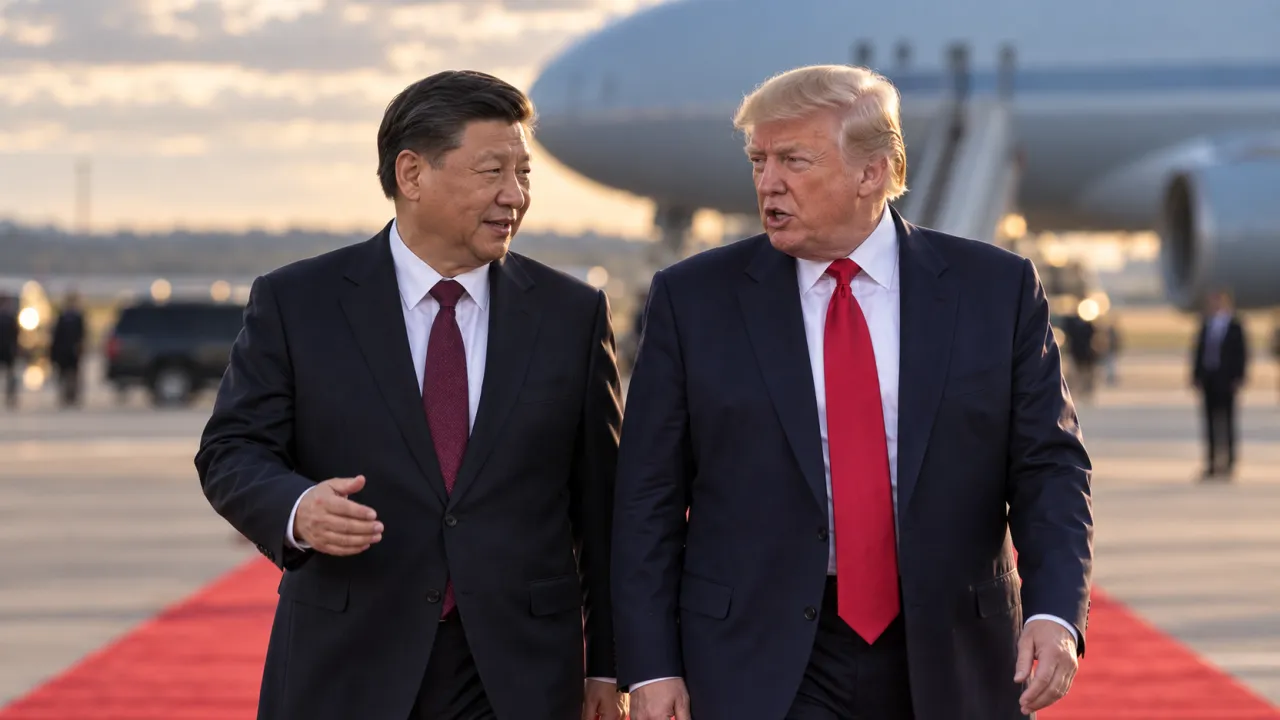
Donald Trump goes in person to Joint Base Andrews to welcome Xi Jinping, a protocol gesture so far reserved for papal visits under Obama and Bush (Times of India).
- 02
The Deccan Chronicle describes the reciprocal visits in six months as a "milestone" and sees a shift towards a bilateral Sino-American "duopoly" sidelining traditional multilateral alliances.
- 03
The Free Press Journal reports the exclusion of General Zhang Youxia, who was in charge of China's border strategy during the 2020 Galwan clash and the military buildup in Ladakh and Tibet, from the Party and the army.
ANALYSIS
New Delhi, Wednesday, September 23, 2026. New Delhi is deciphering Xi Jinping's state visit to Washington as a sign of a strategic shift that could leave India and its partners on the sidelines of Sino-American arbitration. The Times of India notes that Donald Trump will personally go to Joint Base Andrews to welcome the Chinese president, a protocol gesture previously reserved for papal visits under Obama and Bush. The planned ceremony at the Rose Garden - a 479-military honor guard, a flyover by a B-2 bomber escorted by four F-22s - contrasts with the reception given to Trump in Beijing in May: Xi did not come to the airport, had delegated his vice-president Han Zheng, and no flyover had marked the occasion. Former National Security Council official Rush Doshi sees it as a symbol: "the asymmetry of pomp reflects a broader asymmetry in the relationship: Beijing thinks that rare earths have tamed Washington, and Washington sometimes seems to agree."
The Deccan Chronicle describes these reciprocal visits over six months as a "milestone" on the Chinese side, and reads Washington's shift towards a bilateral "duopoly" with Beijing, to the detriment of traditional multilateral alliances - an interpretation that worries New Delhi, where the Quad remains a pillar of foreign policy. The trade deadline is approaching: the truce concluded in Busan is due to expire in the coming weeks, while the US Congress has just authorized Trump to impose up to 100% customs duties on any country trading with Russia or Iran - China being the largest trading partner of both.
The Free Press Journal highlights, in parallel, the exclusion of General Zhang Youxia from the Party and the army, alongside Liu Zhenli. As Vice-President of the Central Military Commission, Zhang had led China's border strategy during the 2020 Galwan confrontation and the military buildup along the Line of Actual Control in Ladakh and Tibet. For the Indian press, this purge recalls that the architect of border tensions with India is disappearing from command at the very moment when Xi is negotiating in Washington, leaving uncertainty over who will now pilot China's posture in the Himalayas while Beijing and Washington redraw their balance of power without consulting New Delhi.
SOURCES (3)
- Times of IndiaMEDIUM
- Deccan ChronicleMEDIUM
- Free Press JournalMEDIUM