
DOMINANT ANGLE
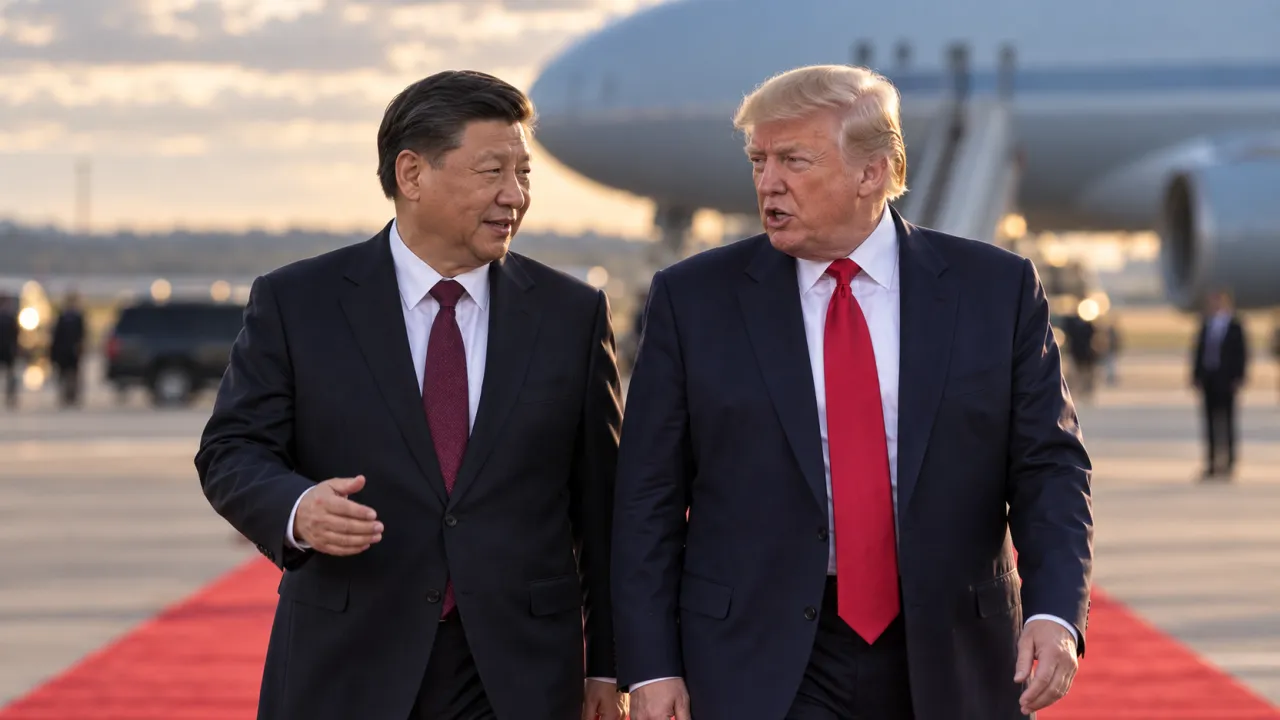
Tokyo is locking in its alliance with Washington ahead of the Xi-Trump summit, fearing that Taiwan and regional economic security may be negotiated without Japan having a say.
Dominant angle identified — does not reflect unanimity of this country’s media
KEY POINTS
- 01
Sanae Takaichi met with Donald Trump on Tuesday, September 22, in New York, for a meeting of about 35 to 40 minutes, on the eve of Xi Jinping's arrival in Washington for his first state visit in eleven years.
- 02
Scott Bessent indicated that Washington has asked Beijing to create a "notification mechanism" for national security-related artificial intelligence issues.
- 03
Tokyo and Beijing have been in a diplomatic freeze since Takaichi suggested in November that an attack on Taiwan could justify a Japanese military response.
ANALYSIS
Tokyo, September 23, 2026. On the eve of Xi Jinping's arrival in Washington for his first state visit in eleven years, Japanese diplomacy has taken the lead. On Tuesday, September 22, Prime Minister Sanae Takaichi met with Donald Trump in New York, on the sidelines of the United Nations General Assembly, for a tête-à-tête of approximately thirty-five to forty minutes. According to the Japanese government, the two leaders discussed "various issues concerning China, including economic security," and agreed to strengthen the deterrent and response capabilities of the Japan-US alliance.
Takaichi justified the move by citing the deterioration of the regional security climate, stating that she wants to show the world "how robust our alliance is" by multiplying meetings. She praised the progress of bilateral cooperation in economic security - artificial intelligence, semiconductors, critical minerals - "thanks to Donald's leadership" and hers. Trump paid her a strong tribute, praising "a Japanese industry that is doing very well" and calling Takaichi a future "great Prime Minister".
The context is heavy: Tokyo and Beijing have been experiencing a diplomatic chill since Takaichi suggested in November that an attack on Taiwan could constitute an existential threat to Japan and justify a military response - a statement that provoked China's anger, which claims the island as part of its territory.
Another thread being followed by the Japanese press is the place of artificial intelligence in the Xi-Trump discussions. US Treasury Secretary Scott Bessent indicated on Sunday that Washington has asked Beijing to create a "notification mechanism" for AI issues related to national security, calling for more transparency between the two powers. Xi Jinping himself emphasized in July, during a conference in Shanghai, the need for technology to remain "always under human control".
For Tokyo, these two issues - military deterrence against China and AI governance - set the terms of a summit where Japan has no seat but will directly suffer the repercussions.