India — news through its media
Stories followed in this country, with their framing set against the rest of the world.
254 subjects found
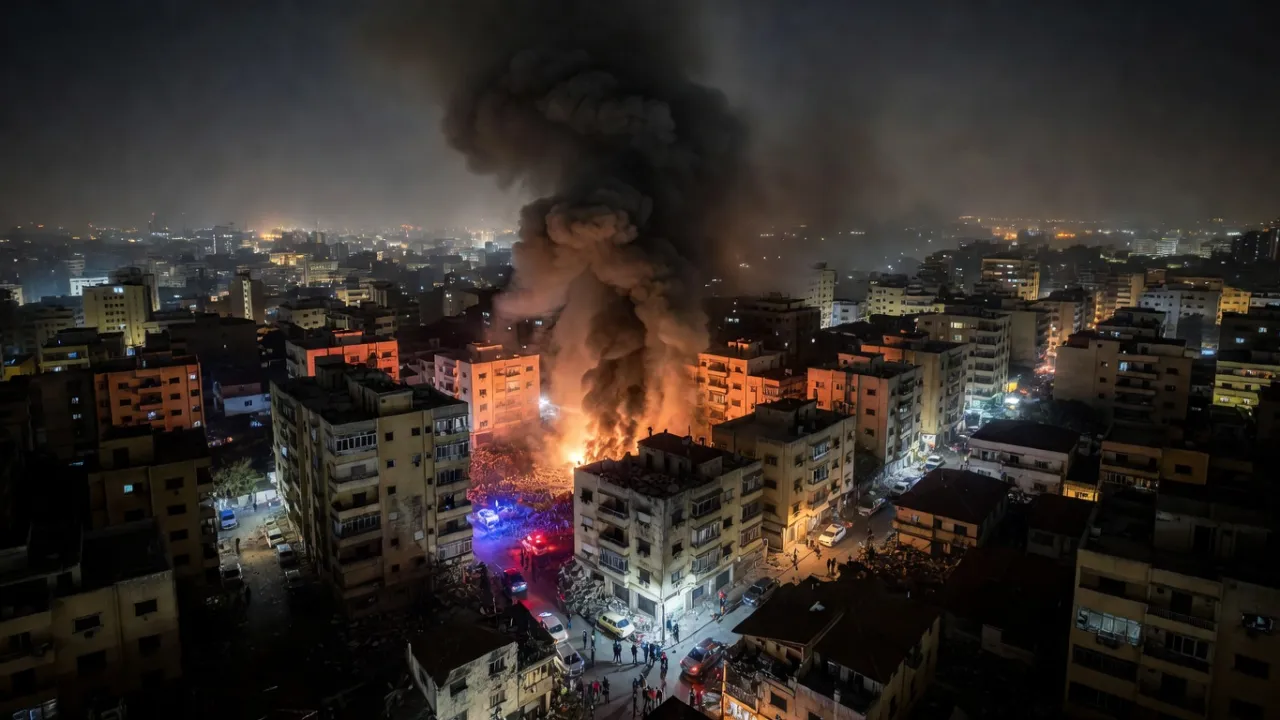
Israel Kills Hezbollah Commander in Beirut: First Strike Since Ceasefire Shatters the Calm
Israel struck Beirut's southern suburbs for the first time since the April 17 ceasefire, killing Malek Ballout, operations commander of Hezbollah's Radwan force — an act Netanyahu frames as self-defense, but one that endangers the truce underpinning the Iran-US negotiations.


 +11

G7 Paris under pressure: Europe pushes back against Trump's car tariffs
G7 trade ministers meeting in Paris cannot paper over the transatlantic tariff rift. Trump threatens to raise duties on European cars to 25%. The EU demands the existing deal be honoured; India plays its own bilateral card.


 +3

One year after Operation Sindoor: Islamabad warns, New Delhi celebrates, Kashmir waits
The first anniversary of Operation Sindoor (India's strike into Pakistan) pits two antagonistic narratives against each other: 'India Forgives Nothing' from New Delhi, 'the next confrontation will be more dangerous' from Islamabad. The US consulate in Peshawar closes. The bilateral tension is settling in for the long haul.

 +2

Project Freedom Buried in 48 Hours: Trump Suspends Operation Hormuz and Announces 'Great Progress' Toward Iran Deal
Launched Sunday, suspended Tuesday evening: the American naval escort operation in the Strait of Hormuz lasted only 48 hours. Trump invokes 'considerable progress' in negotiations with Tehran, but the American naval blockade remains in place — and Iranian missiles continue to strike the United Arab Emirates.
 +5

Iran Strikes Fujairah and ADNOC: First Direct Attack on UAE Since Ceasefire
Iran launched drones and missiles at ships in the Strait of Hormuz and the ADNOC oil facility in Fujairah, UAE, injuring three Indian nationals—the first direct attack on Emirati soil since the ceasefire took effect in early April. This marks a significant escalation following the announcement of the U.S.-led 'Project Freedom' naval escort operation. Trump responded with threats of obliteration, while the incident raises questions about the trigger for Iran's response and whether American military operations provoked the escalation.
+5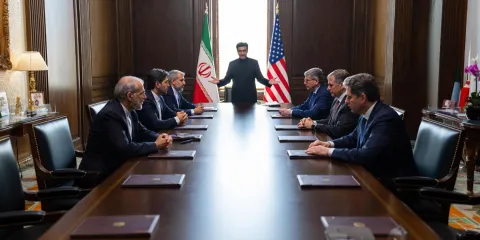
Iran's 14-Point Peace Plan vs Trump's 'Not Acceptable': The Impossible Peace
Iran transmitted a 14-point peace plan via Pakistan proposing to end the war in 30 days, progressively reopen Hormuz, but deliberately omitting the nuclear program. Trump declared he 'cannot imagine' the plan being acceptable, saying Iran hasn't 'paid a big enough price.' Iran's Revolutionary Guards warned the US faces a choice between an 'impossible' military operation and a 'bad deal.' The first round of direct talks in Islamabad failed last month; no second round is scheduled.
 +8
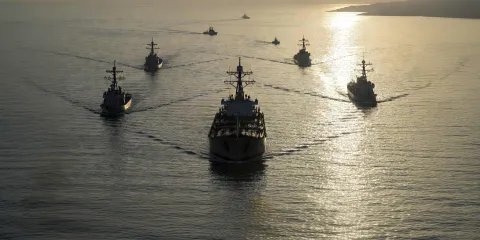
Hormuz Showdown: Trump's 'Project Freedom' vs Iran's Unyielding Grip on the Strait
As Iran doubles down on permanent control of the Strait of Hormuz — comparing it to Mossadegh's 1951 oil nationalization — Trump launches 'Project Freedom' to escort stranded neutral ships out of the Gulf starting Monday. A cargo ship was just attacked by small craft, Pakistan-mediated peace talks remain deadlocked, and OPEC+'s third production quota hike is purely symbolic as long as Hormuz stays shut.
 +11

Trump Pulls 5,000 US Troops from Germany — and Threatens 'A Lot Further': The NATO Fracture Deepens
After Merz accused Iran of 'humiliating' Washington in peace talks, Trump retaliated by announcing the withdrawal of 5,000 US soldiers from Germany — then escalated, threatening to go 'a lot further.' The cancellation of long-range Tomahawk missile deployment, promised by Biden, is also confirmed. NATO says it is 'working to understand' the decision. Republican committee chairs are 'very concerned.'
+8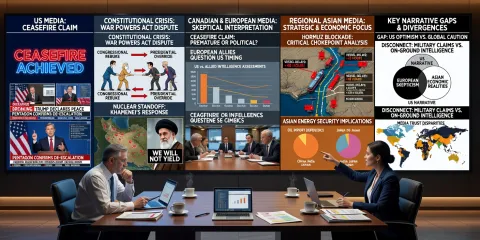
Trump's Iran War Hits Day 60: Congress Fights Back Over Nuclear Standoff
Sixty days into the US-Iran war, Donald Trump claims the conflict is 'terminated' to bypass the War Powers Act deadline. Congress rejects that reading. Supreme Leader Khamenei vows to protect Iran's nuclear and missile capabilities. The Strait of Hormuz remains partially blocked with oil above $125. Ten countries, ten sharply divergent readings.
+11
Trump Threatens to Pull US Troops from Germany: The Transatlantic Fracture Deepens
On April 30, Donald Trump posted on Truth Social that Washington is 'studying and reviewing the possible reduction of troops in Germany,' with a decision expected 'over the next short period of time.' The threat came directly after Chancellor Merz said Iran was 'humiliating' the US at the negotiating table — a comment Trump flatly rejected, calling Merz someone who 'doesn't know what he's talking about.' Berlin says it's 'prepared.' The next day, Trump extended the threat to Italy and Spain. South Korea, with 28,500 US troops of its own, is watching anxiously.
+5
Iran Will Play the World Cup in the US: FIFA Confirms, Trump Says OK, Iranian Exiles Protest
At the FIFA Congress in Vancouver, Gianni Infantino confirmed that Iran will participate in the 2026 World Cup hosted by the United States — despite the ongoing US-Israel war against Iran. Trump gave his blessing: 'If Infantino says so, I don't mind.' Iran's football delegation had earlier stormed out of Canada after being detained at Toronto airport, calling it an 'insult.' Meanwhile, Iranian diaspora protesters outside the Congress chanted 'They are not representing Iran' and demanded FIFA apply the same standards used against Russia. A diplomatic paradox with no historical precedent in world football.
 +9
Understand global stakes from every perspective.
718 subjects · 75 countries · 8174 perspectives