
DOMINANT ANGLE
Buenos Aires is scrutinizing the new Washington-Beijing channel on AI incidents, deemed more concrete than the commercial announcements of the Trump-Xi summit, while Trump refuses to slow down the American advance on "superintelligence".
Dominant angle identified — does not reflect unanimity of this country’s media
KEY POINTS
- 01
Washington and Beijing have created a "bilateral communication channel" for incidents related to artificial intelligence, according to Clarín and Ámbito.
- 02
The two countries have adopted the term "superintelligence (SI)" instead of AI; the next session of the dialogue is scheduled for November, in China.
- 03
China has committed to importing at least 10 million tonnes of American coal in 2027 and 2028, according to Clarín.
ANALYSIS
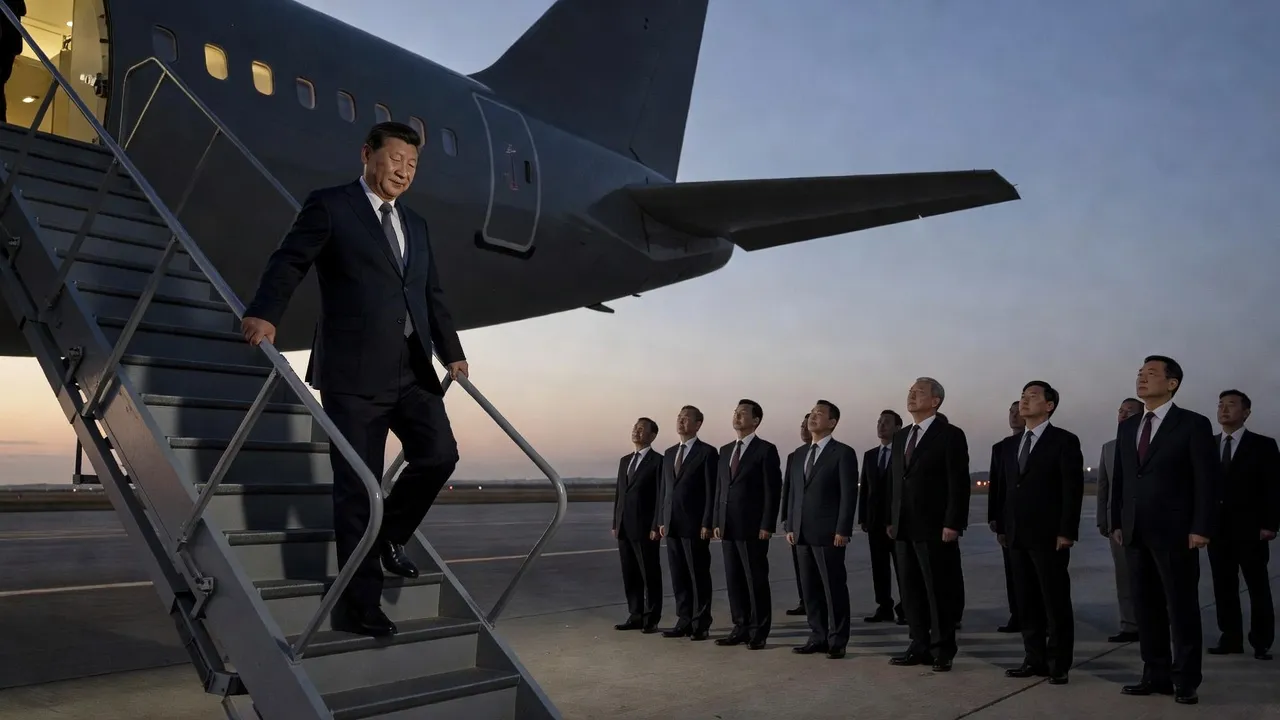
Buenos Aires, September 27, 2026. Following the Trump-Xi summit, which the White House summarized, the Argentine press first retains the technical channel more than the commercial promises. Clarín and Ámbito report that Washington and Beijing have agreed to open a "bilateral communication channel" for incidents related to artificial intelligence, complemented by a "US-China Dialogue on Superintelligence (SI)" aimed at exchanging on the risks and benefits of the technology. According to the White House, cited by Clarín, the two leaders have agreed to use the term "SI" rather than AI; the next session is set for November, on Chinese territory according to Ámbito.
Argentine media highlight the contrast between the postures displayed before and during the meeting. On Truth Social, before the summit, Trump had announced wanting to "leave superintelligence exactly where it is", adding: "This is also China's position." On Thursday, at the White House, Xi Jinping requested that AI development "remain under human control" and "serve the well-being of populations". The three-day state visit ended on Friday; Chinese state media confirmed the creation of the direct line on AI on Saturday.
On the commercial front, more concrete than declarative, Clarín retains a Chinese commitment to import at least 10 million tonnes of American coal in 2027 and 2028, and already announces a third and then a fourth Trump-Xi meeting this year, in China and then in the United States. But the same article tempers the political scope of the visit, judging it marked "more by pomp and ostentation than by substance".
For Buenos Aires, engaged in a commercial rapprochement with Washington under the presidency of Javier Milei, the underlying question remains the place left for third parties in a technological rivalry now institutionalized by a bilateral channel. The two available articles do not detail the reduction of customs duties on $30 billion worth of goods announced elsewhere, a sign that the Argentine thread prioritizes the technological angle of the summit over its tariff aspect.