
DOMINANT ANGLE
Brasília is weighing the risk that Chinese purchases of American soy and beef, revived by the Sino-American trade truce, will encroach on its own export markets more than the new channel opened between Washington and Beijing on artificial intelligence.
Dominant angle identified — does not reflect unanimity of this country’s media
KEY POINTS
- 01
Washington and Beijing will reduce tariffs on $30 billion worth of "non-sensitive" goods and extend the trade truce set to expire on November 10 by two months, according to G1 and Folha de S.Paulo.
- 02
China remains behind on the $17 billion in agricultural purchases promised in May and has not finalized the 25 million tonnes of American soybeans agreed upon in Busan, or the order for 200 Boeing aircraft, according to an editorial in the Estadão.
- 03
The two countries will use the term "superintelligence" rather than AI, open a communication channel for incidents related to this technology, and hold their next dialogue session in November, according to Veja and the Estadão.
ANALYSIS
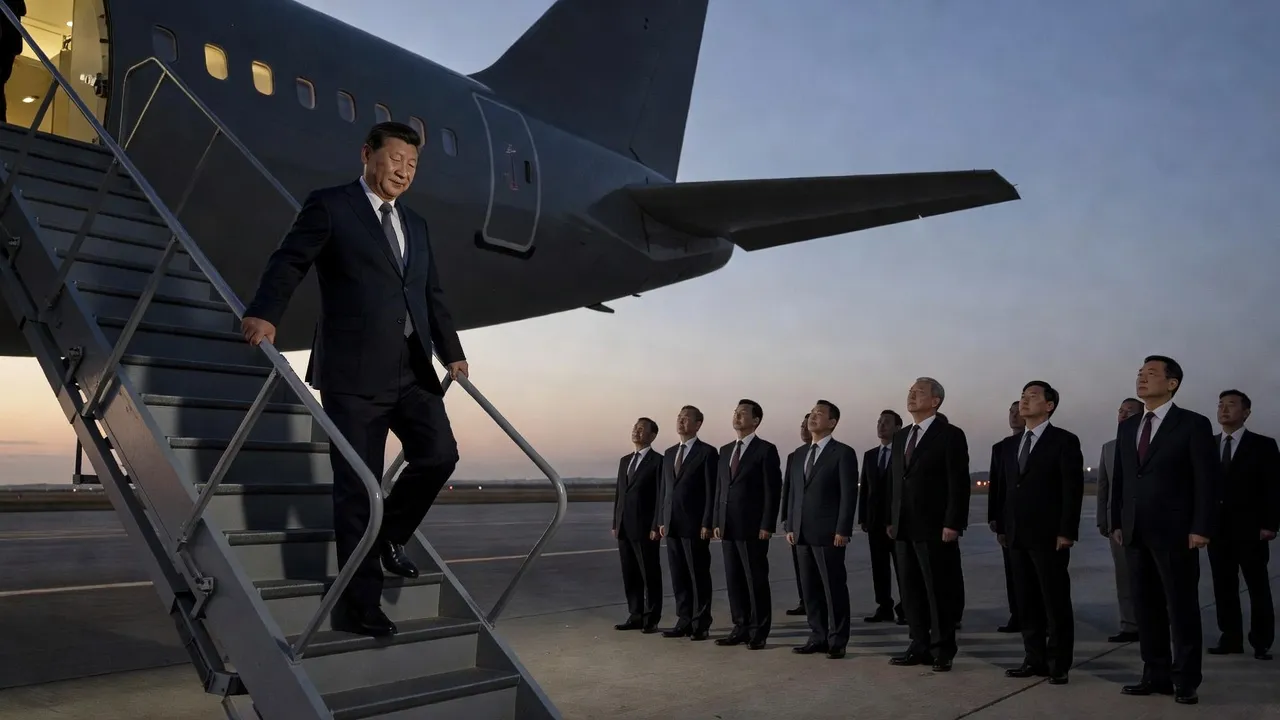
Brasília, September 27, 2026. The three-day summit between Donald Trump and Xi Jinping in Washington, which ended on Friday, September 25, resulted in a trade and technology agreement that the Brazilian press is interpreting primarily in terms of its own agricultural markets. According to the Chinese report relayed by G1 and Folha de S.Paulo, Washington and Beijing will reduce tariffs on $30 billion worth of "non-sensitive" goods — wood, cosmetics, and American agricultural products, toys, and small Chinese appliances — as part of an eight-point consensus. The two capitals will also create a trade council and extend the tariff truce, which was set to expire on November 10, by two months, with Treasury Secretary Scott Bessent seeing this as a gain in time for a broader agreement.
But it's the editorial in Estadão that provides the Brazilian measure of the summit: Beijing is still lagging behind on the $17 billion in additional agricultural purchases promised in May and has not completed the 25 million tons of American soybeans agreed upon in Busan in October, nor the order for 200 Boeing aircraft. For editorialist Lourival Santanna, these purchases weigh on electorally decisive American states — an implicit reminder, for the Brazilian press, that every ton of soybeans or beef purchased from American producers is a ton that does not pass through Mato Grosso or Paraná.
On artificial intelligence, Veja and Estadão note that the two countries have adopted the term "superintelligence" rather than AI, established a "US-China Superintelligence Dialogue," and will open a communication channel for incidents, with a next session in November. Trump, however, specified on Saturday that he prefers to leave the technology "exactly where it is" rather than cooperate with Beijing, while Xi advocated for a relationship "without conflict or confrontation" and human control of AI.
Chinese Foreign Minister Wang Yi described the visit as "historic," having "enriched the constructive and stable relationship between China and the United States." Folha Mundo also reports that Chinese Vice President Han Zheng, speaking at the UN on Saturday, called for respect for the sovereignty of Gulf countries without naming Washington, in a speech deemed cautious towards Russia on Ukraine.
SOURCES (6)
- G1 Globo MundoMEDIUM
- UOL NotíciasMEDIUM
- VejaMEDIUM
- Folha MundoMEDIUM
- EstadãoMEDIUM