
DOMINANT ANGLE
Berlin coolly details the Sino-American trade agreement, noting that "no major breakthrough" has been announced despite $30 billion in reduced tariffs on each side.
Dominant angle identified — does not reflect unanimity of this country’s media
KEY POINTS
- 01
According to Xinhua, China and the US are reducing to zero or very low rates tariffs on "non-sensitive" products worth $30 billion in each direction.
- 02
The Board of Trade, a bilateral trade council, began its work this week, the White House indicated.
- 03
Scott Bessent mentioned a two-month extension of the tariff moratorium, while China had hoped for a year or more, according to several media outlets cited by Handelsblatt.
ANALYSIS
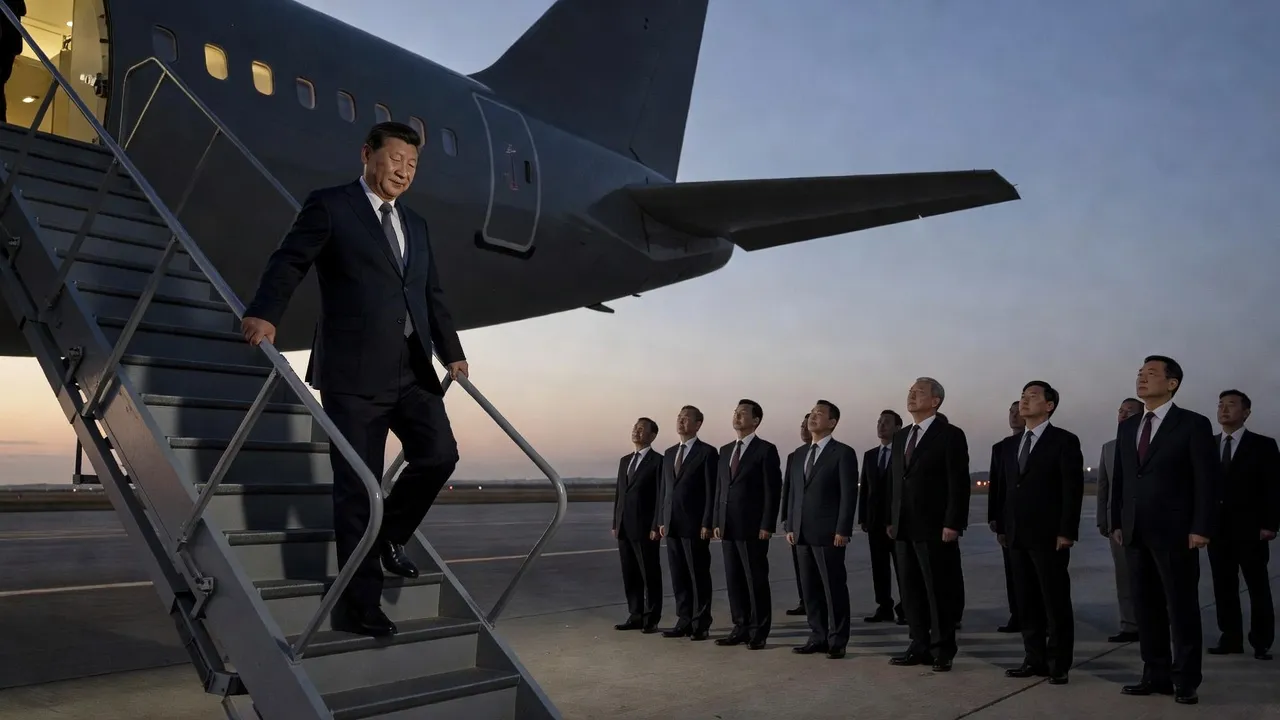
Berlin, September 27, 2026. Following Xi Jinping's state visit to Washington, the German economic press is dissecting less the diplomatic gesture than its tariff mechanism. Handelsblatt reports that China and the United States agreed, as part of the summit between Donald Trump and Xi Jinping, on the exchange of "non-sensitive" products worth $30 billion, without customs duties or at very reduced rates, in each direction. The Chinese agency Xinhua communicated the information on Saturday afternoon, without immediately detailing the list of products concerned. The American trade representative, Jamieson Greer, had already mentioned the agreement on Friday on CNBC, citing American agricultural products and medical equipment, as well as Chinese consumer goods, promising additional clarification on Monday.
The newspaper also highlights the extension of the tariff moratorium, which includes rare earth exports, without Beijing specifying the exact duration. US Treasury Secretary Scott Bessent had, at the beginning of Xi's visit, spoken of a two-month extension, while several media outlets, according to Handelsblatt, indicated that China was hoping for a year or more. This duration gap remains, for the German press, an indicator of the fragility of the truce.
On the institutional level, a joint statement announces an agreement in principle to strengthen crisis communication and prevent military incidents, as well as the launch this week of the Board of Trade, which will handle current trade files. Handelsblatt notes that no major breakthrough was announced during this summit, with some experts seeing it as a signal of strengthened dialogue rather than a concrete result.
The dialogue on artificial intelligence, whose next session is scheduled for November, and the emergency channel for AI-related incidents, are treated as a separate, almost ancillary section to the commercial aspect. Deutsche Welle recalls that UN Secretary-General António Guterres had called on Washington and Beijing to engage in this dialogue, citing the communication channels between the USA and the USSR during the Cold War to avoid misunderstandings and escalation.