
DOMINANT ANGLE
The United States claims a vocabulary and technological advance specific to AI, while locking down a security channel to avoid any incident with Beijing.
Dominant angle identified — does not reflect unanimity of this country’s media
KEY POINTS
- 01
The two countries are creating a bilateral communication channel for AI-related incidents and a dedicated dialogue, with the first session scheduled for November.
- 02
Washington and Beijing have agreed to use the term "super intelligence" (SI): Trump stated "I call it SI because it's a much better name".
- 03
Tariffs are being reduced on $30 billion worth of "non-sensitive" goods in each direction, and China has committed to importing 10 million tonnes of American coal in 2027 and 2028.
ANALYSIS
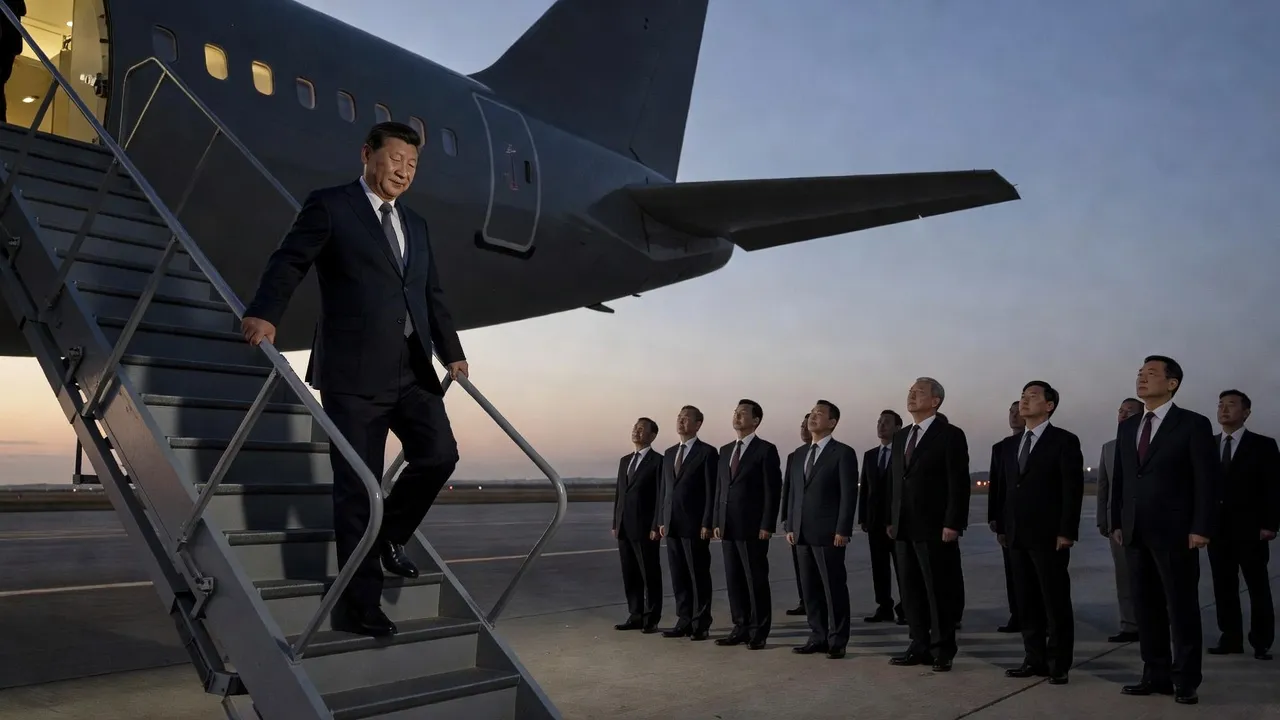
Washington, September 27, 2026. Three days after Xi Jinping's departure, the White House claims an eight-point agreement from the Chinese leader's state visit. The United States and Beijing are reducing their reciprocal tariffs on $30 billion worth of "non-sensitive" goods: agricultural products, wood, cosmetics, and Chinese medical devices on one side, small American household appliances, toys, party decorations, and car seats for children on the other. A Trade Council, already in operation this week according to the White House, will handle the remaining bilateral cases.
On artificial intelligence, the two administrations are setting up a communication mechanism for incidents related to the technology, which several commentators compare to the "red phone" of the Cold War. Treasury Secretary Scott Bessent had pushed this idea during the preparatory meetings the previous weekend. A dedicated dialogue, called the "U.S.-China Super Intelligence Dialogue," is scheduled to take place for the first time in November to examine the "risks and benefits" of the technology. The two sides have agreed to use the term "super intelligence," or SI, preferred by the American president: "I call it SI because it's a much better name," he explained on the South Lawn of the White House.
No major breakthrough is announced, several analysts cited by the American press acknowledge, but the establishment of working groups is considered useful to prevent differences from escalating. A protocol of agreement on crisis communications between the two armies has also been signed, in a Chinese account deemed sparse on details. China has also committed to importing 10 million tons of American coal in 2027 and 2028, after its purchases had collapsed in 2025 during the trade war. The fate of rare earths, at the heart of the trade dispute, remains unclear: the two parties only say they will "continue to work" on the supply chain shortages.
The American press notes the unusual warmth displayed by Donald Trump towards Xi Jinping, a year after he himself relaunched the trade war between the two countries. Xi Jinping returned to Beijing on Saturday, according to the Xinhua agency. For Bloomberg, the major differences - Taiwan, Iran, technology - remain intact behind the display of good understanding.
SOURCES (5)
- BloombergMEDIUM
- AxiosMEDIUM
- CBS News WorldMEDIUM
- The HillMEDIUM
- ABC News WorldMEDIUM