
DOMINANT ANGLE
New Delhi is measuring the actual scope of the Sino-American trade agreement, between $30 billion in reduced tariffs and a mere two-month truce, seeing in it a fragile armistice rather than a strategic reconciliation.
Dominant angle identified — does not reflect unanimity of this country’s media
KEY POINTS
- 01
The eight-point consensus provides for a reciprocal reduction in tariffs on $30 billion worth of goods, announced by the Chinese Ministry of Foreign Affairs.
- 02
The trade truce, which was set to expire on November 10, has been extended by two months, according to an announcement by Treasury Secretary Scott Bessent on Wednesday, September 23.
- 03
The leaders agreed that Iran will honor its commitment not to acquire nuclear weapons and that no country will impose transit tolls on international waterways.
ANALYSIS
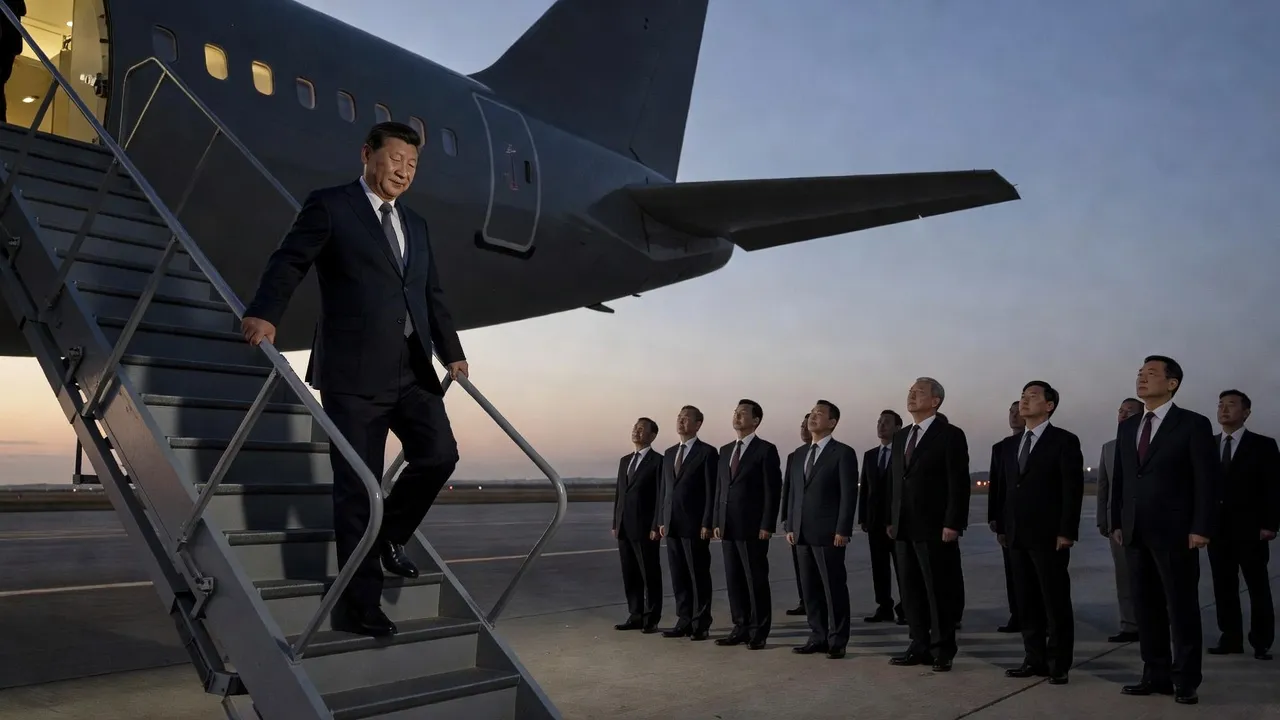
New Delhi, September 27, 2026. The Indian economic press reports, via the minutes released by the Chinese Ministry of Foreign Affairs, the content of an eight-point consensus sealed at the end of Xi Jinping's state visit to Washington, which ended on Friday, September 25. Beijing announces a reciprocal reduction in tariffs on $30 billion worth of goods, the creation of a trade council, and the opening of a dialogue on the risks and benefits of artificial intelligence, with the next round scheduled for November. A communication channel for AI-related incidents is also to be established. The Chinese Ministry appreciates Washington's use of the term "super intelligence" instead of "artificial intelligence".
For Indian media, this set of announcements extends, without transforming, the existing trade truce: US Treasury Secretary Scott Bessent had indicated on Wednesday, September 23, that this truce, which was due to expire on November 10, was being extended by two months to allow time for negotiating a broader agreement. The three-day summit between Xi Jinping and Donald Trump, according to Swarajya, was marked "more by personal diplomacy than by major public breakthroughs". Xi Jinping returned to Beijing on Saturday, September 26, reported the Xinhua agency.
Chinese Foreign Minister Wang Yi described the visit as a moment that "opened a new chapter" in bilateral relations, promising a lasting impact "on global peace and development". The two countries have also committed to supporting each other in organizing the APEC and G20 summits, with each leader attending the event hosted by the other.
Noted on the sidelines of the commercial aspect: the two sides reportedly agreed that Iran must honor its commitment not to acquire nuclear weapons, and that no country should impose transit tolls on international shipping lanes - a clause that directly affects the security of the energy routes used by India. The two delegations finally recalled their World War II alliance.
For New Delhi, the overall outcome remains a calibrated gesture rather than a strategic reconciliation: a two-month commercial reprieve, a technological dialogue that only begins in November, and a report that came almost exclusively from Beijing.