
DOMINANT ANGLE
Beijing retains a "consensus on eight outcomes" based on respect and reciprocity, rather than the sole trade fact sheet released by Washington after Xi Jinping's state visit.
Dominant angle identified — does not reflect unanimity of this country’s media
KEY POINTS
- 01
The Chinese statement relayed by ECNS announces a "consensus on eight outcomes", including a reciprocal tariff reduction arrangement of $30 billion and the creation of a trade council.
- 02
The two leaders agreed that Iran must honor its commitment not to develop nuclear weapons, and that no country should charge for passage through international waters, according to ECNS.
- 03
The White House fact sheet, cited by the South China Morning Post, announces the establishment of a dialogue on "super intelligence", described by analysts as a potentially more decisive channel than immediate trade gains.
ANALYSIS
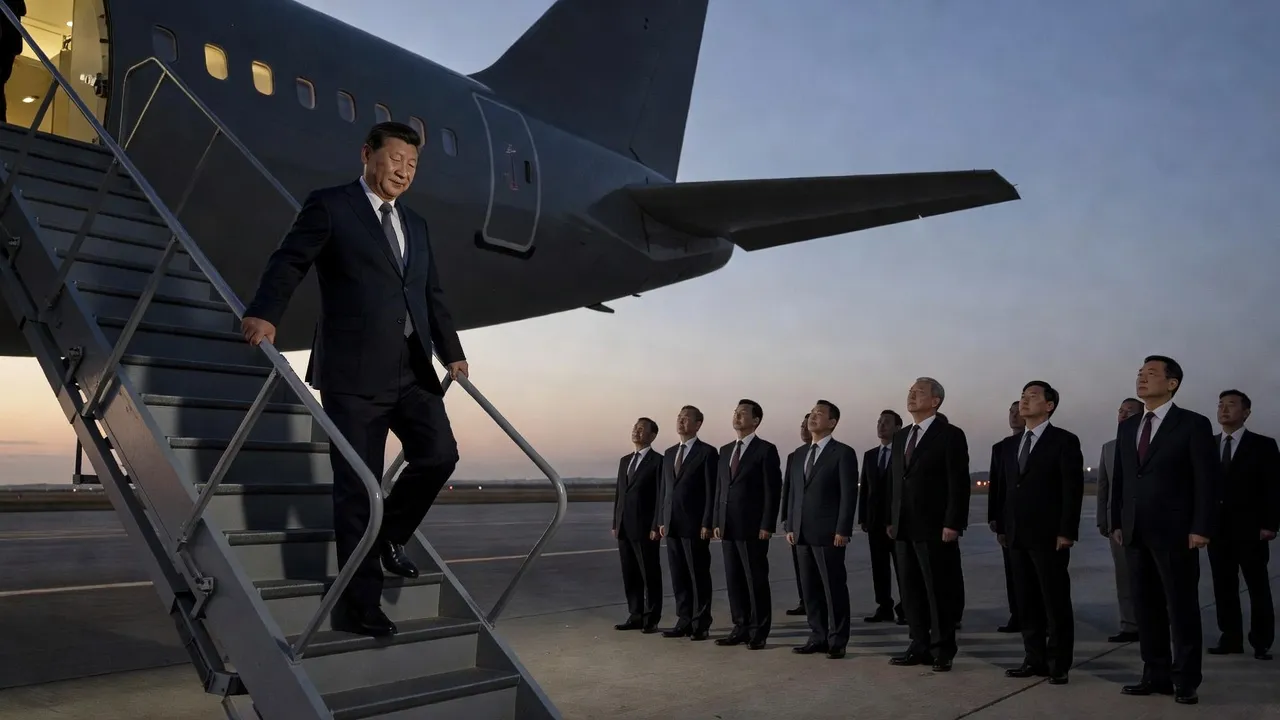
Beijing, September 27, 2026. Three days after the end of Xi Jinping's state visit to Washington, on Friday, September 25, the Chinese presentation of the summit clearly diverges from the technical sheet released the same day by the White House. The statement relayed by the ECNS agency speaks of a "consensus on eight results", and not first of a commercial gesture: the two leaders would have agreed to build "a constructive China-US relationship of strategic stability based on respect, equity, and reciprocity".
This framework encompasses the commercial aspect without placing it first. The statement mentions the outcome of economic and trade consultations held in New York before the summit: the establishment of a trade council, a "reciprocal tariff reduction arrangement of $30 billion" and the extension of the gains from the Kuala Lumpur consultation. According to the South China Morning Post, this amount covers "non-sensitive" goods traded in both directions, with China also committing to buy American coal.
The same statement places diplomatic and security issues on an equal footing: mutual support for the organization of the APEC summit by China in November and the G20 by the United States in December, Iran's commitment not to develop nuclear weapons, and a principle that "no country or institution" should levy passage rights in international waters. The text even recalls that China and the United States were "allies during World War II".
On artificial intelligence, the White House's technical sheet, cited by the SCMP, mentions the establishment of a dialogue on "super intelligence"; analysts consider this channel potentially more decisive for stabilizing the bilateral relationship than the immediate commercial results. Washington also wants to continue discussions on China's control of rare earths, and is pressing Beijing to increase its production of refined petroleum products and limit fentanyl precursors.
This dual reading illustrates a difference in emphasis rather than a factual contradiction: whereas Washington details tariff concessions, the Chinese narrative relayed by ECNS inserts the commercial agreement into a broader framework of mutual recognition.