
DOMINANT ANGLE
Paris sees the technical breakthrough of the Trump-Xi summit as a narrow compromise on managing AI risks, with no progress on the most sensitive diplomatic issues.
Dominant angle identified — does not reflect unanimity of this country’s media
KEY POINTS
- 01
Creation of a "US-China Super-Intelligence Dialogue" and a bilateral communication channel for AI-related incidents, with a next session scheduled by November (Le Monde, Sud Ouest).
- 02
Reduction of tariffs on $30 billion worth of "non-sensitive goods" in each direction; Beijing has not immediately reacted to the US announcement (Sud Ouest).
- 03
L'Express notes that no concrete agreement was reached on AI, Taiwan, or the war in Iran, with only the extension of the trade truce, the sending of two pandas to Atlanta, and the hosting of more American students in China being achieved.
ANALYSIS
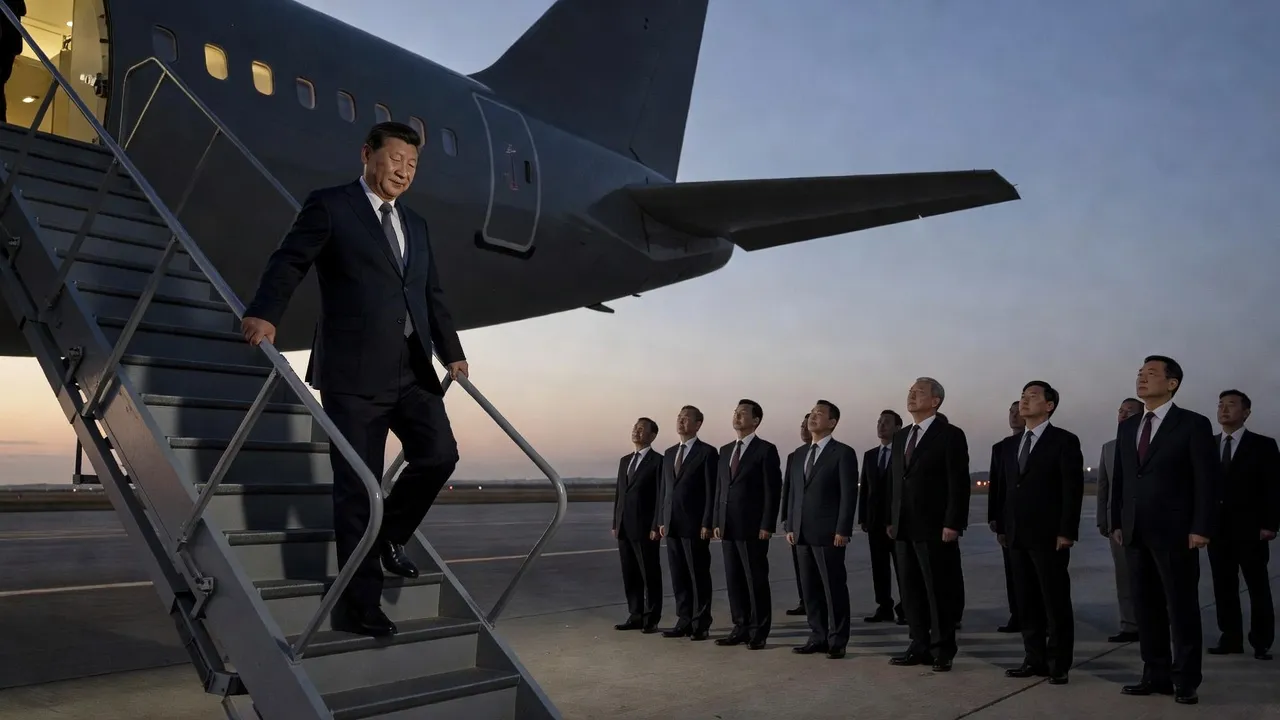
Paris, September 27, 2026. The French press has taken away from the Washington summit, which ended on Friday, September 25, after Xi Jinping's state visit, a precise technical advance and a vague diplomatic packaging. The standout fact, reported by Le Monde and Sud Ouest, is the creation of a "US-China Dialogue on Super-Intelligence to exchange views on the risks and benefits" of artificial intelligence, complemented by a "bilateral communication channel" dedicated to incidents. The next session is to be held "by November," the White House specifies in its information sheet.
This mechanism comes as the two capitals display opposing philosophies on regulation. Xi Jinping recalled that the two leading countries have the "responsibility to develop and manage AI for the common good, and to ensure that its development remains always under human control," according to Le Monde. Donald Trump, for his part, stated that he wants to stay "exactly at the current stage" of regulation — a divergence that the emergency channel does not close, it merely frames.
The semantic aspect does not escape the newspapers: Beijing indicated that it is "considering" the American renaming of AI as "super-intelligence," without confirming or denying Trump's account that Xi Jinping appreciated the formula. On the commercial front, the two countries are reducing their customs duties on $30 billion worth of "non-sensitive goods" in each direction; Beijing has not immediately reacted to this American announcement.
L'Express, reviewing the international readings of the summit, retains a minimal balance: no concrete agreement on AI, Taiwan, or the war in Iran, only the extension of the trade truce, the sending of two pandas to Atlanta, and the hosting of more American students in China having been concluded. La Tribune, on the other hand, sees "the first foundations of global governance" of AI, against the backdrop of rivalry between American giants (Microsoft, Google, Meta, Amazon, Apple, Nvidia, OpenAI) and Chinese giants (Baidu, Alibaba, Tencent, Huawei, ByteDance). Between these two readings, the French press retains above all that the technical channel already exists, while political governance remains to be built.
SOURCES (4)
- Sud OuestMEDIUM
- L'ExpressMEDIUM
- La TribuneMEDIUM