Common ground and differences in coverage across the media analysed.
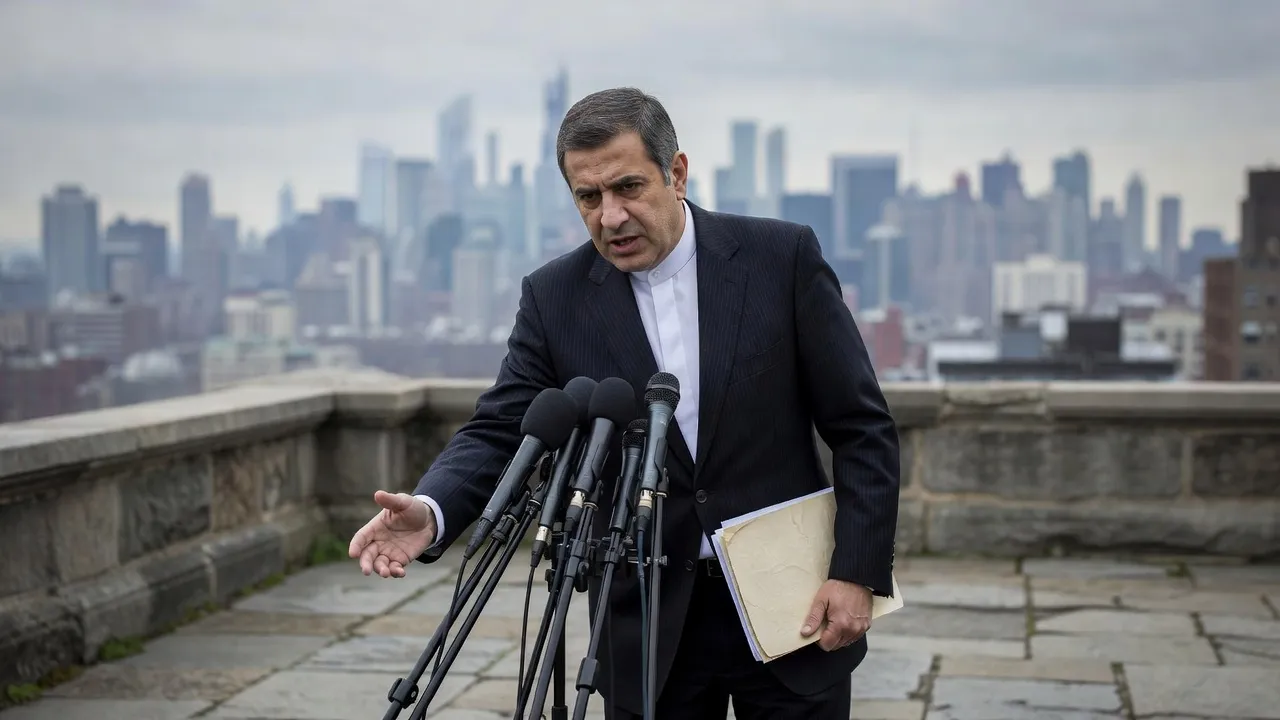
Iranian Minister Abbas Araghchi presented, on Friday in New York on the sidelines of the UN General Assembly, a plan transmitted to Washington via Qatar to reopen the Strait of Hormuz in seven days.
The Iranian plan conditions the reopening of the Strait of Hormuz on the lifting of the naval blockade imposed by the United States on Iranian ports.
Several perspectives report, citing the Wall Street Journal, a rejection of the plan attributed to Donald Trump, while others only report exchanges described as 'positive and constructive' by US officials, without confirmation of a rejection.
Some perspectives report, according to the Wall Street Journal, the hypothesis of a resumption of US strikes after the November midterm elections in the event of a failure of the talks, while others relay the position of Moscow and Tehran according to which only a diplomatic solution is considered.
The US press reports the statements of President Pezeshkian according to which Iran would respect its commitments until allowing nuclear inspectors if the plan is accepted, while Israeli and Iranian perspectives report that no concession will be made on the nuclear program.
Coverage aligned with this reading
This grouping describes the publications analysed, not the position of these countries’ populations or of their governments.
What the coverage of each country leaves aside, while others put it forward.
Norway
Iran
United States
Preview: 3 of 18 media perspectives. Syntheses of the media analysed — not direct quotations. Method & limitations
Dhaka is aware of how even the slightest disruption in the Strait of Hormuz directly impacts its energy bill and the Bangladeshi workers employed in the Gulf.
2 sources · View sources
Brasília is deciphering the Iranian announcement in light of the US electoral calendar, with the Brazilian press mainly noting that Trump would wait for the November midterm elections to, according to the Wall Street Journal, resume bombings rather than accept Tehran's plan.
3 sources · View sources
Ottawa sees the Iranian plan as a calculated gamble on the US electoral calendar, rather than a simple offer to ease energy tensions.
2 sources · View sources
DOMINANT ANGLE
Dhaka is aware of how even the slightest disruption in the Strait of Hormuz directly impacts its energy bill and the Bangladeshi workers employed in the Gulf.
ANALYSIS
Dhaka, September 26, 2026.
DOMINANT ANGLE
Brasília is deciphering the Iranian announcement in light of the US electoral calendar, with the Brazilian press mainly noting that Trump would wait for the November midterm elections to, according to the Wall Street Journal, resume bombings rather than accept Tehran's plan.
ANALYSIS
Brasília, September 26, 2026.
DOMINANT ANGLE
Ottawa sees the Iranian plan as a calculated gamble on the US electoral calendar, rather than a simple offer to ease energy tensions.
ANALYSIS
Ottawa, September 26, 2026.
DOMINANT ANGLE
Helsinki interprets the refusal attributed to Trump through the US electoral calendar rather than the diplomacy of the Strait of Hormuz.
ANALYSIS
Helsinki, September 26, 2026.
DOMINANT ANGLE
Paris is deciphering a diplomatic scenario already seen in June: Tehran is putting unchanged conditions back on the table, Washington is responding with a rejection relayed by the American press rather than through an official channel.
ANALYSIS
Paris, September 26, 2026.
DOMINANT ANGLE
Israel is separating the Iranian offer to reopen Ormuz from the one thing it cares about: the absence of any concessions on the nuclear program.
ANALYSIS
Jérusalem, Saturday, September 26, 2026.
DOMINANT ANGLE
Tehran is setting its conditions for any reopening of the Ormuz Strait: lifting the blockade, ending petroleum sanctions, and a ceasefire extended to Lebanon, without affecting the nuclear program.
ANALYSIS
Tehran, September 26, 2026.
DOMINANT ANGLE
Seoul is taking a two-pronged approach on the Strait of Hormuz: as a co-signer of the declaration by 80 nations demanding immediate reopening, South Korea is maintaining a bilateral channel with Tehran in parallel to protect its trade without getting involved in the war.
ANALYSIS
Seoul, September 26, 2026.
DOMINANT ANGLE
Mexico City is gauging the Ormuz crisis in index points: Wall Street and the Mexican Stock Exchange rose on Friday on hopes of an agreement, while the barrel retreated.
ANALYSIS
Mexico, September 26, 2026.
DOMINANT ANGLE
Kuala Lumpur is measuring the economic weight of a still-closed Strait of Hormuz, a vital crossroads for global oil supply, after the reported American rejection of the Iranian plan in seven days.
ANALYSIS
Kuala Lumpur, September 26, 2026.
DOMINANT ANGLE
Oslo views the Iranian proposal as more of a calendar mechanism than a diplomatic breakthrough, at a time when the Norwegian merchant fleet is monitoring any risks weighing on the Gulf routes.
ANALYSIS
Oslo, Saturday, September 26, 2026.
DOMINANT ANGLE
Kathmandu first gauges the energy stakes of the showdown over the Strait of Hormuz, through which a fifth of the world's oil and gas transited before the war.
ANALYSIS
Katmandou, September 26, 2026.
DOMINANT ANGLE
Islamabad claims to have mediated between Washington and Tehran, positioning the Strait of Hormuz as a "main artery of the global economy" that no party should turn into a chokepoint.
ANALYSIS
Islamabad, September 26, 2026.
DOMINANT ANGLE
Lisbon measures the Iranian offer by its immediate effect on the markets and on fuel prices, between stock market relief on Wall Street and domestic political pressure on fuel tax.
ANALYSIS
Lisbon, September 26, 2026.
DOMINANT ANGLE
Doha is asserting its role as a discreet channel between Tehran and Washington, placing Qatari mediation at the heart of the seven-day plan to reopen the Strait of Hormuz.
ANALYSIS
Doha, September 26, 2026.
DOMINANT ANGLE
Bucharest is watching a showdown where the American response, on Saturday, came in the form of a renowned post on Truth Social rather than a written commitment on the Iranian plan.
ANALYSIS
Bucharest, September 26, 2026.
DOMINANT ANGLE
Moscow defends the diplomatic path as the only way out of the Gulf crisis, highlighting the Iranian plan to reopen the Ormuz Strait in seven days rather than the responsibility that Washington attributes to Tehran.
ANALYSIS
Moscow, September 26, 2026.
DOMINANT ANGLE
The United States is conditioning its response to the electoral calendar: the US government has itself predicted that no agreement with Iran will be found before the November midterm elections, when Tehran is pressing for a rapid outcome.
ANALYSIS
The United States, September 26, 2026.
Explore every perspective on this subject across 18 countries.
Compare viewpoints and see where they diverge.
published on
countries
sources
articles
gap
Before being confirmed by Abbas Araghchi himself on Friday, the Iranian plan had first been revealed by the Japanese agency Kyodo as early as Tuesday, then denied by Iranian media. It reiterates, almost word for word, an agreement protocol signed in June between Washington and Tehran, which has been dormant. Its presentation comes as several capitals, from Moscow to Islamabad, are claiming a role in the surrounding diplomacy.
The Wall Street Journal mentions a rejection by Donald Trump, not publicly confirmed by the White House, while Tehran was waiting on Saturday for an official response from Washington.
According to the French press, the proposal had initially circulated discreetly: the Japanese agency Kyodo revealed it as early as Tuesday, before Iranian media denied it, without official clarification from Tehran until Friday.
The text reproduces, almost word for word, the agreement protocol signed in June between Donald Trump and Massoud Pezeshkian, which remained a dead letter, the French press emphasizes. According to VG and Aftenposten, Abbas Araghchi himself specified that these conditions implied nothing significantly more than what the two countries had agreed on in June. YLE Uutiset recalls that this agreement had collapsed after Iranian attacks on merchant ships accused of having deviated from their route.
In New York, Iranian diplomacy keeps several channels open in parallel: Abbas Araghchi also met his Russian counterpart Sergey Lavrov, with both ministers stating that "there is no alternative to a diplomatic solution", according to the Russian Ministry of Foreign Affairs, as quoted by Sputnik.
The rejection of the plan attributed to Donald Trump is based, in several perspectives in the corpus, solely on the Wall Street Journal: seven of the eighteen national covers gathered here - Brazilian, Finnish, French, Malaysian, Nepalese, Portuguese, and Romanian - relay this information without official confirmation from the White House; this count measures the circulation of information in the press, not its accuracy.
« nearly 22 million barrels of oil left the strait last night »
The Norwegian and Qatari perspectives, on the other hand, only report exchanges described as "positive and constructive" by American officials, without mentioning any rejection: VG and Aftenposten quote a White House official to this effect, and Al Jazeera reports that State Department spokesperson Tommy Pigott assured on Saturday that the door to diplomacy remained open.
Before the General Assembly, Donald Trump summarized his dilemma without making a decision: he had, according to CBS News, "a big decision to make", between an agreement with Iran or "annihilating" the country.
Doha highlights its role as a channel: according to Gulf Times, it was through Qatar that Iran transmitted its plan to Washington, without either party announcing a breakthrough at this stage.
Islamabad claims an earlier role: before the UN, Prime Minister Shehbaz Sharif stated that he had brought Washington and Tehran "under one roof" in Islamabad, ahead of a memorandum of understanding that he described as a "historic step", praising the efforts of Chief of Army Staff Asim Munir.
Seoul, on its part, is conducting a two-pronged diplomacy: according to Korea Pro, on September 24, South Korean Foreign Minister Cho Hyun met with Abbas Araghchi to demand a guaranteed passage for all ships, without engaging his country in the conflict; the two ministers signed a treaty on the transfer of convicted prisoners between their two countries on the same day.
On the markets, the announcement had an immediate effect on Friday: the Dow Jones gained 0.93%, report El Financiero and RTP Notícias, while the US reference barrel, West Texas Intermediate, fell by 1.91%, to $92.80, according to El Financiero.
Saudi Arabia has already reorganized its crude sales: Riyadh increased its exports to 6 million barrels per day in September, an increase of nearly 80% compared to August, bypassing the strait, according to CNBC.
The UN warns on another front: Deputy Secretary-General Jorge Moreira da Silva warned that at least 45 million people in developing countries risk food shortages if the supply of fertilizers through the Strait of Hormuz, through which a third of global trade passes, remains disrupted, according to TASS.
Regional tensions are not easing: Bahraini Foreign Minister Abdul Latif Al-Zayani recalled the death of an Indian national in an attack on a ship off the coast of Oman, while Houthi missile strikes targeted Saudi targets on Friday, according to Nepalese and American press.
He posted on Truth Social a map of the strait renamed "Trump Strait".
Tasnim says Araghchi-Witkoff contact was unauthorized, calls it a "major mistake".
80 countries led by Bahrain demand, in the name of resolution 2817, the immediate reopening.
He says Tehran would allow nuclear inspectors if Washington accepted the plan.
More divergent than 83% of recent comparable stories (reference: 90 recent stories measured with the same method).