Common ground and differences in coverage across the media analysed.
What the media report in common
1
Rospotrebnadzor and regional authorities attribute the 28-year-old laboratory worker's condition to 'pneumonia of undetermined etiology' with no micro-organism linked to her professional activity, while local media suggest the possibility of pulmonary plague, which has not been officially confirmed.
2
The WHO considers the risk to be low to very low outside of Russia ('very low' for Europe), without the press in these countries presenting it as ruled out.
Where media coverage diverges
Credit of the official Russian version
Question asked: is the Russian version of undetermined pneumonia to be retained as such? Some coverage reports it with control elements (commissions, contact tests); others highlight the distrust it inspires or place it under the sign of a lack of transparency.
Question asked: what place to give to the hypothesis of a broken tube in the laboratory? Kyiv and Toronto put it forward citing Russian media, while Berlin, Warsaw and Paris describe it as unproven or unverified.
Question asked: does the case refer to a biological laboratory safety issue? The Ukrainian press mentions a biological weapons program and a possible 'new Wuhan'; American, British, French and Indian media mention the Covid-19 precedent; Latvian, Mexican or Portuguese press mainly deals with the health risk.
Canberra is deciphering the Irkoutsk case as a health enigma: unknown pneumonia or lung plague, Australian media weigh what is established, what remains unknown and the risk deemed low by the WHO.
Brasília is dissecting the conflicting versions of the death of the laboratory worker from Irkutsk and highlighting what is known, what is unknown, and the level of risk assessed by the WHO.
Ottawa is tempering the alert by raising the question of the risk to Canadians: Toronto experts, the WHO, and the Public Health Agency converge on a very low danger, while the cause of death remains to be established.
ANALYSIS
Ottawa, October 7, 2026.
Germany
DOMINANT ANGLE
Berlin is dissecting the rumor mill: between Rospotrebnadzor's denials and distrust of the official Russian version, the German press is weighing what is proven and what is not.
ANALYSIS
Berlin, October 7, 2026.
Finland
DOMINANT ANGLE
Helsinki is closely watching the pressure from Washington and the WHO on Moscow: the Finnish press is categorizing the case of the Siberian laboratory under the question of Russian transparency, up to the announced call between Trump and Putin.
ANALYSIS
Helsinki, October 7, 2026.
France
DOMINANT ANGLE
Paris is scrutinizing Moscow's transparency more than the disease itself: between Russian denials, Washington's pressure, and memories of Covid, the French press finds the sanitary silence to be as unsettling as the risk.
ANALYSIS
Paris, October 7, 2026.
India
DOMINANT ANGLE
New Delhi is deciphering the Irkutsk case as a test of health transparency: between Moscow's denials, the WHO's requests, and the announced call from Trump to Putin, the Indian press is weighing what Russia says and does not say.
ANALYSIS
New Delhi, October 7, 2026.
Latvia
DOMINANT ANGLE
Riga weighs the health risk over controversy: the Latvian disease prevention centre judges the danger of international spread to be very low and recalls that the plague can be treated.
ANALYSIS
Riga, October 7, 2026.
Mexico
DOMINANT ANGLE
Mexico City is deciphering the Irkutsk case as a health alert to be explained to the general public: symptoms, contagion, and real risk, with the WHO as the central reference.
ANALYSIS
Mexico, October 7, 2026.
Poland
DOMINANT ANGLE
Warsaw gauges the risk for Poland: between hypotheses from Irkutsk and the WHO's assessment, the Polish press first seeks to determine if Europe has reasons to be concerned.
ANALYSIS
Warsaw, October 7, 2026.
Portugal
DOMINANT ANGLE
Lisbon interprets the Irkutsk case from a medical angle: it explains what pulmonary plague is, recalls that it can be treated if addressed early, and relays the "very low" risk for Europe according to the WHO.
ANALYSIS
Lisbon, October 7, 2026.
Qatar
DOMINANT ANGLE
Doha weighs what is known and what is unknown about the death of the laboratory worker in Irkutsk, aligning the assessments of the WHO and the CDC with the denials of Moscow.
ANALYSIS
Doha, October 7, 2026.
Russia
DOMINANT ANGLE
Moscow, in its independent press, is deciphering a battle of versions: between the Rospotrebnadzor's denials, quarantines observed on site and rumors of plague, it is the reliability of official information that is at stake.
ANALYSIS
Moscow, October 7, 2026.
Ukraine
DOMINANT ANGLE
Kyiv is examining the Irkutsk case from a biological safety angle: the Ukrainian press sees it as a potential "new Wuhan" and questions Moscow's silence on the laboratory.
ANALYSIS
Kyiv, October 7, 2026.
United Kingdom
DOMINANT ANGLE
London weighs the real risk rather than the rumour: the British press explains the pulmonary plague, relays the "very low" judgment of the WHO and notes what Moscow has not yet established.
ANALYSIS
London, 7 October 2026.
United States
DOMINANT ANGLE
The United States is holding Moscow accountable: the American press is making Russian health transparency the central test, between the administration's caution and the reminder of the Covid precedent.
ANALYSIS
In America, the death of a technician at the Irkutsk anti-plague institute, identified by Russian media as 28-year-old Darya Shipilova, is initially treated as a matter of transparency.
Venezuela
DOMINANT ANGLE
Caracas is particularly holding on to the requirement for transparency: the Venezuelan press is highlighting the WHO's demand to Moscow, due to the lack of official notification regarding the death of a laboratory worker in Irkutsk.
ANALYSIS
Caracas, October 7, 2026.
Explore every perspective on this subject across 17 countries.
Suspected plague in Russia: the death of an Irkutsk lab technician worries the WHO and Washington
published on
October 7, 2026
17
countries
46
sources
58
articles
65/100
gap
The Irkutsk case is less about what has been established than about how the information has circulated, with local media, Russian authorities, the WHO, and foreign press having different sources, each reporting their own.
The cause of death remains officially undetermined: Moscow told the WHO that no cases of plague are recorded, and a Trump-Putin call was announced.
Successive versions
Meduza, which republishes the investigation by local media "Peoples of Baikal", writes that information about a lung plague initially circulated, then was removed from websites of media outlets close to the government, before the authorities spoke of pneumonia. The Russian media outlet specifies that the hypothesis of the plague is based on unnamed sources from several media outlets.
« But trust in the official version is low. »
FAZ, German daily, October 7, 2026
Hypotheses about the origin of the disease vary according to the headlines. The Moscow Times mentions, according to unofficial sources, a trip to Buryatia or a broken test tube. TVNET in Latvia adds a stay in Thailand; RTP in Portugal reports the same lead, citing the local Russian press. According to Ukrainska Pravda, which cites Russian media, the test tube would have been broken on September 25; the Toronto Sun writes that she told her colleagues, without official confirmation.
Gulf Times notes that there is no public evidence to support these accounts. FAZ reports earlier versions, including a rat bite, and notes that it is still unknown where and how the young woman was infected.
What specialists are saying
Isaac Bogoch, an infectious disease specialist in Toronto, told the Globe and Mail that several pathogens are possible and that "we just don't know." According to him, ruling out the plague would be premature until the cause is established.
Experts cited by CBS and CNBC have expressed doubts. Amesh Adalja believes the health response does not match the plague, and Javier Pizarro-Cerda is surprised that a broken tube would be enough to contaminate someone wearing a full-body suit. In Latvia, TVNET+ interviewed Baiba Rozentāle, whose title, "It doesn't add up," expresses skepticism about certain versions.
DW, in its fact-checking on October 6, described the accident hypothesis as unproven. It noted that a Russian-language message on X, describing a broken vial and several hundred contaminated people, had over 320,000 views, and that two Rospotrebnadzor commissions found no evidence of an accident involving pathogenic microorganisms.
The WHO, Moscow, and the United States
Contrapunto, in Venezuela, reports that WHO spokesperson Christian Lindmeier stated that the organization had not received an official notification under the International Health Regulations. According to this media outlet, the WHO detected the case through its internal monitoring and contacted Russian authorities as early as October 3. Russia responded on October 6, according to the Free Press Journal.
« Be transparent and share more information with the world »
Marco Rubio, on a trip to Iceland, as reported by France 24, October 6, 2026
The Free Press Journal also details the WHO's requests: clarification on the cause of pneumonia, the agent that prompted public health measures, and press reports mentioning a second employee with pneumonia of undetermined cause. Director-General Tedros Adhanom Ghebreyesus demands, according to YLE and MTV Uutiset, an exchange of up-to-date, complete, and open information.
In Helsinki, THL's chief medical officer, Leif Lakoma, indicated on Monday, October 5, that no information had reached Finland through official channels, according to YLE. According to the Wall Street Journal, cited by France 24 and Al Jazeera, the State Department sent a confidential démarche to Moscow regarding its international health obligations.
From the Kremlin's side, Dmitri Peskov invites people to follow only the information from Rospotrebnadzor, according to the BBC and Meduza. According to the BBC, he also invited people not to listen to various rumors, in response to Donald Trump's offer of assistance.
On site and in laboratories
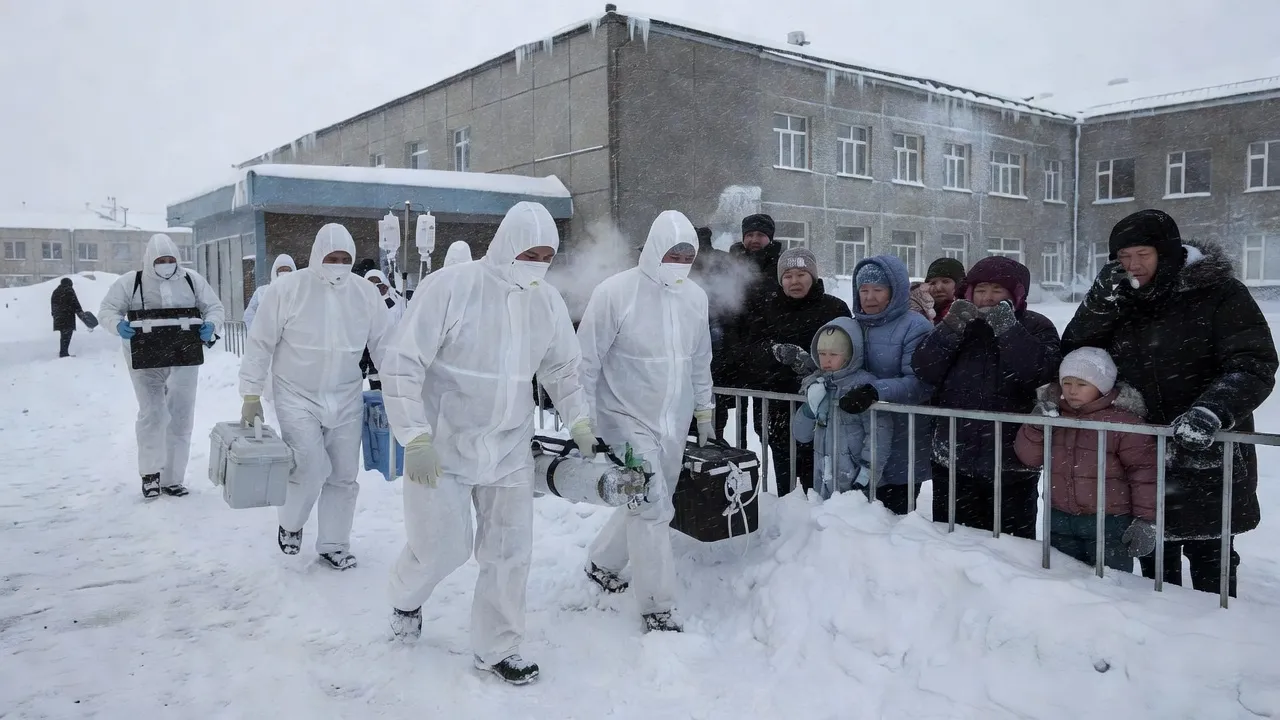
The ABC's report from Irkutsk states that Rospotrebnadzor denounced as false information a document allegedly announcing severe restrictions. Several residents say they do not trust the authorities; PerthNow notes that daily life has barely been disrupted.
According to The Moscow Times, a maternity hospital in Irkutsk distributed a plague screening form and restricted visits, according to a blogger cited by "Peoples of Baikal". Residents of the deceased woman's building describe to Meduza a disinfection carried out by agents who knew nothing else about the death of a young woman.
Outside of Russia, several newsrooms have linked the case to the debate on laboratory safety. Vox sees it as a scenario of a laboratory leak at the origin of a global epidemic, The Atlantic considers the case serious but not catastrophic, and Le Monde recalls China's lack of transparency at the start of Covid-19. The Ukrainian press goes further: TSN, which reprints The Sun, mentions a possible "new Wuhan" and a biological weapons program.
These angles address distinct questions: articles on laboratory safety concern the supervision of dangerous pathogens, those in the health press on the immediate risk to the population.
The people tested
According to Elena Sofina, 60 % of those in quarantine have been released; two cases of Covid-19 and two of rhinovirus detected.
Washington
Marco Rubio is asking Russia to share more information; the State Department is following the situation.
The disease
Pulmonary plague, transmissible between humans, can be treated with antibiotics if care is provided early.
Key figures
200
People in contact with the laboratory technician were placed under observation