
DOMINANT ANGLE
New Delhi is deciphering the Irkutsk case as a test of health transparency: between Moscow's denials, the WHO's requests, and the announced call from Trump to Putin, the Indian press is weighing what Russia says and does not say.
Dominant angle identified — does not reflect unanimity of this country’s media
KEY POINTS
- 01
According to the Times of India, there is no confirmation that the laboratory worker in Irkutsk died of the plague; Russian authorities cite pneumonia of unknown cause.
- 02
Moscow responded to the WHO on October 6: no cases of plague in Irkutsk and contact tracing completed, with no high-risk pathogen detected (Free Press Journal).
- 03
The WHO requested clarification on the cause of the pneumonia, the pathogen involved, and a possible second sick employee, and considers the risk outside of Russia "very low".
ANALYSIS
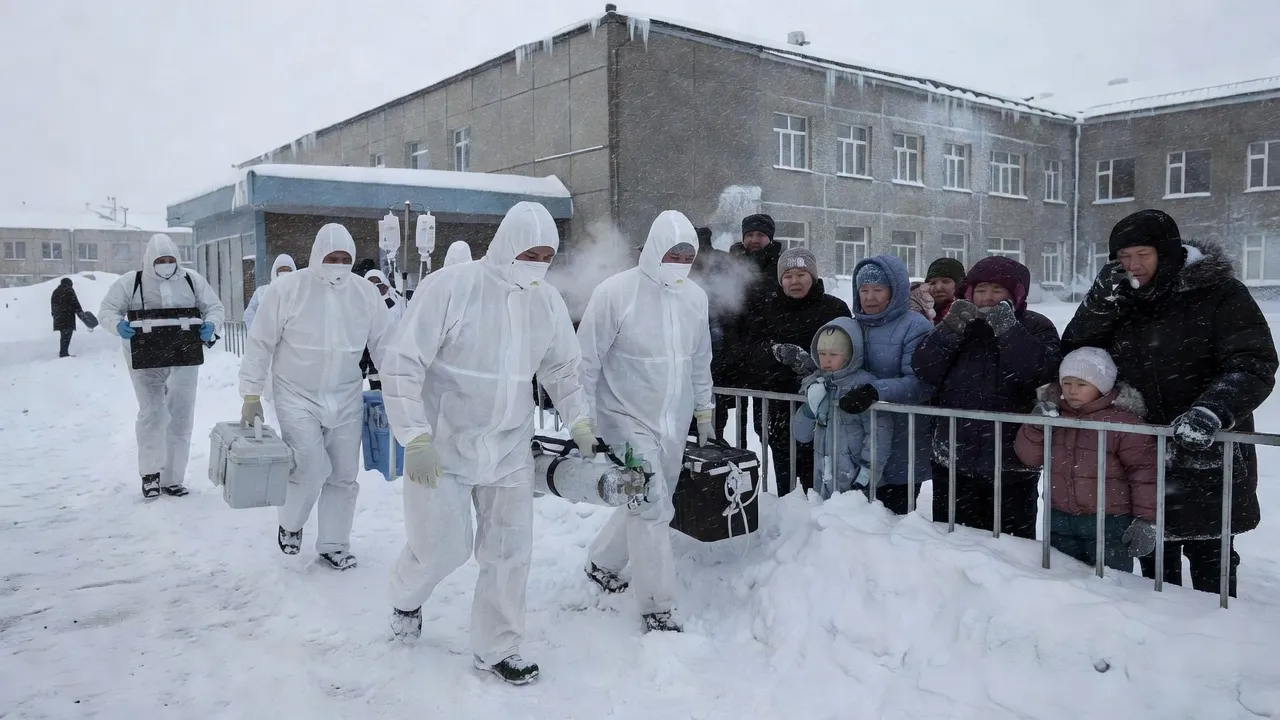
New Delhi, October 7, 2026. Indian media is covering the Irkutsk case with caution, first emphasizing what has not been established. The Times of India recalls that a woman employed at the Siberia and Far East Anti-Plague Research Institute died last week, that Russian authorities are talking about pneumonia of unknown cause, while Russian media and social networks are mentioning pulmonary plague. The newspaper states: "however, there is no confirmation" that the young woman died of the plague.
The newspaper focuses on the international dimension. Donald Trump said he wants to talk to Vladimir Putin about this case, while the World Health Organization (WHO) considers the risk outside of Russia "very low". The Times of India also explains why the episode is worrying: pulmonary plague, the rarest but most virulent form, is transmitted between humans through the respiratory route, but recovery is frequent if treated quickly.
The newspaper then links the case to a still vivid memory. The hypothesis of a respiratory disease coming from a laboratory, it writes, has revived the memory of Covid-19 and the debate over its origins. However, it quotes WHO spokesperson Christian Lindmeier, who says that nothing currently indicates a situation comparable to the pandemic.
The Free Press Journal relies mainly on the WHO statement. Moscow responded on October 6 to an information request under the International Health Regulations: no recent cases of plague have been recorded in the Irkutsk region, neither in the deceased nor in her contacts, who were placed under medical observation, tested, and then released from surveillance without any high-risk pathogens detected. According to the same source, the disease initially presented as a common acute viral respiratory infection.
The newspaper does not omit the areas of uncertainty highlighted by the WHO: it has offered technical support and requested clarification on the cause of the severe pneumonia, the agent that motivated public health measures, and press reports mentioning a second employee with pneumonia of undetermined cause. For the organization, "complete and transparent" information sharing is essential to resolve the contradictions.
In total, the Indian account is factual and without alarmism: it presents the Russian denial, the call from Washington, and the WHO's reservations side by side, without taking a stance on the real cause of the death.