
DOMINANT ANGLE
Warsaw gauges the risk for Poland: between hypotheses from Irkutsk and the WHO's assessment, the Polish press first seeks to determine if Europe has reasons to be concerned.
Dominant angle identified — does not reflect unanimity of this country’s media
KEY POINTS
- 01
The WHO considers the risk "very low" for the European region, low for Russia, and moderate to low for Irkutsk (RMF24, spokesperson Christian Lindmeier).
- 02
Around 200 people in contact with the lab worker have been placed under observation or isolation; Rospotrebnadzor mentions pneumonia of undetermined cause.
- 03
The Chief Sanitary Inspector (GIS) notes that no official source confirms any human cases of plague in Russia.
ANALYSIS
Warsaw, October 7, 2026. The death of Daria Szypiłowa, a 28-year-old laboratory worker at the Siberia and Far East Anti-Plague Institute, is being covered by the Polish press from the angle of public health and geographical proximity: "Co z Polską?" asks Gazeta Prawna in its headline.
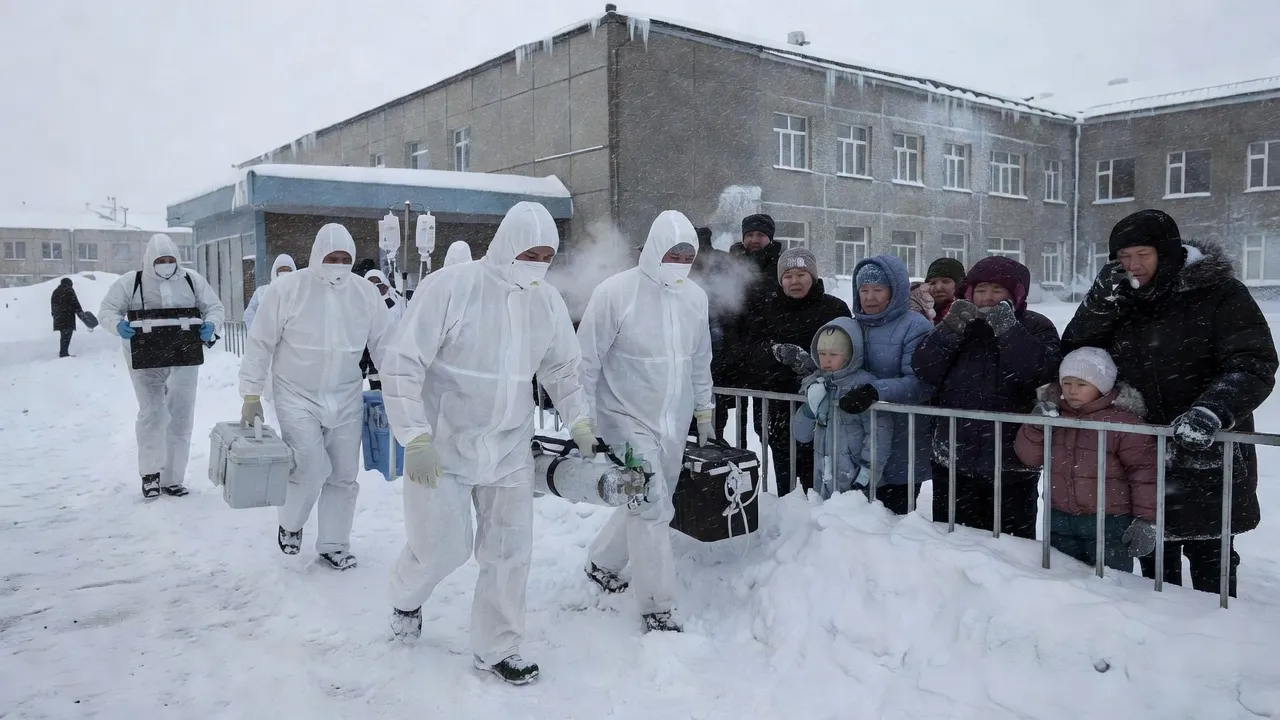
The reported facts are cautious. According to information gathered by Radio Wolna Europa, the young woman was hospitalized on September 29 and died during the night of October 1-2. About 200 people who came into contact with her have been placed under observation or isolation. The local independent media "Ludzie Bajkału" claims that she allegedly broke a tube containing a pathogen; RMF24, citing the American website Axios, mentions pulmonary plague and dates the incident to September 25. The Russian authorities do not confirm this version: Rospotrebnadzor talks about pneumonia of undetermined cause, without any micro-organism related to her work, and says that the institute has not recorded any accidents involving pathogens.
RMF24 highlights the opinion of the WHO. Its spokesperson, Christian Lindmeier, in Geneva, assesses the risk as "moderate to low" for Irkutsk, low for the whole of Russia, and "very low" for the European region. The organization has requested information from Moscow about the circumstances and analyses and offers its assistance.
The national aspect takes a clear place. On Monday, October 5, the Polish Chief Sanitary Inspector (GIS) indicated that no official Russian or international source confirmed any human cases of plague in Russia, recalling that the disease, caused by Yersinia pestis, is "highly contagious".
Gazeta Prawna also devotes a section to the speculations of former Ukrainian diplomat Roman Bezsmertny, interviewed by Kanał 24 on October 6. He considers three scenarios, including a link to work on biological weapons. The newspaper specifies, however, that he presented neither analysis results nor investigation elements. The general line remains one of restraint: an unexplained event, unverifiable Russian denials, and a risk considered low for Poland.