
DOMINANT ANGLE
Riga weighs the health risk over controversy: the Latvian disease prevention centre judges the danger of international spread to be very low and recalls that the plague can be treated.
Dominant angle identified — does not reflect unanimity of this country’s media
KEY POINTS
- 01
The risk of international spread of the plague, including to the country, is deemed "very low" even in the event of laboratory confirmation.
- 02
According to BNN, The Moscow Times and Meduza report that nearly 200 people have been hospitalized for observation after contact with the patient.
- 03
TVNET lists three versions of the contamination: a broken tube at work, a trip to Buryatia near Mongolia, or a stay in Thailand.
ANALYSIS
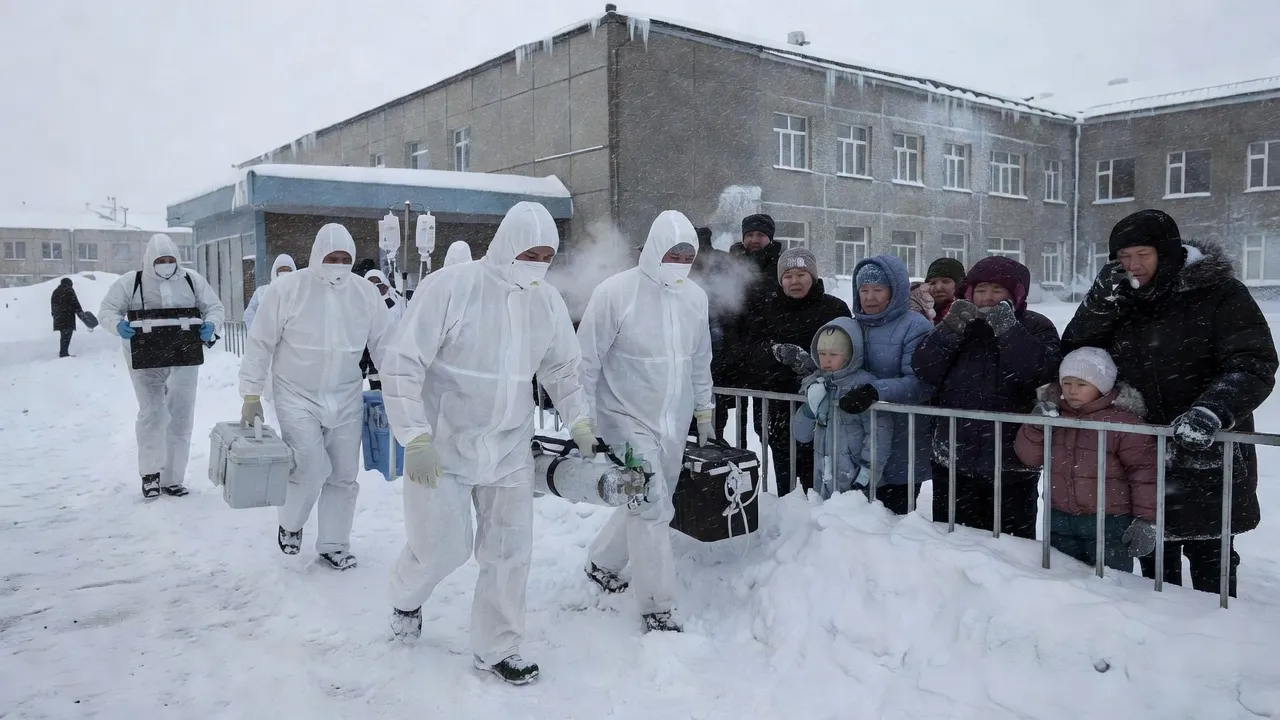
Riga, October 7, 2026. In Latvia, the Irkutsk case is first treated as a public health issue and a risk for the country. BNN reports that the Latvian Center for Disease Prevention and Control (SPKC) has responded to information about a possible case of pulmonary plague in Russia. According to it, the risk of international spread, including to Latvia, is "very low", even if the suspected case was confirmed in a laboratory.
The SPKC emphasizes that the potential death linked to pulmonary plague and the implementation of large-scale quarantines have not been officially confirmed by the World Health Organization or the European Center for Disease Prevention and Control (ECDC). It specifies that rapid diagnosis, patient isolation, contact tracing, and effective antibiotic treatment can now contain the disease and prevent more significant outbreaks. BNN relies on The Moscow Times and Meduza, which mentioned nearly 200 people hospitalized for observation after contact with the patient.
TVNET, on the other hand, details the informational confusion. Its article titled "The plague exists in Siberia and does not exist at the same time" recalls that local media first announced the death of a woman due to the plague, which Russian authorities immediately denied, citing pneumonia, and that Russian media mention quarantines in several hospitals, maternity wards, and an aluminum plant. The victim is identified as Daria Chipilova, an employee of the Irkutsk plague research institute.
The newspaper lists three versions: a broken test tube containing bacteria at the workplace, infection during a mission in Buryatia, near the Mongolian border, or contamination in Thailand. In a second article, TVNET+ interviews Baiba Rozentāle, a professor at the University of Stradiņš in Riga and the chief physician of the Latvian Infectology Center, about the credibility of the broken test tube hypothesis and the modes of contamination. The title, "It doesn't add up", expresses skepticism about certain versions, and the text notes that public reaction is strong, as the pulmonary form is the most dangerous because it is transmitted through the air.
The Latvian media does not focus on the announced call between Donald Trump and Vladimir Putin or the denials from the WHO or Moscow on October 6: the emphasis remains on useful information for the local reader, namely what is confirmed, what is not, and why there is no reason to alarm in Latvia.