
DOMINANT ANGLE
The United States is holding Moscow accountable: the American press is making Russian health transparency the central test, between the administration's caution and the reminder of the Covid precedent.
Dominant angle identified — does not reflect unanimity of this country’s media
KEY POINTS
- 01
Marco Rubio stated on Tuesday, October 6, that it was up to Russia to share more information with the world, according to CBS News.
- 02
Donald Trump announced on Tuesday a call "very soon" with Vladimir Putin and had offered American assistance on Monday, according to NBC News and CNBC.
- 03
The CDC claims to have no indication of a broader threat, according to Axios.
ANALYSIS
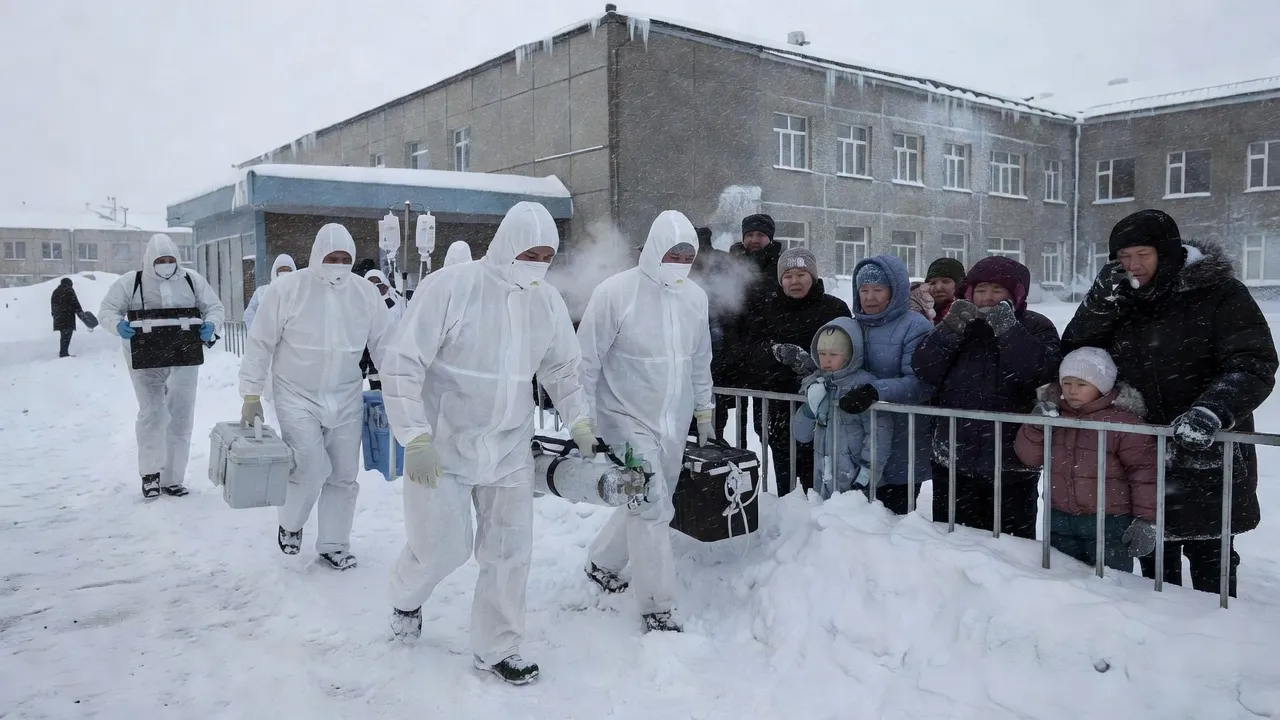
In America, the death of a technician at the Irkutsk anti-plague institute, identified by Russian media as 28-year-old Darya Shipilova, is initially treated as a matter of transparency. Secretary of State Marco Rubio stated on Tuesday, October 6, that it was "incumbent upon Russia to obviously share more information with the world." The day before, on Monday, October 5, he judged the situation to be "not cause for alarm, but cause for focus." A State Department spokesperson welcomed close monitoring with the CDC and called on Moscow for greater clarity, while the embassy in Moscow issued a health alert and Washington reaffirmed its warning against traveling to Russia.
The US government has been following the situation closely, with Donald Trump indicating on Tuesday that he had a call "scheduled" with Vladimir Putin, "very soon," after offering US assistance on Monday: "Anybody that has that kind of a problem, we're always willing to help." He mentioned "very deep discussions" with the intelligence community and promised a report "probably tomorrow."
On the medical front, the press is emphasizing uncertainty. Axios notes that two unknowns are blocking any decision: the pathogen in question and its level of containment, before considering border restrictions or travel advisories. The CDC says it sees "no indication of a broader threat to the United States." NBC points out that Rospotrebnadzor's statement on contacts, where two cases of Covid and one or two of rhinovirus were found, does not mention the word "plague." Experts cited by CBS and CNBC are expressing doubts: Amesh Adalja estimates that "the response doesn't fit plague," and Javier Pizarro-Cerda is surprised that a broken tube could be enough to contaminate someone wearing a full suit.
Editorials are broadening the discussion. The Atlantic judges the situation to be "bad, but not that bad" and recalls that pulmonary plague can be treated with antibiotics, but demands that Moscow tell the truth about the laboratory's work. Vox sees this as a warning signal: since Covid, laboratories handling dangerous pathogens are multiplying, while their supervision is struggling to keep up. The risk, according to the WHO, remains low outside of Russia, and very low for the European region.
SOURCES (5)
- NBC NewsMEDIUM
- CBS NewsMEDIUM
- AxiosMEDIUM
- The AtlanticMEDIUM
- VoxMEDIUM