
DOMINANT ANGLE
Canberra is deciphering the Irkoutsk case as a health enigma: unknown pneumonia or lung plague, Australian media weigh what is established, what remains unknown and the risk deemed low by the WHO.
Dominant angle identified — does not reflect unanimity of this country’s media
KEY POINTS
- 01
Rospotrebnadzor attributes the 28-year-old woman's death to "pneumonia of undetermined etiology" and detected no micro-organism related to her work (PerthNow, ABC).
- 02
According to the WHO, the risk to the general population "appears to be low" based on available information (SBS).
- 03
Elena Sofina says 60% of people in quarantine have been released; contact tests revealed two cases of Covid-19 and two of rhinovirus (PerthNow).
ANALYSIS
Canberra, 7 October 2026. The Australian press is treating the Irkutsk case primarily as a public health issue: what is known, what is unknown, and what is the real risk. SBS and the ABC are publishing explanatory fact sheets on the plague, a disease caused by the Yersinia pestis bacterium, which is present in small wild mammals in Siberia and their fleas.
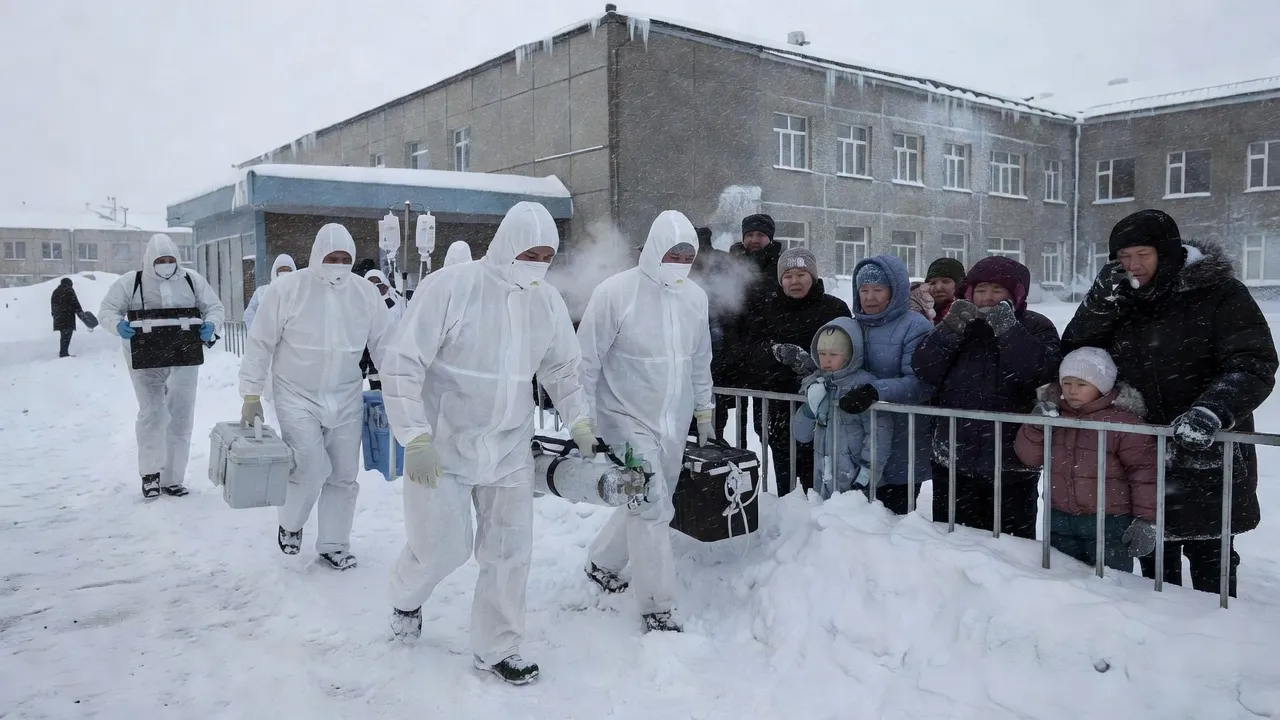
The reported facts are sparse. A 28-year-old laboratory worker at the Siberia and Far East Anti-Plague Institute died on Friday, 2 October. Local media have suggested a link to her work. Rospotrebnadzor, the Russian health agency, is talking about "pneumonia of undetermined etiology" and claims that thorough tests found no micro-organism related to her activity. PerthNow relayed its statement on Tuesday, 6 October: contacts, placed under hospital observation with daily tests, have presented two cases of Covid-19 and two cases of rhinovirus, but no other infectious agent. Elena Sofina, deputy head of the Chelekhov district, indicates that the "dangerous diagnosis" is not confirmed and that 60% of people quarantined have already been released; local press spoke of around 200 people.
The ABC explains that the pulmonary form is the most virulent, with an incubation period that can be as short as 24 hours and transmission through respiratory particles, which is fatal without treatment. SBS cites the WHO, which says that the risk to the general population "appears to be low" based on available information, with new assessments as soon as more elements are known.
The political aspect remains secondary. SBS reports that Donald Trump has called the death a "big problem for Russia" and offered his help, while Marco Rubio claims that Washington is closely following the situation.
The ABC's report from Irkutsk provides a local perspective. Rospotrebnadzor is denouncing a document circulating online, which allegedly announces severe restrictions, as false information: "No decision of this type has been made." Residents say they do not trust the authorities. A resident of 15 years claims that the authorities are downplaying the situation on instructions from Moscow. Others are downplaying the situation: PerthNow notes that daily life has been barely disrupted.
SOURCES (4)
- ABC News AustraliaMEDIUM
- PerthNowMEDIUM
- SBS News AustraliaMEDIUM
- ABC News PoliticsMEDIUM