
DOMINANT ANGLE
Paris is deciphering Xi Jinping's state visit as a diplomatic staging exercise where the pomp of protocol masks the lack of breakthrough on substance, from trade to Taiwan.
Dominant angle identified — does not reflect unanimity of this country’s media
KEY POINTS
- 01
The trade truce between Washington and Beijing has been extended until January 10, 2027, announced by Treasury Secretary Scott Bessent upon Xi Jinping's arrival
- 02
Xi Jinping announced the sending of two giant pandas "in a few days" to the Atlanta zoo, presented as a "symbol of friendship" between the two countries
- 03
RFI describes the summit as "a lot of appearance, little substance", a judgment echoed by Le Monde on the preeminence of images over substance
ANALYSIS
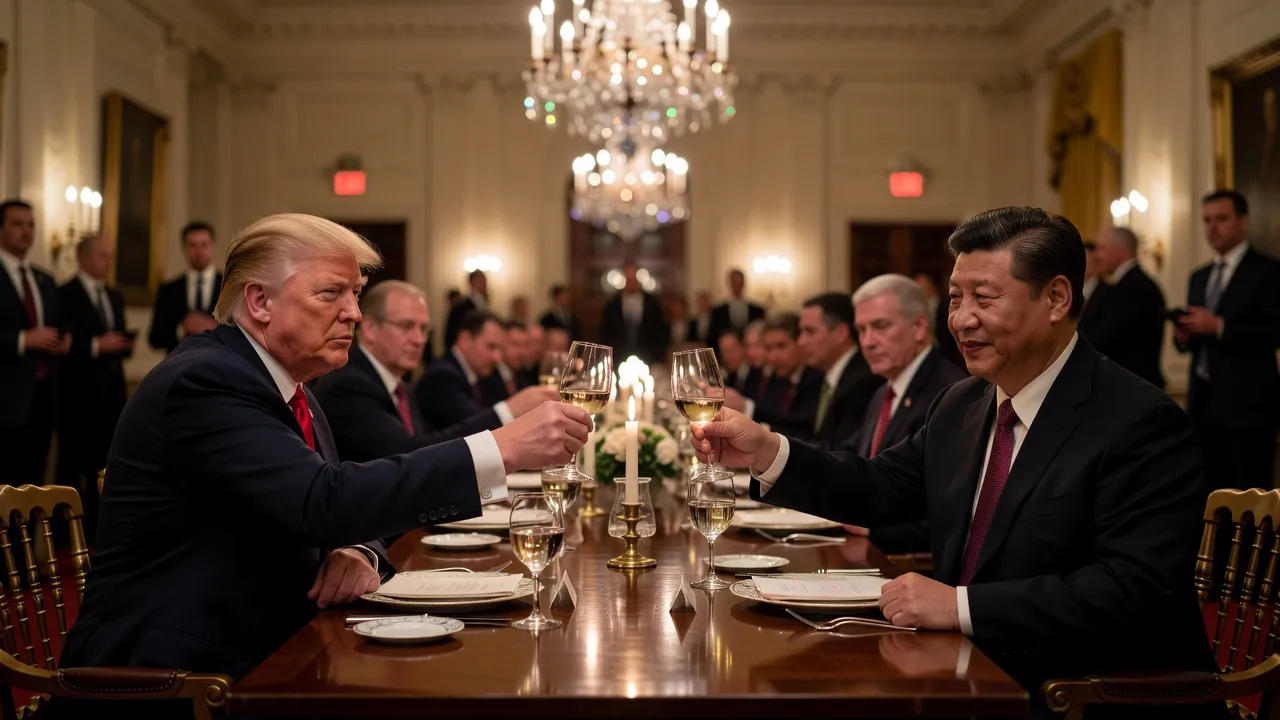
Paris, September 25, 2026. The French press first notes the contrast between the pomp displayed in Washington and the meagerness of the outcome. At Andrews Air Force Base on Wednesday, September 23, Donald Trump personally welcomed Xi Jinping; Le Monde points out that the American president "almost never travels to welcome a foreign leader at the airport". On Thursday, September 24, the White House multiplied the honors: military parade, flyover of bombers, state dinner in the presence of Tim Cook, Jensen Huang, Elon Musk, and Sam Altman. Trump offered an eagle statue and praised a "very great friendship", stating that the two countries "had never gotten along better". Xi responded by announcing the sending "in a few days" of two giant pandas to the Atlanta zoo, "a symbol of friendship between China and the United States", according to BFMTV.
But RFI sums up the summit in a phrase: "a lot of appearance, little substance". Le Monde goes in the same direction, noting that "the produced images and agreed-upon public statements took precedence over substance". The only concrete achievement remains the extension of the trade truce until January 10, 2027, announced by Treasury Secretary Scott Bessent upon Xi's arrival; Bessent judged Beijing "a bit late" in its agricultural purchases. On Taiwan, Iran, rare earths, and artificial intelligence, nothing was settled: Xi reaffirmed his red lines and called for "peaceful coexistence" based on shared "historical responsibility", while warning against the "Thucydides trap". France 24 emphasizes that hopes for cooperation on AI remain slim, while a concrete gesture emerged on another front: Trump said he was willing to let Chinese manufacturers like BYD set up in the United States, on condition that they employ American workers.
Demonstrators chanted "Free Hong Kong" in front of the White House, a reminder that the relationship remains tense beneath the protocolary veneer. For L'Express, this staging of personal proximity could backfire on Washington: former CIA analyst Jonathan Czin believes that "Xi Jinping attaches very little importance to personal relationships".
SOURCES (5)
- L'ExpressMEDIUM
- BFMTV InternationalMEDIUM