
DOMINANT ANGLE
Doha is particularly mindful of what the Trump-Xi summit did not resolve: a trade truce extended by only two months and a US dependence on Chinese rare earths that stretches into the 2030s.
Dominant angle identified — does not reflect unanimity of this country’s media
KEY POINTS
- 01
The commercial truce announced upon Xi's arrival has been extended by only two months, although it was initially set to expire in November (Gulf Times).
- 02
The United States covers only 42% of their rare earth needs and will remain importers for nearly a quarter of their demand in five years, according to Benchmark Mineral Intelligence (Gulf Times).
- 03
Al Jazeera lists four files with no announced progress following the summit: trade, Taiwan, artificial intelligence, and Iran.
ANALYSIS
Doha, September 25, 2026. In Washington, Donald Trump reserved a personal welcome for Xi Jinping on the tarmac of Joint Base Andrews, a first in eleven years for an American president to greet a foreign leader upon arrival, according to Al Jazeera. However, for Qatari media, this protocol splendor does not mask the absence of tangible results on the files that oppose Washington and Beijing.
Gulf Times summarizes the tone of the summit: the meeting was "expected to be more about spectacle than substance." The only concrete announcement, the extension of the trade truce, initially set to end in November, was only extended by two months. A gesture deemed limited in the face of the magnitude of the remaining differences over trade, Taiwan, artificial intelligence, and Iran, listed by Al Jazeera as the four major points of contention at the summit.
The Qatari newspaper highlights a structural imbalance that the meeting did not resolve: the United States covers only 42% of its rare earth needs and will remain dependent on Chinese imports for nearly a quarter of its demand in five years, according to data from Benchmark Mineral Intelligence cited by Gulf Times. Beijing, which dominates the global extraction and refining of these critical minerals, had agreed last year to postpone until November 10 export restrictions; their extension was on the agenda of the two leaders.
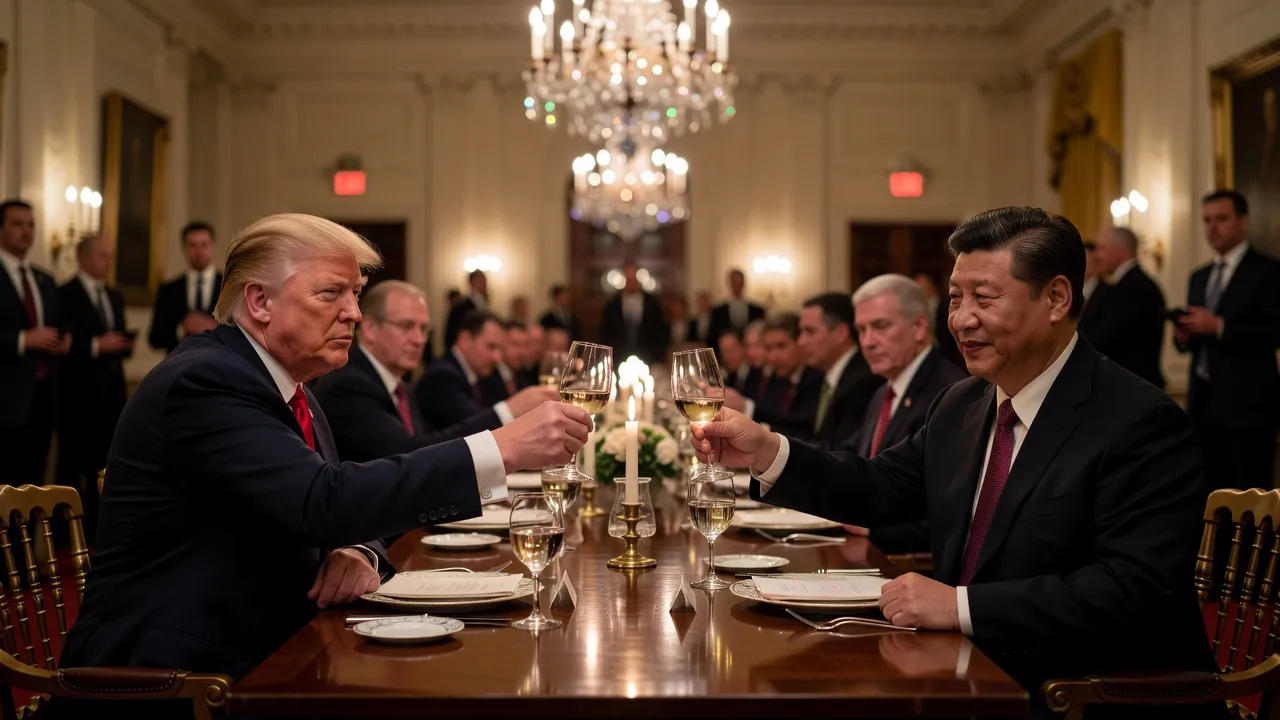
In terms of speeches, Doha notes the contrast between the magnitude of the staging — a state dinner on Thursday evening bringing together tech leaders and billionaires, according to Al Jazeera — and the modesty of the results. Trump boasted of a friendship "never as good," while Xi, quoted by the Xinhua agency, pleaded for a status of "partners and not rivals." Analysts cited by Gulf Times estimate that the primary goal of this splendor remains to maintain a fragile calm between the two powers, rather than to resolve their fundamental disagreements.
This state visit, Xi's first to Washington in over a decade and his third meeting with Trump since the latter's return to power, took place while expectations of a breakthrough were deemed low by Gulf Times from the outset. Al Jazeera notes that trade, Taiwan, AI, and Iran were all on the official agenda of discussions, without any of these four fault lines being resolved at the end of the closed-door talks on Thursday.