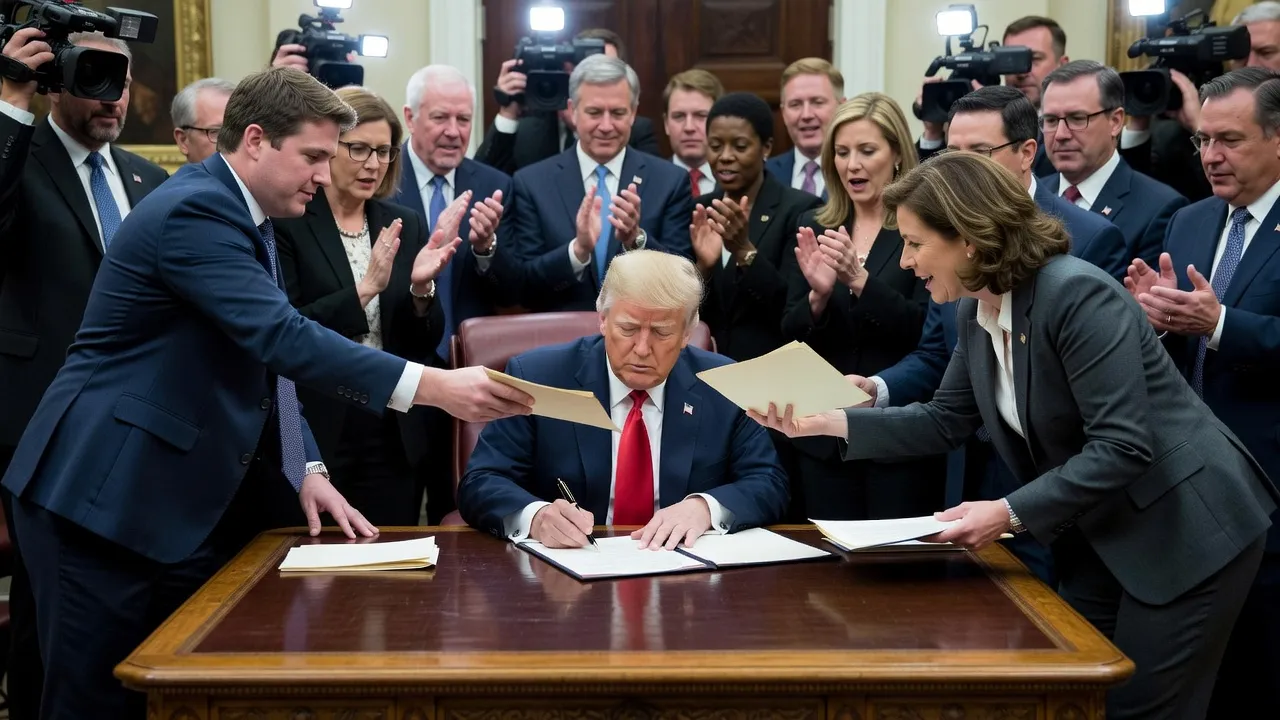
United States: Donald Trump suspends the Russia sanctions passed by Congress
published on
countries
sources
articles
The October 17 and 18 coverage details what the maps do not say: the legal basis for the exemption, Congress's reaction, the Russian diesel schedule, and the positions of Kiev, Moscow, Brussels, and New Delhi.
The sanctions of the Graham law are suspended by decree; those already in force remain applicable and the law remains in force.
An exemption provided for by law
The ANSA agency specifies the legal basis for the decree. The decree, titled "Implementation of the Lindsey O. Graham Sanctioning Russia and Iran Act of 2026", is based on section 115 of the law. This clause allows the president to suspend the measures provided a certification is transmitted to Congress, accompanied by an explanatory report. Ukrinform adds that section 115 allows for this exemption, but not the lifting of sanctions already announced.
« I exempt the application of such sanctions, restrictions, and customs duties as provided in the Graham Act »
According to CNBC, the text also provided for customs duties of up to 500% on Russian products. The BBC writes that it is named after Republican Senator Lindsey Graham, who died on July 11. Le Monde, cited in the French perspective, describes it as the first major action by Congress against Moscow since Donald Trump's return.
In terms of duration, TASS indicates that the decree does not set a time limit. The Mexican press (El Siglo de Torreón) writes that the exemption is valid until a decision by Trump or the Secretary of State, in consultation with the Treasury. Ukrainska Pravda notes that the decree formally establishes the duties while suspending their application.
Regarding the motives, Tagesschau writes that the White House has not specified how the measure serves the national interest, and SRF reports on a suspension decided without justification. The ANSA agency, on the other hand, indicates that several US agencies will monitor Russian oil purchases and circumventions, and that the president retains the power to revoke the exemptions.
Congress and the electoral deadline
The American press also reports the reaction of Don Beyer, a Democrat, who denounces a "surrender" to Vladimir Putin. Estadão quotes Senator Richard Blumenthal, who believes the decision favors the Russian president. RT mentions a bill by Representative Gregory Meeks aimed at blocking the diesel agreement.
« The President is prolonging the war, not ending it »
The BBC writes that on Thursday, October 15, twenty elected officials from both parties had written to Trump to demand a "full and faithful" application of the text. Nigerian Eye indicates that twelve senators, including six Republicans, are asking Trump to abandon the Russian diesel agreement.
Axios writes that these criticisms place Republican candidates at the end of the campaign in the need to defend the president's relationship with Moscow. Clarín recalls that Trump's popularity ratings are close to their lowest. The Sydney Morning Herald and CBC cite an AP-NORC poll from October 1: Americans disapprove of his handling of the war against Iran and blame him for the price increase.
Diesel, prices and crude oil buyers
In this corpus of 26 countries, 18 presses explain the decree by the fuel prices and the midterm elections. This count measures what the editorial offices retained to cover the event. It says nothing about the opinion of their readers, nor the accuracy of this explanation.
« Washington can restore the tariffs anytime »
The diesel agreement announced the previous week provides for 300,000 tonnes immediately, 500,000 in November, then one million, according to CNBC and ElDiario.es. CNBC writes that Washington has suspended until April 2027 the sanctions on Russian diesel exports. Al Jazeera gives the same deadline. La Tribune notes diesel above $6 per gallon in some states.
On the role of Ukrainian strikes against Russian refineries, NBC and Time report that Trump blames them on Kiev. Time notes that the war in Iran weighs more heavily on prices. SRF judges Trump's argument "absurd". RT, citing the American press, writes that Trump eased sanctions after Zelensky's refusal to stop these strikes.
On the buyers' side, The Hindu Business Line cites Kpler, which anticipates 1.8 to 1.9 million barrels per day imported by India in October, far from the peaks in June (2.6 million) and July (2.57 million). The newspaper indicates that Russian oil accounted for 2% or less of Indian imports before February 2022, then 40 to 50% at certain times. Swarajya notes that Marco Rubio is expected in India, with interviews scheduled in Mumbai on October 20.
Kyiv, Moscow and the Europeans
On Saturday, October 17, Zelensky deemed the "diesel deal" the "first step," according to Kyiv Post and Ukrainska Pravda. The Independent, CBC, and PerthNow note that he avoids directly criticizing Trump and calls on his supporters to defend the law, which can still be useful in his view.
« feels joy, happiness »
In Moscow, TASS quotes Kirill Dmitriev, who says the law could have interrupted all Russian-American economic cooperation. HuffPost España, citing Reuters, adds that Moscow sees an opening in energy, technology, and infrastructure. Tagesschau recalls that Dmitriev is the Kremlin's negotiator opposite Steve Witkoff and Jared Kushner. ARY News, according to AFP, specifies that the Kremlin and Vladimir Putin had not yet reacted at the time of the dispatch.
SAPO Notícias reports that the European Commission states that the sanctions weigh on the Russian economy and is preparing a 22nd package. Ursula von der Leyen repeats that they will not be lifted as long as the war lasts. Al Jazeera raises the question of European purchases of Russian gas and writes that Trump accuses Europeans of "hypocrisy".
In Brussels, Zelensky requested additional funding, and the coverage retains different amounts. The French press mentions 70 billion euros, La Libre and Le Temps 70 billion dollars, Malay Mail and Channel News Asia nearly 80 billion dollars for next year. The FAZ reports that von der Leyen confirms a need for 70 billion euros for Ukraine in 2027.
The Senate adopted it by 86 votes to 11 and the House by 262 to 159.
Republican lawmakers Thom Tillis, John Cornyn, and Don Bacon criticize the decree.
The midterm elections are taking place on November 3, three weeks after the decree.
Key figures
- 332 dronesRussian drones and 4 cruise missiles on more than 15 Ukrainian energy sites1 source · ABC News
- 1.82 million barrels/dayRussian crude imported by India in September, versus 1.49 million for China1 source · The Hindu Business Line
What the comparison reveals
Common ground and differences in coverage across the media analysed.
What the media report in common
Donald Trump signed a decree on Friday, October 16, suspending most of the sanctions and customs duties provided for by the Graham law against Russia, two days before they were due to come into effect on Sunday, October 18.
The suspended law had been enacted by Donald Trump himself the previous month, in mid-September, after its adoption by Congress.
The decision comes one week after the agreement on the purchase of Russian diesel announced by Donald Trump.
Where media coverage diverges
Reason for the suspension
Question: why is Donald Trump suspending the law? Some sources cite the 'national interest' and the drop in fuel prices before the midterms; others see a rapprochement with Moscow, a change of camp by Washington, or a reward for Vladimir Putin.
Coverage aligned with this reading
Durability of the measure
Question: is the suspension durable? The Indian press relays the think tank GTRI, which states that Washington can restore the rights at any time, and the Italian press notes that Washington retains the ability to revoke the exemptions; TASS describes an exemption without a time limit and Zelensky estimates that the lifting of sanctions will continue.
Reason given by the Russian side
Question: what led to the measure? RT, citing the American press, mentions Zelensky's refusal to stop strikes on Russian energy facilities; SRF considers the American argument about refineries 'absurd' and Kiev sees it as a green light for strikes on its power grid.
Coverage aligned with this reading
Coverage that diverges
This grouping describes the publications analysed, not the position of these countries’ populations or of their governments.
Blind spots
What the coverage of each country leaves aside, while others put it forward.
 India
India- Zelensky's reaction and the Russian strike on the Ukrainian power grid
- criticisms from US lawmakers
 Mexico
- Kiev's reaction
- Dmitriev's reaction
Understand the context
- SEP 18, 2026Promulgation of the Graham law on sanctions against Russia
- OCT 16, 2026Decree suspending sanctions and customs duties of the law
- OCT 18, 2026Scheduled date of entry into force of the measures
How each country reads it
Preview: 3 of 26 media perspectives. Syntheses of the media analysed — not direct quotations. Method & limitations
 Bangladesh
Dhaka is mainly gauging the energy and electoral stakes of Trump's waiver: oil prices ahead of the midterm elections, concerns from India and China, while Kiev denounces a green light for strikes.
2 sources · View sources
 Argentina
Buenos Aires sees the suspension of sanctions as an electoral calculation by Donald Trump, three weeks before the midterm elections, which offends both Kiev and Congress.
3 sources · View sources
 Australia
Canberra is gauging Donald Trump's about-face in light of his domestic political fragility: a president who suspends the Graham law he signed, just three weeks before the midterm elections.
3 sources · View sources
The full text, country by country
Bangladesh
DOMINANT ANGLE
Dhaka is mainly gauging the energy and electoral stakes of Trump's waiver: oil prices ahead of the midterm elections, concerns from India and China, while Kiev denounces a green light for strikes.
KEY POINTS
- The decree published on Friday cites national interest to suspend sanctions and customs duties under the law signed last month (Daily Star, TBS).
- The law provided for duties of up to 100% on products from the five largest Russian oil or gas importers (TBS, Daily Star).
- Zelensky denounces a "sanctions blackout" and claims that more than 15 Ukrainian power sites were hit on Friday (Daily Star).
ANALYSIS
Dacca, October 17, 2026. The English-language dailies The Daily Star and TBS report on Donald Trump's decision to lift, through a decree published by the White House on Friday, October 16, the majority of sanctions and customs duties that a law he had signed last month had envisioned against Russia. The text, introduced to Congress by the late Senator Lindsey Graham, was to impose duties of up to 100% on products imported to the United States from the five largest buyers of Russian oil or gas, as well as on any country knowingly purchasing these hydrocarbons.
The Bangladeshi press reiterates the presidential justification: the decree asserts that the waiver is in the national interest of the United States. The Daily Star quotes the phrase from the text: "I am hereby waiving the application of such sanctions, restrictions, and duties provided for in the Graham Act." It recalls that the law also targeted Russian energy and defense sectors, Vladimir Putin, and high-ranking officials, as well as the "ghost fleet" of oil tankers used to circumvent Western sanctions.
The perspective is largely economic. TBS emphasizes that these measures could have driven up oil prices just weeks before the midterm elections, while Americans are already experiencing increased costs, largely attributed to the American-Israeli war against Iran, according to analysts. The media outlet also notes that India and China had expressed concerns about the proposed law, which indirectly relates the subject to Asian energy importers.
The Ukrainian aspect is treated as a reaction. Volodymyr Zelensky condemns on X a "blackout of sanctions" that alleviates pressure on the aggressor and encourages Vladimir Putin to continue his attacks; he asserts that Russia struck more than 15 Ukrainian electricity production and transmission sites on Friday. The Daily Star also situates the decree after the controversial agreement allowing Russian diesel exports in exchange for eased sanctions, which Kiev had described as a "weak decision," and notes that Ukrainian forces have resumed their strikes on Russian refineries.
The two newspapers finally observe that Donald Trump is drawing closer to Moscow while publicly criticizing the Ukrainian president, even suggesting that Kiev might need a new leader.
Argentina
DOMINANT ANGLE
Buenos Aires sees the suspension of sanctions as an electoral calculation by Donald Trump, three weeks before the midterm elections, which offends both Kiev and Congress.
KEY POINTS
- Donald Trump signed a decree on Friday, October 16, suspending the package of sanctions, two days before the deadline set by the law he promulgated last month (Clarín, La Nación).
- The package provided for sanctions against Russian officials, banks, and a fleet of oil tankers, as well as customs duties of up to 100% on the five main buyers of Russian oil and gas, including China and India (La Nación, Ámbito).
- The decision comes a week after the agreement to purchase Russian diesel and precedes the midterm elections on November 3, in a context of presidential popularity near its lows (Clarín, La Nación).
ANALYSIS
Buenos Aires, October 17, 2026. The three Argentine dailies, Clarín, La Nación, and Ámbito, report the same scene: Donald Trump signed a decree on Friday, October 16, putting on hold a vast package of sanctions against the Russian economy, citing "national interest" before Congress. Clarín, which reprints an AP agency dispatch, emphasizes that the president himself had promulgated the law last month and is acting barely two days before the deadline set by the text, which bears the name of Senator Lindsey Graham, who died in July.
La Nación headlines with "a new wink to Putin that infuriates Ukraine" and recalls the content of the package: sanctions against Russian officials, banks, and a clandestine fleet of oil tankers. Ámbito adds the threat of customs duties that could reach 100% on imports from the five main buyers of Russian oil and gas, including China and India.
The explanatory thread is primarily electoral. Clarín notes that Trump's popularity ratings are near their lowest, that Americans blame him for the price hike linked to the war against Iran, and that Republicans want to retain control of both chambers in the November 3 election. La Nación links the decree to the agreement, announced a week earlier, to buy Russian diesel to lower energy prices, at the risk of penalizing Ukraine.
The Ukrainian aspect occupies most of Ámbito's coverage: Kiev considers the measure "lamentable" and claims it "eases the pressure on the aggressor". Zelensky regrets that Washington chooses to "completely ignore" the sanctions. The daily recalls that the relationship between Washington and Kiev deteriorated after the diesel agreement, with Ukraine subsequently accusing the Trump administration of withdrawing key military support. La Nación reports Zelensky's phrase about a reward given to the master of the Kremlin.
The reaction of Congress is mentioned in all three texts: Ámbito speaks of a "strong reaction" from American lawmakers, La Nación of criticism from both Ukraine and the Capitol. The angle remains that of a president backtracking on his own signature, rather than the effects on energy markets. None of the articles discuss the consequences for Argentina or Latin America.
Australia
DOMINANT ANGLE
Canberra is gauging Donald Trump's about-face in light of his domestic political fragility: a president who suspends the Graham law he signed, just three weeks before the midterm elections.
KEY POINTS
- On Friday, October 16, Trump signed a decree putting on hold the package of sanctions from the Graham law, which he had enacted the previous month, citing national interest.
- According to the SMH, Trump's rating is close to its historic lows and the Republicans are defending both chambers of Congress on November 3.
- On Saturday, October 17, Zelensky lamented that the Graham law is being ignored after a strike on more than 15 energy sites: four cruise missiles and 332 drones, according to the Ukrainian air force.
ANALYSIS
Canberra, October 18, 2026. The Sydney Morning Herald and The Age, which published the same article, focused on the gesture: on Friday, October 16, Donald Trump signed a decree that put on hold a vast package of sanctions targeting the Russian economy, telling Congress that this pause was in the "national interest". The president had nonetheless promulgated this law "last month", according to the two publications. Named after South Carolina Senator Lindsey Graham, who died in July, it was meant to tighten the financial screws on the resources fueling the war in Ukraine more quickly.
The account emphasized the reversal. After Graham's death, his Congressional colleagues had responded with bipartisan support, and Trump had signed the law before "changing his mind on Friday". The White House did not immediately explain how the pause served the national interest; the decision was published late in the evening on its website, with a note that a justifying report had been submitted to Congress.
The newspapers framed the episode in a sequence. A week earlier, Trump had spectacularly announced that the United States would buy Russian diesel in an attempt to lower global energy prices, at the risk of penalizing Ukraine. He is also increasingly targeting Volodymyr Zelensky, whom he accuses of not reaching an agreement with Vladimir Putin.
The reading is distinctly domestic. The SMH recalled an AP-NORC poll published on October 1: Americans disapprove of Trump's handling of the war in Iran and blame him for the price hike. His rating is close to its historic lows, and Republicans are seeking to retain control of both chambers of Congress in the November 3 election.
PerthNow then gave the floor to Kiev. On Saturday, October 17, Zelensky regretted that a decision had been made in America to "completely ignore" the Graham law, while hoping it could be revived: "This act could greatly help, and still can". Without directly criticizing Trump, he described a massive strike against more than 15 energy sites; the Ukrainian air force reported four cruise missiles and 332 attack drones, with all missiles and 289 drones neutralized. The title highlighted the fear of a Ukraine left exposed as winter approaches.
 Belgium
DOMINANT ANGLE
Brussels is gauging the setback dealt to Ukraine: the French-speaking Belgian press is holding on to an American ally that is turning its back on Kiev and sending the bill to the Europeans.
KEY POINTS
- Donald Trump signed a decree on Friday evening exempting Russia from the sanctions and customs duties of the Graham Act, citing the "national interest of the United States".
- The Graham Act, enacted on September 18, targeted Russia's ghost fleet, Vladimir Putin, and opened up customs duties of up to 100% on the five main Russian energy importers.
- Volodymyr Zelensky says he feels "betrayed" and is asking for an additional $70 billion from European allies.
ANALYSIS
Brussels, October 18, 2026. La Libre Belgique and La DH agree on the facts: on Friday evening, Donald Trump signed a decree suspending the application of a large package of sanctions against Russia, provided for by a law recently adopted by Congress. The text, promulgated on September 18, bears the name of Republican Senator Lindsey Graham, who died in July, "a staunch defender of Ukraine". The decree states: "I exempt the application of such sanctions, restrictions and customs duties provided for in the Graham Act", in the name of "the national interest of the United States".
La Libre emphasizes the symbolic scope of the gesture. The Graham Act was the first major action by Congress against Moscow since Donald Trump's return to power. It targeted the Russian energy sector, aimed at the ghost fleet for the first time, as well as Vladimir Putin and other high-ranking officials. It also allowed for customs duties of up to 100% on the five main importers of Russian gas and oil, including China and India. The newspaper speaks of "a new setback for Ukraine, which fears being abandoned by its American ally".
The Belgian account then sides with Kiev. According to La Libre, Volodymyr Zelensky, "shaken" by the recent announcements favorable to Moscow, did not hide his feeling of being "betrayed" and turned to his European allies, to whom he is demanding an additional $70 billion to cope with the Russian invasion. The financial burden thus falls on Europe, an angle that speaks directly to the Belgian readership.
La DH broadens the reading to American policy. It recalls that the president, whom it describes as "rather conciliatory with the Kremlin", announced a controversial agreement with Moscow for the massive purchase of Russian diesel. The newspaper links this shift to two factors: the midterm elections, which are less than three weeks away and are deemed crucial for the rest of his term, and the desire to relieve American consumers, as fuel prices have soared after the US-Israeli attack on Iran at the end of February.
The two newspapers cite the White House statement as their primary source. Neither develops the reaction of the Kremlin nor the criticism of American parliamentarians; attention is focused on the fate of Ukraine and the expected response from Europeans.
 Brazil
DOMINANT ANGLE
Brasília sees the suspension of sanctions as an arbitration by Trump between oil prices and midterm elections, before viewing it as a blow to Kiev.
KEY POINTS
- The decree signed on Friday, October 16, suspends sanctions and customs duties from the Graham law that were to come into effect the following week, in the name of "national interest" (G1).
- The law provided for 100% duties on products from the five largest buyers of Russian oil, including China and India, and up to 500% on imports from Russia (Veja).
- Kirill Dmitriev, Putin's emissary, hailed a "important and truly historic" moment, while Zelensky believes the measure "only helps the Russians" (Veja, G1).
ANALYSIS
Brasília, October 18, 2026. For the Brazilian press, Donald Trump's decision to suspend the sanctions provided for by the Lindsey Graham law is primarily an economic and electoral calculation. Veja reports that the American president is renouncing commercial sanctions "to prevent an increase in oil prices." The magazine recalls that the text, voted on with the support of Republicans and Democrats, gave Trump thirty days to impose 100% customs duties on products from the five largest buyers of Russian oil, including China and India, and up to 500% on American imports from Russia.
Veja explains that, "with popularity declining fifteen days before the midterm elections," the president fears the impact of these measures on the domestic economy. The magazine specifies that the setback only suspends the application: the mechanism could be reactivated later. It also puts the decision into perspective a week after the American agreement to purchase Russian diesel, with more than 300,000 tonnes delivered immediately, followed by 500,000 in November.
G1 focuses on the procedure. On the night of Friday, October 16, Trump signed a decree invoking "national interest," which provoked hostile reactions from American parliamentarians. According to the text cited by the site, the suspension is valid until Trump or his main collaborators judge that "new measures are appropriate." G1 links the decision to the deterioration of relations between Washington and Kiev, and recalls that Trump said it was "time for Ukraine to have a new president" after Zelensky's criticism of the diesel agreement.
Reactions occupy a large space. On Saturday, October 17, Zelensky wrote on X that the measure "only helps the Russians" and "certainly does not interrupt the war." He stated that Russia had struck more than fifteen Ukrainian energy production and transportation facilities the day before. Estadão emphasizes that the decision revives the fear of an escalation of strikes as winter approaches, and quotes Senator Richard Blumenthal, who believes it favors Putin. On the Russian side, envoy Kirill Dmitriev hailed an "important and truly historic" moment.
The Brazilian press corps is treating the matter primarily as an American and Ukrainian episode. It does not examine its consequences for the countries targeted by the 100% customs duties, nor for Brazil itself.
 Canada
DOMINANT ANGLE
Ottawa is gauging Donald Trump's reversal in light of his political weakening: a president who suspends the law he signed a month earlier, just three weeks before the midterm elections.
KEY POINTS
- On Friday, October 16, Trump signed a decree putting on hold the package of sanctions against Russia, two days before the deadline set by the law he had signed himself the previous month (CBC, Global News).
- The reversal comes a week after the announcement of a purchase of Russian diesel, as Trump's ratings are near historic lows ahead of the November 3 election (CBC).
- On Saturday, October 17, Zelensky called for defending the Graham law, without directly criticizing Trump, and reported a massive Russian strike against more than 15 energy sites (CBC).
ANALYSIS
Ottawa, October 18, 2026. Canada's major media outlets are treating the suspension of sanctions against Russia as a U-turn by the US president, largely based on dispatches from the Associated Press reproduced by CBC, Global News, and the Globe and Mail.
On Friday, October 16, Donald Trump signed a decree that puts on hold a "vast package of sanctions" targeting the Russian economy, informing Congress that this pause was in the national interest. CBC notes that the White House did not immediately explain this justification. The text, which bears the name of Senator Lindsey Graham, who died in July, had been promulgated by Trump himself last month; the suspension comes two days before the deadline set by law for its implementation. The media recall that Graham, a close ally of the president, had returned from Ukraine at the time of his death, and that his colleagues had voted on the text in a bipartisan manner in his memory. Global News notes that Trump "changed his mind" on Friday and that the decision has sparked condemnation from Democratic members of Congress.
The Canadian narrative immediately situates the decision in the context of US domestic politics. The articles recall that Trump announced a week earlier the purchase of Russian diesel to lower energy prices, that an AP-NORC poll on October 1 shows Americans disapproving of his handling of the war against Iran and blaming him for the price hike, and that his popularity ratings are near historic lows, as Republicans try to retain control of both chambers in the November 3 election.
The second part, published on Saturday, October 17, gives the floor to Volodymyr Zelensky. He regrets that a decision was made "to disregard" the Graham law, thanks Democrats and Republicans who supported it, and urges his supporters to defend it: "This law could have helped a lot, and still can." However, he avoids directly criticizing Trump. CBC relays his assessment of a massive strike against more than fifteen energy sites, with four cruise missiles and 332 attack drones launched overnight, including all missiles and 289 drones neutralized according to the Ukrainian air force. The articles evoke fears of a Ukraine exposed to the approach of winter.
The coverage remains factual and little editorialized: it quotes few Canadian experts and does not develop either the position of Ottawa or the consequences for customers of Russian oil and gas.
 Switzerland
DOMINANT ANGLE
Berne cuts sharply: the Swiss press sees this as a Washington turn towards Moscow, which leaves Kiev feeling betrayed and isolated as the US midterm elections approach.
KEY POINTS
- The decree exempts the application of sanctions and customs duties under the Graham Act in the name of the "national interest of the United States", according to Le Temps.
- The law allowed for customs duties of up to 100 % on the five main importers of Russian gas and oil, including China and India.
- Volodymyr Zelensky says he feels betrayed and is demanding an additional $70 billion from European allies.
ANALYSIS
Berne, October 18, 2026. For the Swiss press, the decree signed on Friday by Donald Trump is not just a technical adjustment, but a change of course towards Moscow. The Times reports that the American president "exempts the application of such sanctions, restrictions, and customs duties provided for in the Graham Act", citing "the national interest of the United States". The Romandy daily emphasizes the symbolic scope of the text: the first major action by Congress against Moscow since Donald Trump's return to power, promulgated in mid-September by the Republican himself.
The Times details what the law provided for: an arsenal targeting the Russian energy sector, the ghost fleet, President Vladimir Putin, and other high-ranking officials, as well as the possibility of customs duties of up to 100% on the five main importers of Russian gas and oil, including China and India. The law is named after Republican Senator Lindsey Graham, who died in July, and is described by the newspaper as a fierce defender of Ukraine.
On the Ukrainian side, the daily notes that Volodymyr Zelensky "did not hide his feeling of betrayal" and turned to the Europeans, demanding an additional $70 billion to cope with the invasion. The newspaper also mentions shortages of interceptor missiles.
The German-speaking television SRF emphasizes the lack of justification: Donald Trump only said "at this point in the national interest of the USA", without explaining either the interest or the chosen moment. SRF places the decree in a series of gestures over the course of a week: the agreement on Russian diesel, the limitation of Ukrainian use of Starlink, and the public denial of Russian support for Iran. According to the media outlet, the decree also avoids exerting new pressure on China and India, major buyers of Russian oil.
SRF finally puts the decision into the context of American domestic politics: inflation fueled, according to him, by the war in Iran, just a few weeks before the midterm elections. It reports on a question from a Sky News journalist to Volodymyr Zelensky, on the sidelines of the EU summit in Brussels, about the risk of being used as a scapegoat. The Ukrainian president simply smiled.
 Germany
DOMINANT ANGLE
Berlin sees in this decree a new step by Washington towards Moscow, to the detriment of Kiev, as winter approaches.
KEY POINTS
- Trump suspended by decree on Friday the customs duties and sanctions of the law signed in mid-September, citing the "national interest" of the United States; the law allows him to do so by informing Congress (Handelsblatt).
- Kirill Dmitriev, Putin's economic emissary, described the suspension as a "momentous and truly historic moment" (Tagesschau).
- Zelensky warned that Russia is seeking to provoke a blackout before winter, with more than 15 power facilities having been attacked the day before (Tagesschau).
ANALYSIS
Berlin, October 17, 2026. The German press reports on the decree published on Friday (local time) by Donald Trump, which puts "on ice" the customs duties and sanctions provided for by the law promulgated in mid-September. According to the Handelsblatt, the text allows the president to suspend these measures by informing Congress; the suspension will last until Trump or high-ranking officials deem other steps appropriate. The FAZ notes that Trump acted shortly before the end of the 30-day deadline set by Congress, which wanted to increase pressure on the Kremlin.
The Tagesschau emphasizes the justification: the measure would be "in the national interest" of the United States at present, but the White House has not specified what this means. Moscow is pleased: Kirill Dmitriev, Vladimir Putin's economic envoy, speaks of a "truly important and historic moment." He is also, the channel recalls, the Kremlin's negotiator with Steve Witkoff and Jared Kushner.
The dominant angle is one of rapprochement. Under the title "How Trump is getting closer to Putin," the Tagesschau mentions the agreement on Russian diesel concluded a few days earlier, still reserved support for Ukraine, and writes: "Trump has changed sides." It also quotes Trump reproaching Zelensky for striking refineries and driving up the price of oil, and notes that Democrats and some Republicans are defending Kiev, while figures from the MAGA movement are pro-Russian.
The Ukrainian viewpoint occupies a large space. Zelensky, on Telegram, believes that easing pressure and offering financial rewards is only an encouragement for Putin to strike harder. He recalls that the decision comes on the heels of one of the most massive strikes against Ukraine's energy sector, with over 15 facilities hit and hundreds of thousands of people without electricity or heating: "Russia is trying to provoke a blackout before winter." The package of sanctions "could have helped a lot," and could still if Washington reinstated it.
The Handelsblatt adds an economic and electoral reading: according to analysts, the sanctions could have driven up oil prices even further, while Americans are suffering from increased costs due to the war against Iran launched by the United States and Israel, and Republicans are under pressure ahead of the legislative elections. The FAZ recalls in its live blog that Von der Leyen confirms a need for an additional 70 billion euros for Ukraine in 2027.
 Spain
Spain
DOMINANT ANGLE
Madrid sees the suspension as a calculation of domestic politics: three weeks before the legislative elections, Donald Trump is draining of its substance a law of Congress that he himself had enacted, after the diesel pact with Putin.
KEY POINTS
- On Friday, Trump signed a decree suspending the package of sanctions adopted by Congress on September 18, citing "national interest" (ElDiario.es).
- Trump announced an agreement with Putin on more than 300,000 tonnes of Russian diesel, then 500,000 tonnes in November and 1 million afterwards (ElDiario.es).
- Kirill Dmitriev, Putin's emissary, describes the decision as "historic" and sees it as an opportunity to save economic cooperation (HuffPost España, according to Reuters).
ANALYSIS
Madrid, October 17, 2026. For the Spanish press, the episode is first and foremost a gesture of American domestic politics. ElDiario.es reports that Donald Trump is suspending sanctions against Russia "just three weeks before the legislative elections and after the diesel pact with Putin".
According to the daily, Congress had adopted the package, dubbed the Lindsey Graham package, named after the recently deceased parliamentarian, with a large bipartisan majority in the House and Senate on September 18. "In less than a month, Donald Trump has left it on the back burner," ElDiario.es writes. On Friday, the president signed a decree and communicated to Congress a certification that the exemption "is in the national interest of the United States".
The newspaper emphasizes the oil context: the previous week, Trump announced on Truth Social an agreement with Vladimir Putin for the delivery of over 300,000 tonnes of diesel, then 500,000 tonnes in November and one million "immediately after", with the hope of lowering American pump prices. The administration, it notes, had remained almost silent since the vote, while lawmakers had been urged to act by Volodymyr Zelensky.
HuffPost España, citing Reuters, highlights Moscow's reaction. Kirill Dmitriev, Vladimir Putin's economic envoy, considers the decision "historic" and claims it can preserve Russian-American economic cooperation. Moscow sees an opening in energy, technology, and infrastructure; Dmitriev had mentioned the day before joint projects, including data centers powered by nuclear energy.
The media outlet specifies that the package included new restrictions on the Russian energy sector and customs duties of up to 100% for countries continuing to buy Russian oil and gas. The suspension will last "until further notice", in the name of "national interest". HuffPost España recalls that the diesel agreement had already sparked criticism in Kiev and among several European allies, and that Zelensky had reacted by criticizing the suspension.
The Spanish framing thus remains focused on Washington: the timeline (vote, diesel pact, decree), the electoral deadline, and the price of gasoline, rather than on the military effects in Ukraine.
 France
DOMINANT ANGLE
Paris sees the suspension of the Graham law as a new step in the rapprochement between Washington and Moscow, leaving Kiev feeling "betrayed" at a time when Europe is being asked for 70 billion.
KEY POINTS
- The decree published on Friday, October 16, suspends the sanctions and customs duties of the Graham Act, which provided for up to 100% on the first five buyers of Russian oil and gas (BFMTV, Sud Ouest).
- Kirill Dmitriev welcomes a "truly historic" decision, while Zelensky denounces a "sanctions blackout" that encourages Putin to continue his attacks (RFI, HuffPost).
- Republicans like Thom Tillis criticize the measure, deemed "completely irresponsible" (Le Monde).
ANALYSIS
Paris, October 18, 2026. For the French press, the decree published on Friday, October 16, in the evening by the White House is first and foremost a gesture of rapprochement with Moscow. Donald Trump writes: "I exempt the application of such sanctions, restrictions, and customs duties provided for in the Graham Act," citing "the national interest of the United States." BFMTV and HuffPost speak of a "new slap in the face" for Ukraine, which Le Monde recalls is the first major action by Congress against Moscow since the return of the American president.
The text, promulgated in mid-September, was due to come into effect this weekend. It authorized customs duties of up to 100% on the five main buyers of Russian oil and gas, including China and India, and targeted the ghost fleet for the first time, according to BFMTV, Sud Ouest, and L'Express. According to L'Express, the suspension will last as long as the president or high officials do not consider that "additional action is appropriate."
La Tribune proposes an electoral reading: a few weeks before the midterm elections, with diesel fuel above $6 per gallon in some states, the White House hopes that an influx of Russian fuel will cause prices to drop. RFI recalls the agreement on Russian diesel, which provides for nearly two million tons to be supplied in the first phase.
On the Russian side, Kirill Dmitriev, a Kremlin advisor, hailed a "truly important and historic moment." On the Ukrainian side, Volodymyr Zelensky speaks of a "blackout of sanctions": "all this only encourages them to continue attacking," he declared on Saturday, October 17. He emphasized that the decision came on the day of one of the largest attacks on the energy network, with 332 drones and several missiles during the night, according to the Ukrainian air force cited by Le Monde.
Le Monde also notes that Republicans are criticizing the decision, such as Senator Thom Tillis, who considers it "completely irresponsible." Libération points out that the law was named after the late "anti-Russian" Senator Lindsey Graham. At the Brussels summit, Zelensky asked Europeans for an additional 70 billion euros, with the European Council instructing the Commission to prepare proposals, while Robert Fico ruled out Slovakia's participation.
 Hungary
DOMINANT ANGLE
Budapest is breaking down the suspension of sanctions from the perspective of energy prices and the US midterm elections, relaying Kiev's anger without making it the focus of the story.
KEY POINTS
- Trump suspended by decree, according to the AP via Telex, the package of sanctions he had signed a month earlier, citing the national interest of the United States; it was set to take effect on October 18.
- The law allowed for up to 100% tariffs on imports from the five largest buyers of Russian oil and gas; Reuters, cited by Index, mentions the risk of a fuel price hike ahead of the midterm elections.
- Zelensky denounces a "sanctions blackout" following a Russian strike targeting more than 15 Ukrainian power facilities, according to 444.
ANALYSIS
Budapest, October 18, 2026. Hungarian media are treating Donald Trump's decision as a matter of energy and electoral calendar as much as war. Telex, quoting the AP agency, writes that the American president suspended by decree, two days before the deadline, the vast package of sanctions against Russia that he had himself signed a month earlier. In his communication to Congress, Trump advances only one justification: the measure serves the interest of the United States. Telex notes that the White House did not provide a detailed explanation.
The text, which bears the name of Republican Senator Lindsey Graham, who died in July, targeted Russia's energy, defense industry, and "ghost fleet". Index and 444, which quote the MTI agency's dispatch, specify that it authorized customs duties of up to 100% on imports from the five largest buyers of Russian oil and gas, as well as the five countries that most help circumvent sanctions. The text was to come into effect on October 18. According to the decree, the exemption remains valid as long as Trump or his senior officials do not judge that "other measures are necessary".
The economic reading dominates. Telex and Index quote analysts, Reuters for the latter: these measures could have further increased oil and fuel prices a few weeks before the midterm elections, where Republicans are defending their narrow majority in both chambers. Telex adds that Americans are already suffering from increased costs, largely due to the war between the United States and Israel against Iran. The three sites recall that China and India, major buyers of Russian crude, had criticized the project, and that Trump had announced the previous week that Russia could supply hundreds of thousands of tons of diesel to the global market to reduce prices.
The reaction from Kiev comes second. 444 reports that Volodymyr Zelensky speaks of a "sanctions blackout" and asserts that the easing and Vladimir Putin's financial gains only encourage him to continue his attacks. He mentions one of the strongest strikes of the previous day against Ukraine's energy sector, with more than 15 electricity production and transportation facilities targeted. He estimates, however, that the Graham law can still weigh on Moscow, and he calls for counting every vote in its favor in Congress. The Hungarian articles in the corpus do not quote the Kremlin's reaction.
 Romania
DOMINANT ANGLE
Bucharest denounces a new concession from Washington to Moscow: the Romanian press notes the Kremlin hailing a "historic" moment while the relationship with Kiev deteriorates.
KEY POINTS
- Trump invoked Section 115 of the Graham Act, enacted on September 18, to suspend sanctions and customs duties before their application on Sunday, October 18 (Mediafax).
- The law passed the Senate by 86 votes to 11 and the House by 262 to 159 (Mediafax).
- Kirill Dmitriev described the suspension as an "important and truly historic" moment on Telegram (Digi24, citing TASS).
ANALYSIS
Bucharest, October 17, 2026. The Romanian press presents Donald Trump's decision as a new concession to Moscow. G4Media headlines with "o nouă concesie pentru Putin": on Friday, the American president signed a decree suspending the new package of sanctions against Russian officials, banks, and the "ghost fleet" of oil tankers, two days before the law was set to come into effect.
Digi24 highlights the paradox: Trump had himself promulgated the text last month, then "changed his mind on Friday". Mediafax specifies that the Lindsey Graham law, promulgated on September 18, was due to come into effect this Sunday, October 18. Trump invokes section 115, which authorizes suspension if the administration certifies that the national interest of the United States requires it. The certification was sent to Congress, but the order does not publicly explain the reasons. The text had passed the Senate by 86 votes to 11 and the House by 262 to 159.
The media detail what is being suspended: a 500% surtax on goods imported from Russia, 100% duties on the five largest buyers of Russian oil and gas, and on the five countries helping Moscow to circumvent sanctions. Mediafax notes that major clients, probably including China and India, are currently escaping these penalties, while the sanctions already imposed by other decrees remain in effect.
The context is being read through the American-Russian relationship. Digi24 recalls that the decision comes a week after the announcement of the purchase of Russian diesel to try to reduce global energy prices, despite the possible impact on Ukraine. Mediafax adds that Moscow has committed to delivering over 300,000 tonnes immediately, then 500,000 in November.
The Russian reaction occupies an entire article in Digi24. Kirill Dmitriev, Vladimir Putin's economic emissary, welcomes on Telegram a "truly important and historic moment": "instead of sanctions and confrontation, we have dialogue". The same text mentions the growing tensions between Trump and Volodymyr Zelensky and cracks in Washington's support for Kiev, which increases the concern of European allies.
G4Media recalls that Trump recently publicly criticized Zelensky, suggesting that Ukraine would need a new leader. Digi24 notes that the measure has sparked condemnation from Democrats in Congress.
India
DOMINANT ANGLE
New Delhi is measuring what the suspension changes for its refineries: a tariff reprieve deemed reversible, which leaves its Russian crude purchases intact.
KEY POINTS
- Trump signed a decree on Friday suspending rights of up to 100% and sanctions under the Graham law, one day before the 30-day deadline (Hindu Business Line, Swarajya).
- India imported around 1.82 million barrels/day of Russian crude in September, compared to 1.49 million for China; Kpler forecasts 1.8 to 1.9 million in October.
- The GTRI views the reprieve as temporary: "Washington can restore the tariffs anytime", and the law remains in effect.
ANALYSIS
New Delhi, October 17, 2026. The Indian press is treating the suspension of sanctions by Donald Trump as a matter that is first and foremost energetic and commercial. According to The Hindu Business Line, the American president signed a decree on Friday lifting "sanctions, restrictions, and duties" provided for by the Lindsey O. Graham law on Russia and Iran, one day before the expiration of the 30-day deadline, the law having been promulgated on September 18. The text authorized customs duties of up to 100% on products from the five main importers of Russian crude and gas, as well as sanctions against the ghost fleet of oil tankers.
Swarajya specifies that the decree first implements these measures and then suspends them immediately, via its section 4, and that Trump invoked the national interest of the United States before Congress. The newspaper notes that the decision comes as Secretary of State Marco Rubio is expected in India, with interviews scheduled in Mumbai on October 20, and about a week after the announcement of an American purchase of Russian diesel.
Figures dominate the coverage. India is the leading buyer of Russian crude transported by sea, with an average of 1.8 million barrels per day this year, ahead of China (1.2 million). In September, it took approximately 1.82 million, compared to 1.49 million for China; Kpler anticipates 1.8 to 1.9 million in October, well below the peaks of June (2.6 million) and July (2.57 million). Before February 2022, Russian oil accounted for 2% or less of Indian imports; it has reached 40 to 50% at times, driven by discounts. Analysts believe that refiners will continue to buy.
The think tank GTRI tempers this: this reprieve is "temporary", reversible, and Washington "can restore duties at any time". Its founder, Ajay Srivastava, advises New Delhi to protect its energy security, buy at commercial conditions, and prepare for new pressures, as a provisional easing does not justify permanent trade concessions. He notes that the American-Russian agreement of October 9 on diesel made it difficult to sanction other buyers, and that China already benefited from protection until January 10, proof, according to him, that American interests decide the timing of penalties.
The articles provided do not report the reaction of Kiev or that of the Kremlin.
 Italy
Italy
DOMINANT ANGLE
Rome sees the suspension of sanctions under the Graham law as an arbitration by Donald Trump on the price of diesel before the November 3 midterm elections.
KEY POINTS
- By decree, Trump suspends sanctions and customs duties under the Graham law on Russian exports, just days before they were set to take effect (ANSA).
- ANSA links the decision to the goal of reducing diesel prices ahead of the November 3 midterm elections; pre-existing sanctions remain in effect.
- Washington says it is monitoring Russian oil purchases and workarounds, and retains the ability to revoke the exemptions (ANSA).
ANALYSIS
Rome, October 17, 2026. The Italian government notes that President Donald Trump has signed an executive order suspending significant sanctions and customs duties targeting Russian exports, as provided for by the "Lindsey Graham Act", just a few days before its entry into force.
The Italian reading is first and foremost economic and electoral. According to reports, the application of these measures "would have complicated efforts to reduce diesel prices ahead of the November 3 midterm elections". The suspended text is the law that Trump himself had promulgated the previous month, using a clause of exemption that it provides.
The Italian government details the mechanism: the exemptions are justified by national interest, exempt Russian goods from customs duties, and suspend sanctions against individuals and entities, while pre-existing sanctions remain in effect. The decree, entitled "Implementation of the Lindsey O. Graham Sanctioning Russia and Iran Act of 2026", relies on section 115 of the law, which authorizes the president to suspend these measures provided that a certification is transmitted to Congress, accompanied by an explanatory report. Trump declares that the exemption is, "at this time", in the national interest of the United States.
The Italian government specifies that several American agencies will monitor Russian oil purchases and attempts to circumvent them, and that the president retains the power to revoke the exemptions if necessary. It also recalls that the law was wanted by Republican Senator Lindsey Graham, who died in July, shortly after a return from Kiev, to punish Russia after the invasion of Ukraine.
The Italian news feed places this information in the midst of a stream of war news: new Russian nighttime air attack, air raid alerts in Kiev and several regions, threat of ballistic missiles on Kryvyi Rih, Zaporizhzhia, and the Dnipro area, 11-year-old girl injured during a raid in Kherson, citing Kyiv Post and Ukrinform. The same feed relays a telephone interview between Pope Leo and Vladimir Putin, mentioned by the Vatican press office: the pontiff expressed his deep concern for the humanitarian situation in Oleshky, in the Kherson region, and called for a ceasefire to deliver aid and evacuate civilians.
In the available excerpts, the Italian coverage remains factual and little editorialized: it exposes the legal procedure and price calculation, without taking up in these passages the reactions of the Kremlin or Kiev.
Mexico
DOMINANT ANGLE
Mexico City sees the suspension of sanctions against Russia as a pricing maneuver: Donald Trump is seeking to lower diesel prices before the midterm elections.
KEY POINTS
- According to El Financiero, Trump exempted tariffs on Russian energy exports because they complicated his diesel initiative before the November 3 elections.
- The law gave 30 days, until October 18, to impose 100% tariffs on the top five buyers of Russian crude and 500% on Russian energy products.
- According to El Siglo de Torreón, the decision does not eliminate the sanctions already imposed on Russia by previous executive orders.
ANALYSIS
Mexico, October 17, 2026. The Mexican press is treating the suspension of sanctions against Russia primarily as an energy price issue. El Financiero headlines that "Trump is in a hurry to lower diesel prices": the president has exempted massive Russian energy exports from tariffs, as provided for by a law he signed last month, because these measures complicated his initiative to reduce diesel prices before the midterm elections. The newspaper recalls that fuel prices remain at historic highs just a few weeks before the November 3 election.
The newspaper quotes the formula of the executive order published on Friday evening: "I exempt from the application of sanctions, restrictions, and obligations provided for by the Graham law," with a certification addressed to Congress stating that the exemption "is in the national interest" of the United States. El Financiero specifies that the directive formally imposes tariffs but suspends their application, so that Trump could activate them later.
The newspaper details what the law provided for: thirty days to impose 100% tariffs on all products from the five main buyers of Russian crude, sanctions against many Russian entities, and 500% tariffs on American imports of Russian energy products. The deadline expired on October 18. These provisions conflicted with the plan, announced the previous week, to collaborate with Vladimir Putin to release diesel reserves on global markets.
El Siglo de Torreón emphasizes the legal scope: the law, promulgated on September 18 and bearing the name of the late Republican Senator Lindsey Graham, aimed to toughen sanctions and limit the resources that support the war against Ukraine. The order suspends for the time being the sanctions against individuals and entities linked to the Russian government, financial and trade restrictions, and tariffs, but does not cancel the sanctions already imposed by previous executive orders. The exemption will last until Trump or the Secretary of State decides, in consultation with the Treasury.
Reforma and El Norte, via a news agency dispatch, summarize the decision in one sentence: Trump "has put the brakes on" the sanctions approved by Congress, claiming that the exemption is in the national interest. Congress appears in these texts as the author of the law, without any reported reaction from lawmakers or from Kiev or Moscow.
 Malaysia
DOMINANT ANGLE
Kuala Lumpur sees the suspension of sanctions as a rift between Washington and Kiev, while Europe closes ranks behind Volodymyr Zelensky.
KEY POINTS
- Donald Trump signed a decree on Friday, October 16, lifting sanctions and tariffs on Russian energy revenues, which the Lindsey Graham law had provided for up to 100% on major buyers of Russian oil and gas (Malay Mail).
- On Saturday, October 17, Volodymyr Zelensky judged that this measure "rewards" Vladimir Putin and that the diesel agreement is "only a first step" (The Sun MY).
- On the same day as the decree, Russia attacked fifteen Ukrainian electricity production facilities, in "one of the largest" attacks on the grid (The Sun MY).
ANALYSIS
Kuala Lumpur, October 17, 2026. For Malay Mail, Donald Trump signed a decree on Friday, October 16, lifting vast sanctions and customs duties targeting Russia's energy revenues, which marks "a new low" in Washington's relations with war-torn Ukraine. The newspaper recalls that the Lindsey Graham law, promulgated by the president last month, authorized him to impose up to 100% duties on major buyers of Russian oil and gas. It also targeted the energy and defense sectors, Vladimir Putin and other leaders, as well as the "ghost fleet" of oil tankers.
The Malaysian press links this decision to the agreement between Mr. Trump and Mr. Putin: Moscow would supply large quantities of diesel to global markets in exchange for a relaxation of sanctions. Malay Mail adds that the American war in Iran has caused severe oil shortages and price hikes, creating strong headwinds for the Republican Party ahead of next month's midterm elections.
On Saturday, October 17, according to The Sun, Mr. Zelensky stated that he fears Washington will lift other sanctions and that Mr. Trump's gesture will "reward" Mr. Putin. "Unfortunately, the lifting of sanctions will continue. I believe the 'diesel deal' is just a first step," he told journalists. He still hopes, "personally", that Mr. Trump will do "everything in his power" to push Moscow to end the war, but believes this is not achieved by limiting Ukrainian responses.
The newspaper reports that the decision came on the same day Russia targeted fifteen Ukrainian electricity production facilities, in "one of the largest" attacks on the network. One person was killed in Kherson, and Ukraine reported at least two deaths in strikes on Saturday, in the fifth year of the war.
The Malaysian account also emphasizes the personal rift: Mr. Trump called the resumption of Ukrainian strikes on Russian refineries "a shame". In Brussels, Mr. Zelensky responded: "I defend exclusively the interests of Ukraine and the Ukrainian people." He requested nearly $80 billion in additional funding from EU leaders for next year. When asked about being a scapegoat for Mr. Trump's domestic difficulties before the election, he just smiled: "That's my answer."
 Nigeria
DOMINANT ANGLE
Abuja is deciphering the suspension of sanctions through the energy price: Nigerian media links Donald Trump's decree to Russian diesel and the midterm elections, while relaying Kiev's alarm.
KEY POINTS
- Trump signed a decree on Friday, October 16, citing "national interest" to suspend provisions of the law, including customs duties of up to 100% on the five largest buyers of Russian oil or gas.
- Twelve US senators, including six Republicans, asked Trump to abandon the deal on Russian diesel, announced before the exemption.
- On Saturday, October 17, Zelensky stated that the decision "rewards" Putin, on the same day Russia targeted 15 Ukrainian electricity production facilities.
ANALYSIS
Abuja, October 17, 2026. Nigerian media are covering the suspension of Russian sanctions from two complementary angles: Washington's economic reasons and Kiev's reaction.
According to Nigerian Eye, Donald Trump signed a decree on Friday, October 16, which waives several provisions of the sanctions, trade restrictions, and customs duties imposed by Congress. He cites the "national interest of the United States". The exemption comes "barely a month" after the law was enacted, and a few days before it was due to come into effect. The text had provided for customs duties of up to 100% on goods imported from the five largest buyers of Russian oil or gas, whose purchases finance the Kremlin's war effort. Trump transmitted a certification and a justifying report to Congress. The exemption remains in effect until he or the Secretary of State deems a new action appropriate, and does not affect the sanctions resulting from previous decrees.
The site devotes an entire section to the motivations behind the decision. The measure follows the announcement of a supply of Russian diesel intended to lower global energy prices, an agreement criticized by 12 American senators, including six Republicans, who are asking Trump to withdraw it. Trump attributes the price increase to Ukrainian attacks on Russian refineries. As the mid-term elections approach, more expensive fuel could weigh on Republicans who hold only narrow majorities in both chambers. The text notes that Trump did not explicitly link the exemption to the diesel agreement, but that the decision gives his administration more latitude on Russian energy trade. It also signals that Trump "seems to disagree" with Volodymyr Zelensky.
Vanguard Nigeria gives the floor to Kiev. On Saturday, October 17, Zelensky estimated that the decision "rewards" Vladimir Putin and warned that Moscow is seeking to deprive "millions" of Ukrainians of heating and electricity before winter. He recalls that Russia targeted 15 power generation facilities on the same day as the decision, in one of the largest attacks on the energy network. For him, a "blackout" of American sanctions only encourages Putin to continue the strikes; the law, he says, "could still" help enormously. The newspaper recalls that the law, named after the late Senator Lindsey Graham, also targeted the Russian energy and defense sectors, Putin, and the "ghost fleet" of oil tankers, in the fifth year of the offensive.
 Pakistan
DOMINANT ANGLE
Islamabad sees the suspension of sanctions as a diplomatic gain for Moscow and an open rift between Washington and Kiev, as reported by news agency dispatches and national media.
KEY POINTS
- Donald Trump signed a decree on Friday exempting Russian energy revenues from sanctions and customs duties, two days before they were due to take effect (ARY News, AFP).
- Kirill Dmitriev, Vladimir Putin's envoy, deemed the suspension of the Graham law "important and truly historic" on Saturday.
- Volodymyr Zelensky has asked the European Union for nearly eighty billion dollars in additional aid for next year (Daily Times).
ANALYSIS
Islamabad, October 17, 2026. The Pakistani press is reporting on Donald Trump's decision to suspend sanctions against Russia, placing it first on the terrain of relations between major powers. According to an AFP dispatch relayed by ARY News, the American president signed a decree on Friday setting aside sanctions and customs duties targeting Russian energy revenues, two days before they were to come into effect. ARY sees this as "a major diplomatic gain for Russia" and notes that the dispute with Volodymyr Zelensky is fueling speculation that Washington is moving closer to Moscow, nearly five years after the start of the offensive.
The Russian reaction is taking center stage. On Saturday, Kirill Dmitriev, Vladimir Putin's emissary, described the suspension of the Graham law on social media as "an important and truly historic moment". He added that the text would have caused "serious damage first to the American economy and global markets". The dispatch specifies that the Kremlin and Vladimir Putin, who appeared on Friday in military uniform and stated his intention to take the rest of eastern Ukraine, had not yet reacted.
Daily Times, on the other hand, is emphasizing the justification put forward by Washington. Donald Trump is said to have acted after an agreement with Vladimir Putin to put Russian diesel back on global markets, in order to alleviate fuel shortages and rising oil prices before the midterm elections. The text, which authorized heavy customs duties against the main buyers of Russian oil and gas and the ghost fleet, is thus presented as being sacrificed to American domestic constraints.
The newspaper describes a isolated Kiev. Asked in Brussels, in front of European Union leaders, whether Ukraine was being used as a scapegoat for American political difficulties, Volodymyr Zelensky responded with a notable silence. Donald Trump had also criticized Ukrainian strikes against Russian refineries, and disruptions to satellite communications had hindered Ukraine's defense. Volodymyr Zelensky has requested nearly eighty billion dollars in additional aid for next year and more air defense before winter, while European partners are worried about the growing gap.
The two titles remain factual and do not comment much on the consequences for third-party countries that buy Russian energy.
 Portugal
DOMINANT ANGLE
Lisbon stands out on the transatlantic axis: the Portuguese press frames the suspension of sanctions as a departure by Washington from Brussels and Kiev, which say they will maintain pressure on Moscow.
KEY POINTS
- Trump has suspended the Graham law by executive order, in the name of national interest, with customs duties of up to 100% on major buyers of Russian oil and gas (Observador).
- The European Commission says sanctions are weighing on the Russian economy and is preparing a 22nd package; von der Leyen rules out lifting them as long as the war lasts (SAPO Notícias).
- Zelensky sees the diesel agreement as "the first step" towards other measures favorable to Putin (Jornal Económico).
ANALYSIS
Lisbon, October 17, 2026. The Portuguese press reports on the suspension of sanctions against Russia in three stages: Washington's decision, Brussels' response, and Kiev's reaction.
The Observador news journal, at 4 am, presents a Donald Trump who "takes a step back in economic pressure on Russia." By executive order, the American president invokes national interest and postpones the application of sanctions provided for by the Graham law, voted on by Congress with the support of Republicans and Democrats and promulgated by himself about a month ago. The text provided for customs duties of up to 100% on products from the main buyers of Russian oil and gas, in order to limit the revenue that finances the war. The Observador links the measure to the agreement announced a week earlier with Vladimir Putin on the purchase of Russian diesel, presented as a means of lowering energy prices in the United States.
SAPO Notícias highlights the European response. This Saturday, October 17, the European Commission asserts that the sanctions "exert pressure on the Russian economy" and that it is necessary to "do more," through the voice of its spokesperson Thomas Reigner. Brussels is preparing a 22nd package of restrictive measures, recalls a total aid of 230 billion euros to Ukraine, and Ursula von der Leyen repeats that the sanctions will not be lifted as long as the war lasts. European leaders regret the suspension, which the text describes as temporary.
The Jornal Económico gives the floor to Volodymyr Zelensky, back from the European summit in Brussels held on Friday. He fears that the agreement on diesel will be "the first step" in a broader easing: "you can't stop Putin that way." According to him, the Russian president "feels joy and satisfaction" in the face of such support, and the lifting of sanctions "only helps the Russians" without stopping the war. He thanks the "friends in Congress" for a law that had bipartisan support, judges the decision to block it "erroneous," and hopes that Trump will do everything to get Putin to stop the attacks on the Ukrainian energy sector.
Overall, the Portuguese media treat the case mainly as a subject of Atlantic diplomacy: Washington is moving away from a common line that Brussels and Kiev say they want to maintain. The dimension of American domestic policy remains in the background, limited to the reminder of the bipartisan vote.
 Qatar
Qatar
DOMINANT ANGLE
Doha sees the suspension of sanctions as an energy arbitration: according to Al Jazeera, it is Russia that reaps the greatest benefit, while Europe continues to buy Russian gas.
KEY POINTS
- The decree suspends measures including customs duties of up to 100% on the five main importers of Russian oil or gas, including China and India (Al Jazeera).
- The US Treasury lifted sanctions on Russian diesel sales until April 2027, a week before the decree (Al Jazeera).
- Republican Senator Thom Tillis calls the decision "beyond irresponsible" and recalls that the law was passed 86-11 in the Senate (Al Jazeera).
ANALYSIS
Doha, October 18, 2026. Qatar's government reports that Donald Trump signed a decree on Friday suspending sanctions against Russia provided for by the Lindsey Graham law, just a few days before they were to come into effect on Sunday. The president cites "national interest" and does not specify when the restrictions could be introduced: they remain suspended until he or high-ranking officials deem new action appropriate.
Qatar's capital places energy at the center of the story, recalling that the law, adopted by large majorities in both chambers, provided for sanctions against officials, banks, and a "ghost fleet" of oil tankers, as well as customs duties of up to 100% on the five main buyers of Russian oil or gas, including China and India. Qatar's government relates the decision to the agreement on Russian diesel announced a week earlier, aimed at reducing energy prices that have soared during the American-Israeli war against Iran. The US Treasury has lifted sanctions on Russian diesel sales until April 2027. For analysts cited by Qatar's government, Russia is the main beneficiary of this exemption.
The text also points to Washington's argument: Donald Trump accuses Europeans of "hypocrisy", with figures showing that European Union countries continue to import Russian gas, hence the question raised in the title about Brussels' purchases.
The Ukrainian reaction is widely relayed. Volodymyr Zelensky judged that the measure "rewards" Vladimir Putin and fears that the lifting of sanctions will continue: the "diesel deal" would be only "the first step". Qatar's government highlights that the decision came on the day Russia targeted 15 power generation facilities, one of the largest attacks on Ukraine's energy network. Kherson and Sumy each reported one death.
Qatar's government finally dedicates an article to the American domestic front. Republican Senator Thom Tillis judges the decision "far more than irresponsible" and asks what the president does not understand about a law voted 86 to 11. His colleague John Cornyn estimates that Lindsey Graham, who died in July, "would be appalled". Democrat Don Beyer speaks of a betrayal of Ukraine. Qatar's government thus describes a gap that is widening between Trump and Zelensky, with European allies joining the chorus of criticism.
 Russia
DOMINANT ANGLE
Moscow hails the suspension of Graham sanctions as a "historic" moment, where economic dialogue replaces confrontation with Washington.
KEY POINTS
- Kirill Dmitriev describes the suspension of the Graham law as an "important and truly historic moment" (TASS, Sputnik).
- The law, signed on September 18, had provided for customs duties of 500% on Russian products and 100% on major buyers of Russian energy; the decree sets an exemption with no time limit (TASS).
- According to RT, citing the US press, Trump eased the sanctions after Zelensky refused to stop strikes on Russian energy facilities.
ANALYSIS
Moscow, October 17, 2026. The Russian press is hailing the decree signed by Donald Trump on Friday as a turning point. Kirill Dmitriev, the presidential envoy for investment and economic cooperation, sees it on Telegram as "an important and truly historic moment": "Instead of sanctions and confrontation, we have dialogue, mutually beneficial cooperation, and shared responsibility for global stability." TASS is reporting his comments and emphasizing that the law could have, in his opinion, interrupted all Russian-American economic cooperation and severely damaged the American economy and global markets.
TASS is detailing the legal mechanism: signed on September 18, the law provided for sanctions against the Russian political and military leadership, state-owned enterprises, and banks, as well as customs duties of 500% on Russian products and 100% on the main buyers of Russian energy. The decree invokes the "national interest" of the United States and, the agency notes, sets no time limit: the exemptions remain in effect until the president or secretary of state deems "that further action is appropriate." The other existing American restrictions remain unchanged.
Sputnik is giving a platform to Mohammed Saqib, secretary general of the India-China Economic and Cultural Council, who believes that the exemption undermines the credibility of "secondary sanctions by customs duties" targeting China, India, and Turkey. He sees it as a priority given to American domestic energy concerns and the protection of the agreement on Russian diesel. Dmitriev is also attributing the origin of the conflict in Ukraine to the corruption of the Biden administration.
RT is presenting the measure as the suspension of "bone-crushing" sanctions that Trump had enacted a month earlier, after lifting sanctions on Russian diesel to contain energy prices before the midterm elections. The media is reporting, according to the American press, that Trump would have decided on this easing after Volodymyr Zelensky's refusal to stop strikes against Russian energy facilities, and mentions the indignation in Kiev, the criticism of a bipartisan group of senators, and the bill by Representative Gregory Meeks aimed at blocking the diesel agreement.
The Moscow Times, alone in nuancing, notes that Trump is moving closer to Moscow while publicly criticizing Zelensky, and that the new measures risk driving up oil prices just weeks before the elections.
 Singapore
DOMINANT ANGLE
Singapore is gauging the suspension of sanctions in terms of oil, diesel, and the US midterm elections, long before its impact on the Ukrainian battlefield.
KEY POINTS
- The decree signed on Friday, October 16, suspends customs duties of up to 100% on the five largest importers of Russian oil or gas, as provided for by the Graham law promulgated in September.
- According to Channel News Asia, the decision follows a Trump-Putin agreement: easing sanctions on more Russian diesel on global markets.
- On Saturday, October 17, Zelensky wrote that the measure "only helps the Russians" and reported more than 15 Ukrainian power sites hit on Friday.
ANALYSIS
Singapour, 17 October 2026. Singapore's capital is abuzz with the news that on Friday, 16 October, Donald Trump signed a decree suspending the bulk of the sanctions and customs duties provided for by the Graham law, just before they were due to come into effect the following week. The text, promulgated by the president in September, targeted Russia's energy and defense sectors, Vladimir Putin and other leaders, as well as the "ghost fleet" of oil tankers used to circumvent Western sanctions. It provided for duties of up to 100% on the five largest importers of Russian oil or gas.
The Straits Times reproduces the White House's justification: the suspension is in the "national interest of the United States". The daily notes especially the energy context. With just a few weeks to go before the midterm elections, where Republicans are defending a narrow majority in both houses, the new measures "could have driven up oil prices even further", at a time when Americans are already suffering from increased costs, largely attributed to the American-Israeli war against Iran. It also notes that countries like India had expressed concerns about the text.
Channel News Asia anchors the story in a tense market. According to the agency, the decision follows an agreement between Trump and Putin: a relaxation of sanctions in exchange for significant volumes of Russian diesel being put back on the global market. It mentions oil shortages and price hikes born of the war in Iran, which create headwinds for the Republican Party.
The Ukrainian dimension comes second. CNA talks of a "new low" in relations between Washington and Kiev, at a time when Volodymyr Zelensky was asking European leaders for nearly $80 billion in additional funds for next year. On Saturday, 17 October, Zelensky said on X that the decision "seems wrong" and that it "only helps the Russians". He stated that Russia had struck more than 15 electricity production and transport sites on Friday, and said he feared an intensification of strikes in the west of the country.
Both titles recall that Trump is getting closer to Moscow while publicly criticizing the Ukrainian president, even suggesting that Kyiv might need a new leader. Neither of them develops the reaction of Congress or that of the Asian capitals that are major importers of Russian crude.
 Ukraine
DOMINANT ANGLE
Kiev interprets the suspension of the Graham law as an implicit green light for Russian strikes against its power grid as winter approaches, and a financial reward for Vladimir Putin.
KEY POINTS
- The decree signed on Friday, October 16, suspends the 100% duties on the first five buyers of Russian oil and gas and the 500% surtaxes on Russian energy imports, scheduled for Sunday, October 18 (Kyiv Post, Ukrinform).
- Zelensky speaks of a "sanctions blackout" after a Russian attack targeted more than 15 key power installations (Ukrainska Pravda).
- Zelensky considers the "diesel deal" "the first step" and believes that "the lifting of sanctions will continue" (Kyiv Post, Ukrainska Pravda).
ANALYSIS
Kiev, October 17, 2026. On Friday, October 16, Donald Trump signed a decree suspending most of the sanctions and customs duties provided for by the Lindsey Graham law, which he himself had enacted on September 18. According to Kyiv Post, the measures were due to come into effect on Sunday, October 18: 100% duties targeting the top five buyers of Russian oil and gas, and 500% surtaxes on Russian energy imports. The president cited "national interest" and transmitted a certification to Congress to this effect.
Ukrainska Pravda specifies that the decree formally establishes the duties while suspending their application: Trump could therefore activate them later. Citing Bloomberg, it links the move to the desire to lower diesel prices before the midterm elections and to the agreement on Russian diesel announced the previous week. Ukrinform recalls that Section 115 of the law authorizes this exemption, but not the lifting of already announced sanctions, and anticipates a new wave of criticism in Congress, including from Republicans.
The Ukrainian reading is first and foremost a security one. Volodymyr Zelensky speaks of a "sanctions blackout" in the aftermath of one of the largest Russian attacks on the energy sector: more than 15 electricity production and transportation facilities targeted. He claims that Russia is trying to plunge Ukraine into darkness just before winter, depriving millions of people of electricity and heating, and that easing the pressure "only encourages" it to continue attacking.
On Saturday, October 17, before the press, he judged the "diesel deal" to be "the first step" and predicted that "the lifting of sanctions will continue." According to him, Putin "feels joy, happiness" from such support; neither the lifting of sanctions nor the restriction of Ukrainian responses will stop him. He hopes, however, that the American president will do what is necessary to stop the strikes against energy infrastructure.
Kiev is also turning to Congress: Zelensky thanked the parliamentarians who voted for the law, saluting bipartisan support, and believes it can still serve if every voice counts. His negotiating team is in contact with Washington; a meeting is expected this week, as the Americans were unable to come to Brussels. Kyiv Post notes that relations between the two capitals have deteriorated.
 United Kingdom
DOMINANT ANGLE
London notes the contradiction of a president who freezes the law he himself enacted, and gauges the bipartisan backlash from Congress as midterm elections approach.
KEY POINTS
- Trump signed a decree on Friday, October 16, suspending sanctions under the Graham law, which were set to take effect on Sunday, October 18, in the name of "national interest" (BBC).
- The law allowed for tariffs of up to 100% on the five main buyers of Russian oil and gas, including China and India (BBC).
- Twenty lawmakers from both parties had asked Trump on Thursday to enforce the law; Zelensky says it's a signal that gives Putin reasons to continue the war (BBC, Daily Mail).
ANALYSIS
London, 18 October 2026. For the BBC, Donald Trump used his presidential authority to block "many sanctions" against Russia recently voted by Congress. In a decree signed on Friday, 16 October in the evening, he invokes the "national interest" of the United States. The law, signed in September, was due to come into effect on Sunday, 18 October. The Independent notes that the president himself had approved it last month and is now blocking it two days before the deadline set by the text.
The BBC details what the law provided for: customs duties of up to 100% on the five main buyers of Russian oil and gas, "especially China and India", sanctions targeting Vladimir Putin, Russian leaders, banks, and the "ghost fleet" of tankers. It is named after Republican Senator Lindsey Graham, who died on 11 July and was presented as one of the strongest defenders of Ukraine in Washington.
The newspaper links the decision to the announcement, a week earlier, of a purchase of Russian diesel intended to lower energy prices before the November mid-term elections. According to the BBC, this plan "shocked parliamentarians" and provoked a bipartisan reaction. On Thursday, twenty elected officials from both parties had written to Trump to demand "full and faithful" implementation of the text, intended to force Putin to take peace talks seriously. The Independent also recalls that Trump refused to say that Putin had triggered the war: "I only care about one thing: I want this war to end."
On the Ukrainian side, the Daily Mail relays Volodymyr Zelensky's charge: this suspension gives Putin "every reason" to "continue the war indefinitely". The Kremlin welcomed a "historic" decision. The tabloid reports, according to Zelensky, a night of strikes targeting more than 15 energy sites, with over 320 "shahed" drones and missiles, and sees an attempt to provoke a blackout before winter. He also mentions a dispute over the slowing down of military access to Starlink.
The Independent notes a more measured tone: Zelensky judges the decision "unfortunate" without directly criticizing the American president, and calls on his supporters to defend the law, which "can still" be reinstated. British articles leave little room for the voice of Moscow beyond the word "historic", and do not detail the sanctions already in force, which remain applicable.
 United States
DOMINANT ANGLE
The United States is experiencing a power struggle: the suspension of a law that Trump himself enacted is pitting lawmakers from both parties against the White House, ahead of the midterm elections.
KEY POINTS
- Trump signed a decree on Friday, October 16, suspending the bulk of the Graham law, citing "the national interests of the United States", two days before its implementation.
- The Senate had passed the law by 86 votes to 11; Tillis, Cornyn, and Bacon, Republicans, criticize the decree.
- According to ABC, the Russian strike that night targeted more than 15 Ukrainian energy sites with 4 missiles and 332 drones.
ANALYSIS
The United States, October 17, 2026. On Friday, October 16, in the evening, Donald Trump signed a decree suspending the bulk of the Lindsey O. Graham law on sanctions against Russia and Iran, which Congress had voted on and he himself had enacted in September. The text was set to take effect on Sunday, October 18. According to CNBC, it provided for customs duties of up to 500% on Russian products and up to 100% on countries among the top five buyers of Russian oil or gas, including China and India. The decree invokes "national interest": Trump writes that he has transmitted a certification to Congress to this effect. The previous sanctions remain in place.
The American press first places the issue in the context of Congress. The text had gathered 86 votes against 11 in the Senate, recalls The Hill. Republican Senator Thom Tillis judges the decision "beyond irresponsible" and asks what the president does not understand about the application of a law. His colleague John Cornyn asserts that "Lindsey would be appalled", and Representative Don Bacon writes that "the President is prolonging the war, not ending it". On the Democratic side, Don Beyer denounces a "surrender" to Putin. Axios emphasizes that these bipartisan criticisms come just a few weeks before the midterm elections and force Republican candidates to defend the president's relationship with Moscow.
The energy context is mentioned in almost all articles. The decree comes a week after the agreement on Russian diesel: 300,000 tonnes immediately, 500,000 in November, and then one million. CNBC specifies that Washington has suspended sanctions on Russian diesel exports until April 2027, to ease the supply penalized by the war with Iran. NBC and Time note that Trump blames Kiev for its strikes on Russian oil infrastructure, while Time notes that the war in Iran has a greater impact on prices.
On Saturday, October 17, Volodymyr Zelensky denounced an "American sanctions blackout" that "only encourages" Putin, according to NBC. NPR and ABC report that he called on his supporters to defend the law, while avoiding direct criticism of Trump, and that a massive Russian strike targeted more than 15 energy sites, with four cruise missiles and 332 drones. Time reads the decree as a sign of the deterioration of relations between Washington and Kiev. Bloomberg mentions economic and diplomatic openings for Moscow.
 South Africa
DOMINANT ANGLE
Pretoria is mainly concerned with the energy and commercial cost: the lifting of 100% customs duties on Russian oil buyers is presented in light of crude oil prices and the US midterm elections.
KEY POINTS
- The decree published on Friday, October 16, cites the national interest of the United States to lift sanctions and customs duties related to the law signed in mid-September.
- The law provided for up to 100 % customs duties on products from the five largest importers of Russian oil or gas.
- Cited analysts judge that these measures risked driving up oil prices just a few weeks before the midterm elections.
ANALYSIS
Pretoria, October 18, 2026. The South African press reports on Donald Trump's decision through the same agency dispatch, reproduced verbatim by TimesLIVE, Business Day, and SABC News. The American president lifted most of the Russian sanctions and customs duties before they came into effect, through a decree made public by the White House on Friday, October 16. He invokes the national interest of the United States.
The account opens with the content of the law. Signed in mid-September, the text bears the name of Republican Senator Lindsey Graham, described as "late", and his main promoter in Congress. It provided for customs duties of up to 100% on all products imported to the United States from the five largest importers of Russian oil or gas. It also targeted any country that had knowingly purchased these hydrocarbons thirty days after the promulgation, or was among the top five helping Moscow to circumvent sanctions. The articles cite China and India as among the main buyers of Russian oil.
The text puts the measure in the American political calendar. Just a few weeks before the midterm elections, where Republicans are defending a narrow majority in both chambers, these new measures could have driven up oil prices even further. Americans are already suffering from increased costs, which analysts attribute largely to the American-Israeli war against Iran.
The dispatch notes that Donald Trump is getting closer to Moscow while publicly criticizing Volodymyr Zelensky, even suggesting that Kiev needs a new leader. It recalls that the law was meant to increase pressure on Russia for its invasion of Ukraine, which began in 2022.
According to the decree, the exemption remains in effect until Donald Trump or his main officials judge that "additional action is appropriate". It claims to have transmitted to Congress a certification that this exemption is in the national interest. The provided articles report neither an official South African reaction nor commentary from local analysts: the reading remains that of a shock to the energy markets and global trade.
Explore every perspective on this subject across 26 countries.
Compare viewpoints and see where they diverge.