
DOMINANT ANGLE
London notes the contradiction of a president who freezes the law he himself enacted, and gauges the bipartisan backlash from Congress as midterm elections approach.
Dominant angle identified — does not reflect unanimity of this country’s media
KEY POINTS
- 01
Trump signed a decree on Friday, October 16, suspending sanctions under the Graham law, which were set to take effect on Sunday, October 18, in the name of "national interest" (BBC).
- 02
The law allowed for tariffs of up to 100% on the five main buyers of Russian oil and gas, including China and India (BBC).
- 03
Twenty lawmakers from both parties had asked Trump on Thursday to enforce the law; Zelensky says it's a signal that gives Putin reasons to continue the war (BBC, Daily Mail).
ANALYSIS
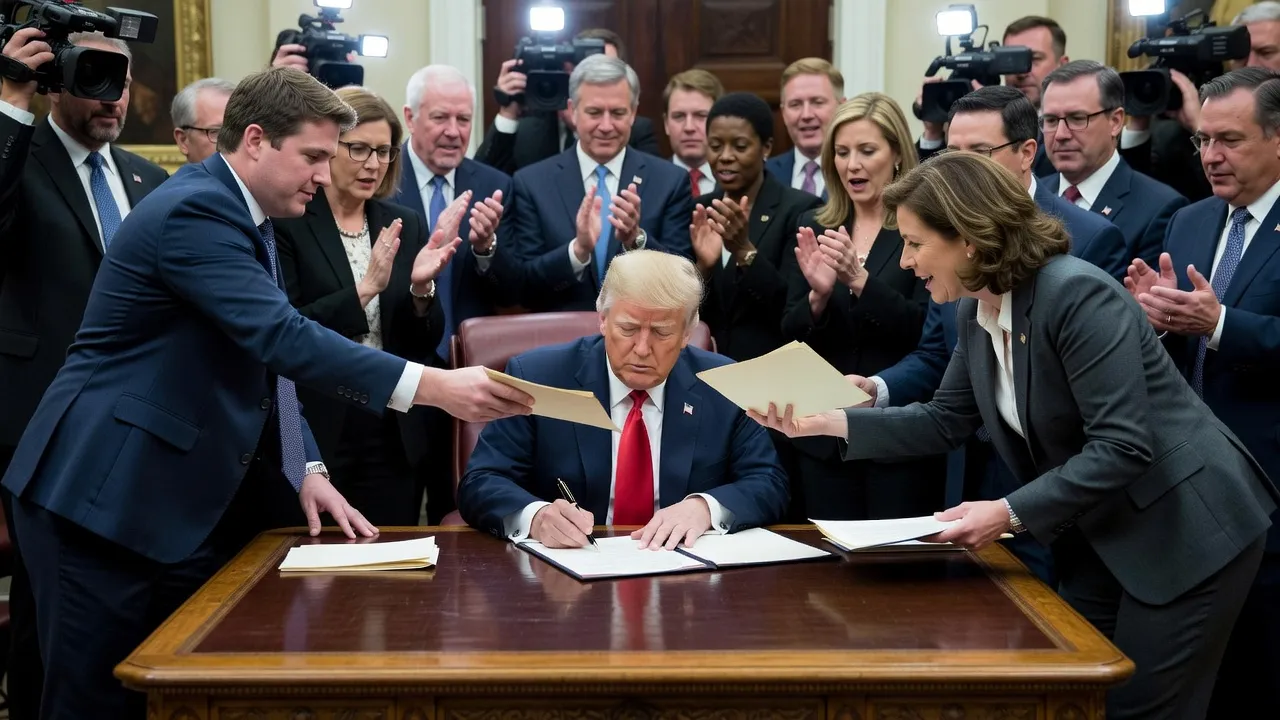
London, 18 October 2026. For the BBC, Donald Trump used his presidential authority to block "many sanctions" against Russia recently voted by Congress. In a decree signed on Friday, 16 October in the evening, he invokes the "national interest" of the United States. The law, signed in September, was due to come into effect on Sunday, 18 October. The Independent notes that the president himself had approved it last month and is now blocking it two days before the deadline set by the text.
The BBC details what the law provided for: customs duties of up to 100% on the five main buyers of Russian oil and gas, "especially China and India", sanctions targeting Vladimir Putin, Russian leaders, banks, and the "ghost fleet" of tankers. It is named after Republican Senator Lindsey Graham, who died on 11 July and was presented as one of the strongest defenders of Ukraine in Washington.
The newspaper links the decision to the announcement, a week earlier, of a purchase of Russian diesel intended to lower energy prices before the November mid-term elections. According to the BBC, this plan "shocked parliamentarians" and provoked a bipartisan reaction. On Thursday, twenty elected officials from both parties had written to Trump to demand "full and faithful" implementation of the text, intended to force Putin to take peace talks seriously. The Independent also recalls that Trump refused to say that Putin had triggered the war: "I only care about one thing: I want this war to end."
On the Ukrainian side, the Daily Mail relays Volodymyr Zelensky's charge: this suspension gives Putin "every reason" to "continue the war indefinitely". The Kremlin welcomed a "historic" decision. The tabloid reports, according to Zelensky, a night of strikes targeting more than 15 energy sites, with over 320 "shahed" drones and missiles, and sees an attempt to provoke a blackout before winter. He also mentions a dispute over the slowing down of military access to Starlink.
The Independent notes a more measured tone: Zelensky judges the decision "unfortunate" without directly criticizing the American president, and calls on his supporters to defend the law, which "can still" be reinstated. British articles leave little room for the voice of Moscow beyond the word "historic", and do not detail the sanctions already in force, which remain applicable.
SOURCES (3)
- The IndependentMEDIUM
- Daily MailMEDIUM