
DOMINANT ANGLE
Rome sees the suspension of sanctions under the Graham law as an arbitration by Donald Trump on the price of diesel before the November 3 midterm elections.
Dominant angle identified — does not reflect unanimity of this country’s media
KEY POINTS
- 01
By decree, Trump suspends sanctions and customs duties under the Graham law on Russian exports, just days before they were set to take effect (ANSA).
- 02
ANSA links the decision to the goal of reducing diesel prices ahead of the November 3 midterm elections; pre-existing sanctions remain in effect.
- 03
Washington says it is monitoring Russian oil purchases and workarounds, and retains the ability to revoke the exemptions (ANSA).
ANALYSIS
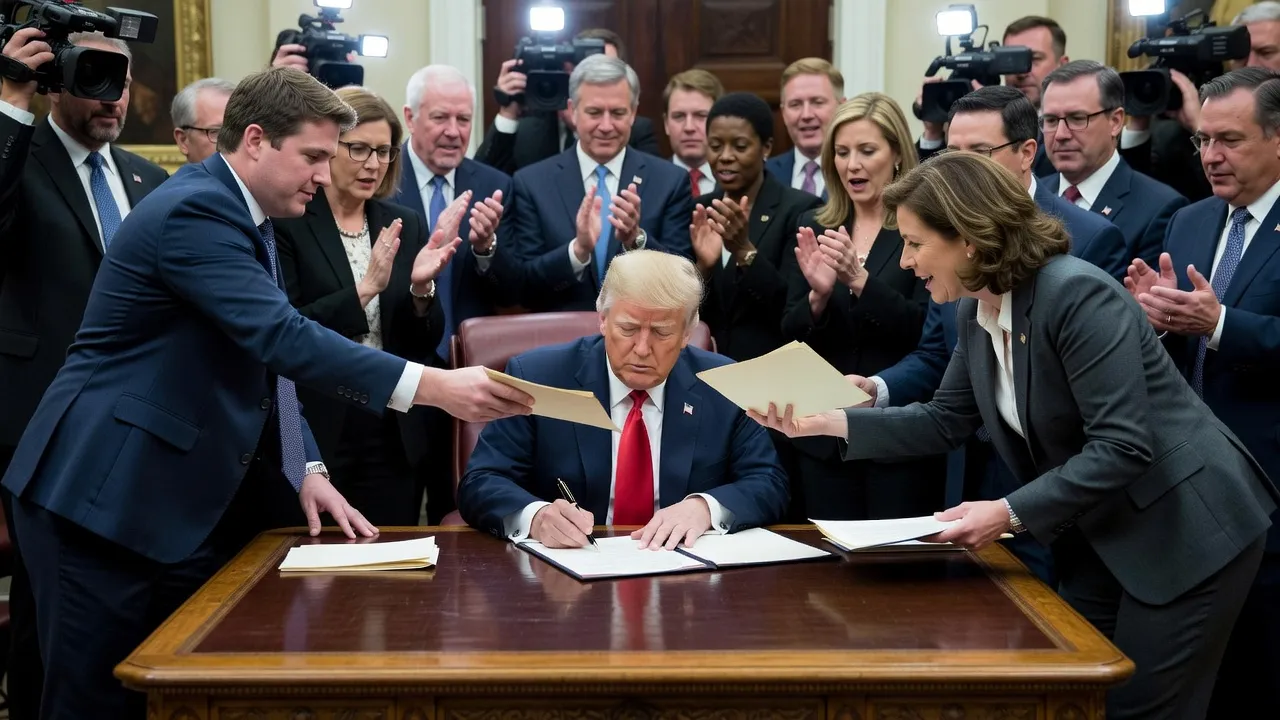
Rome, October 17, 2026. The Italian government notes that President Donald Trump has signed an executive order suspending significant sanctions and customs duties targeting Russian exports, as provided for by the "Lindsey Graham Act", just a few days before its entry into force.
The Italian reading is first and foremost economic and electoral. According to reports, the application of these measures "would have complicated efforts to reduce diesel prices ahead of the November 3 midterm elections". The suspended text is the law that Trump himself had promulgated the previous month, using a clause of exemption that it provides.
The Italian government details the mechanism: the exemptions are justified by national interest, exempt Russian goods from customs duties, and suspend sanctions against individuals and entities, while pre-existing sanctions remain in effect. The decree, entitled "Implementation of the Lindsey O. Graham Sanctioning Russia and Iran Act of 2026", relies on section 115 of the law, which authorizes the president to suspend these measures provided that a certification is transmitted to Congress, accompanied by an explanatory report. Trump declares that the exemption is, "at this time", in the national interest of the United States.
The Italian government specifies that several American agencies will monitor Russian oil purchases and attempts to circumvent them, and that the president retains the power to revoke the exemptions if necessary. It also recalls that the law was wanted by Republican Senator Lindsey Graham, who died in July, shortly after a return from Kiev, to punish Russia after the invasion of Ukraine.
The Italian news feed places this information in the midst of a stream of war news: new Russian nighttime air attack, air raid alerts in Kiev and several regions, threat of ballistic missiles on Kryvyi Rih, Zaporizhzhia, and the Dnipro area, 11-year-old girl injured during a raid in Kherson, citing Kyiv Post and Ukrinform. The same feed relays a telephone interview between Pope Leo and Vladimir Putin, mentioned by the Vatican press office: the pontiff expressed his deep concern for the humanitarian situation in Oleshky, in the Kherson region, and called for a ceasefire to deliver aid and evacuate civilians.
In the available excerpts, the Italian coverage remains factual and little editorialized: it exposes the legal procedure and price calculation, without taking up in these passages the reactions of the Kremlin or Kiev.