
DOMINANT ANGLE
Berlin sees in this decree a new step by Washington towards Moscow, to the detriment of Kiev, as winter approaches.
Dominant angle identified — does not reflect unanimity of this country’s media
KEY POINTS
- 01
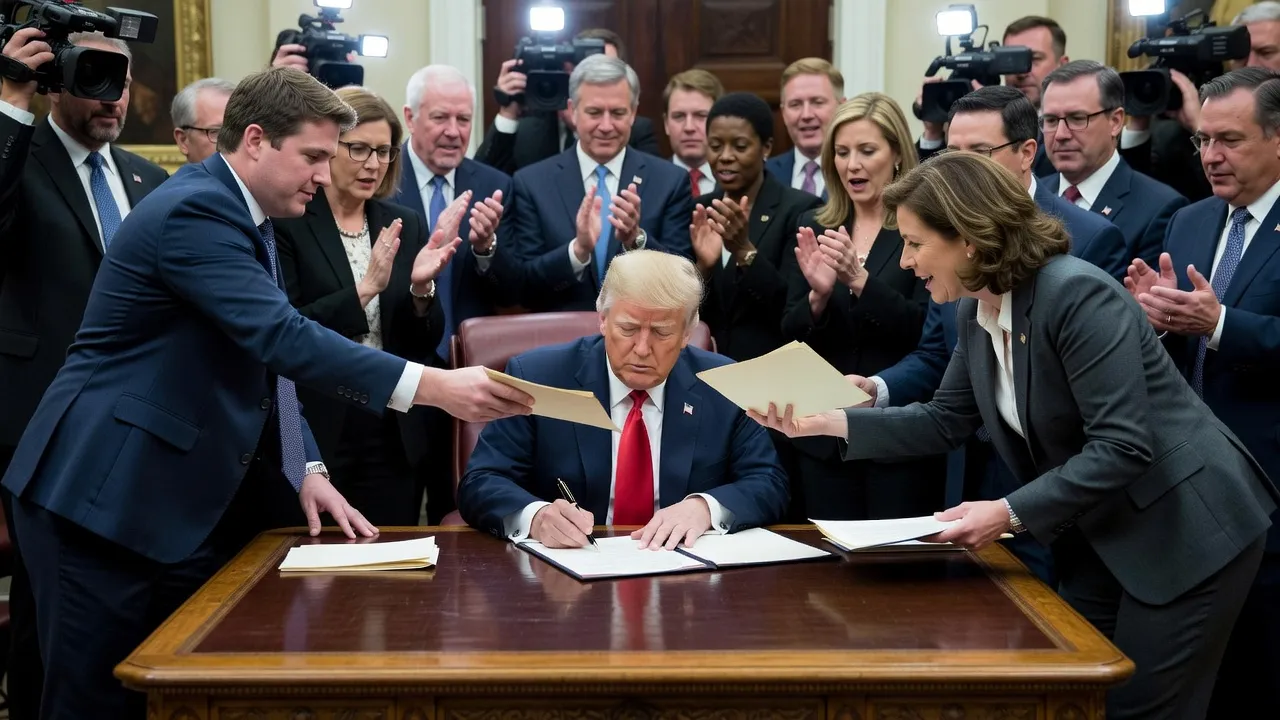
Trump suspended by decree on Friday the customs duties and sanctions of the law signed in mid-September, citing the "national interest" of the United States; the law allows him to do so by informing Congress (Handelsblatt).
- 02
Kirill Dmitriev, Putin's economic emissary, described the suspension as a "momentous and truly historic moment" (Tagesschau).
- 03
Zelensky warned that Russia is seeking to provoke a blackout before winter, with more than 15 power facilities having been attacked the day before (Tagesschau).
ANALYSIS
Berlin, October 17, 2026. The German press reports on the decree published on Friday (local time) by Donald Trump, which puts "on ice" the customs duties and sanctions provided for by the law promulgated in mid-September. According to the Handelsblatt, the text allows the president to suspend these measures by informing Congress; the suspension will last until Trump or high-ranking officials deem other steps appropriate. The FAZ notes that Trump acted shortly before the end of the 30-day deadline set by Congress, which wanted to increase pressure on the Kremlin.
The Tagesschau emphasizes the justification: the measure would be "in the national interest" of the United States at present, but the White House has not specified what this means. Moscow is pleased: Kirill Dmitriev, Vladimir Putin's economic envoy, speaks of a "truly important and historic moment." He is also, the channel recalls, the Kremlin's negotiator with Steve Witkoff and Jared Kushner.
The dominant angle is one of rapprochement. Under the title "How Trump is getting closer to Putin," the Tagesschau mentions the agreement on Russian diesel concluded a few days earlier, still reserved support for Ukraine, and writes: "Trump has changed sides." It also quotes Trump reproaching Zelensky for striking refineries and driving up the price of oil, and notes that Democrats and some Republicans are defending Kiev, while figures from the MAGA movement are pro-Russian.
The Ukrainian viewpoint occupies a large space. Zelensky, on Telegram, believes that easing pressure and offering financial rewards is only an encouragement for Putin to strike harder. He recalls that the decision comes on the heels of one of the most massive strikes against Ukraine's energy sector, with over 15 facilities hit and hundreds of thousands of people without electricity or heating: "Russia is trying to provoke a blackout before winter." The package of sanctions "could have helped a lot," and could still if Washington reinstated it.
The Handelsblatt adds an economic and electoral reading: according to analysts, the sanctions could have driven up oil prices even further, while Americans are suffering from increased costs due to the war against Iran launched by the United States and Israel, and Republicans are under pressure ahead of the legislative elections. The FAZ recalls in its live blog that Von der Leyen confirms a need for an additional 70 billion euros for Ukraine in 2027.
SOURCES (3)
- FAZMEDIUM
- HandelsblattMEDIUM