
DOMINANT ANGLE
Brasília sees the suspension of sanctions as an arbitration by Trump between oil prices and midterm elections, before viewing it as a blow to Kiev.
Dominant angle identified — does not reflect unanimity of this country’s media
KEY POINTS
- 01
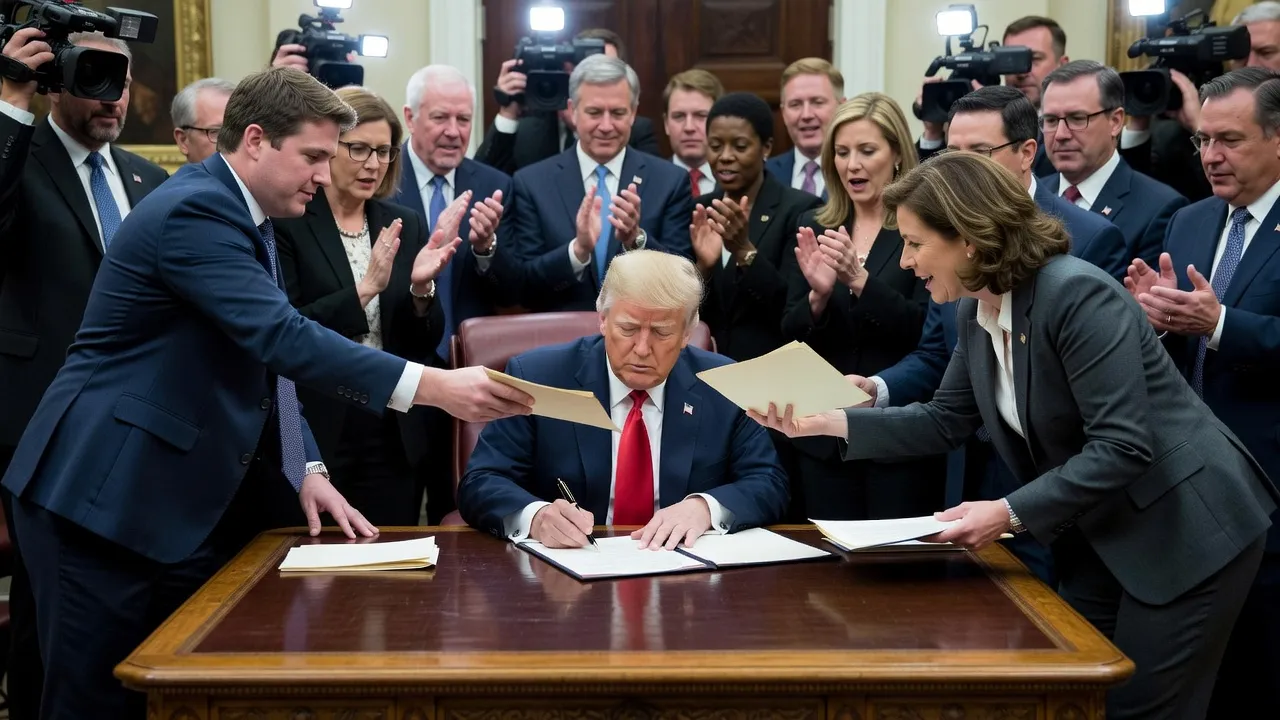
The decree signed on Friday, October 16, suspends sanctions and customs duties from the Graham law that were to come into effect the following week, in the name of "national interest" (G1).
- 02
The law provided for 100% duties on products from the five largest buyers of Russian oil, including China and India, and up to 500% on imports from Russia (Veja).
- 03
Kirill Dmitriev, Putin's emissary, hailed a "important and truly historic" moment, while Zelensky believes the measure "only helps the Russians" (Veja, G1).
ANALYSIS
Brasília, October 18, 2026. For the Brazilian press, Donald Trump's decision to suspend the sanctions provided for by the Lindsey Graham law is primarily an economic and electoral calculation. Veja reports that the American president is renouncing commercial sanctions "to prevent an increase in oil prices." The magazine recalls that the text, voted on with the support of Republicans and Democrats, gave Trump thirty days to impose 100% customs duties on products from the five largest buyers of Russian oil, including China and India, and up to 500% on American imports from Russia.
Veja explains that, "with popularity declining fifteen days before the midterm elections," the president fears the impact of these measures on the domestic economy. The magazine specifies that the setback only suspends the application: the mechanism could be reactivated later. It also puts the decision into perspective a week after the American agreement to purchase Russian diesel, with more than 300,000 tonnes delivered immediately, followed by 500,000 in November.
G1 focuses on the procedure. On the night of Friday, October 16, Trump signed a decree invoking "national interest," which provoked hostile reactions from American parliamentarians. According to the text cited by the site, the suspension is valid until Trump or his main collaborators judge that "new measures are appropriate." G1 links the decision to the deterioration of relations between Washington and Kiev, and recalls that Trump said it was "time for Ukraine to have a new president" after Zelensky's criticism of the diesel agreement.
Reactions occupy a large space. On Saturday, October 17, Zelensky wrote on X that the measure "only helps the Russians" and "certainly does not interrupt the war." He stated that Russia had struck more than fifteen Ukrainian energy production and transportation facilities the day before. Estadão emphasizes that the decision revives the fear of an escalation of strikes as winter approaches, and quotes Senator Richard Blumenthal, who believes it favors Putin. On the Russian side, envoy Kirill Dmitriev hailed an "important and truly historic" moment.
The Brazilian press corps is treating the matter primarily as an American and Ukrainian episode. It does not examine its consequences for the countries targeted by the 100% customs duties, nor for Brazil itself.
SOURCES (4)
- G1 Globo MundoMEDIUM
- Jornal de BrasíliaMEDIUM
- VejaMEDIUM
- EstadãoMEDIUM