
DOMINANT ANGLE
Lisbon stands out on the transatlantic axis: the Portuguese press frames the suspension of sanctions as a departure by Washington from Brussels and Kiev, which say they will maintain pressure on Moscow.
Dominant angle identified — does not reflect unanimity of this country’s media
KEY POINTS
- 01
Trump has suspended the Graham law by executive order, in the name of national interest, with customs duties of up to 100% on major buyers of Russian oil and gas (Observador).
- 02
The European Commission says sanctions are weighing on the Russian economy and is preparing a 22nd package; von der Leyen rules out lifting them as long as the war lasts (SAPO Notícias).
- 03
Zelensky sees the diesel agreement as "the first step" towards other measures favorable to Putin (Jornal Económico).
ANALYSIS
Lisbon, October 17, 2026. The Portuguese press reports on the suspension of sanctions against Russia in three stages: Washington's decision, Brussels' response, and Kiev's reaction.
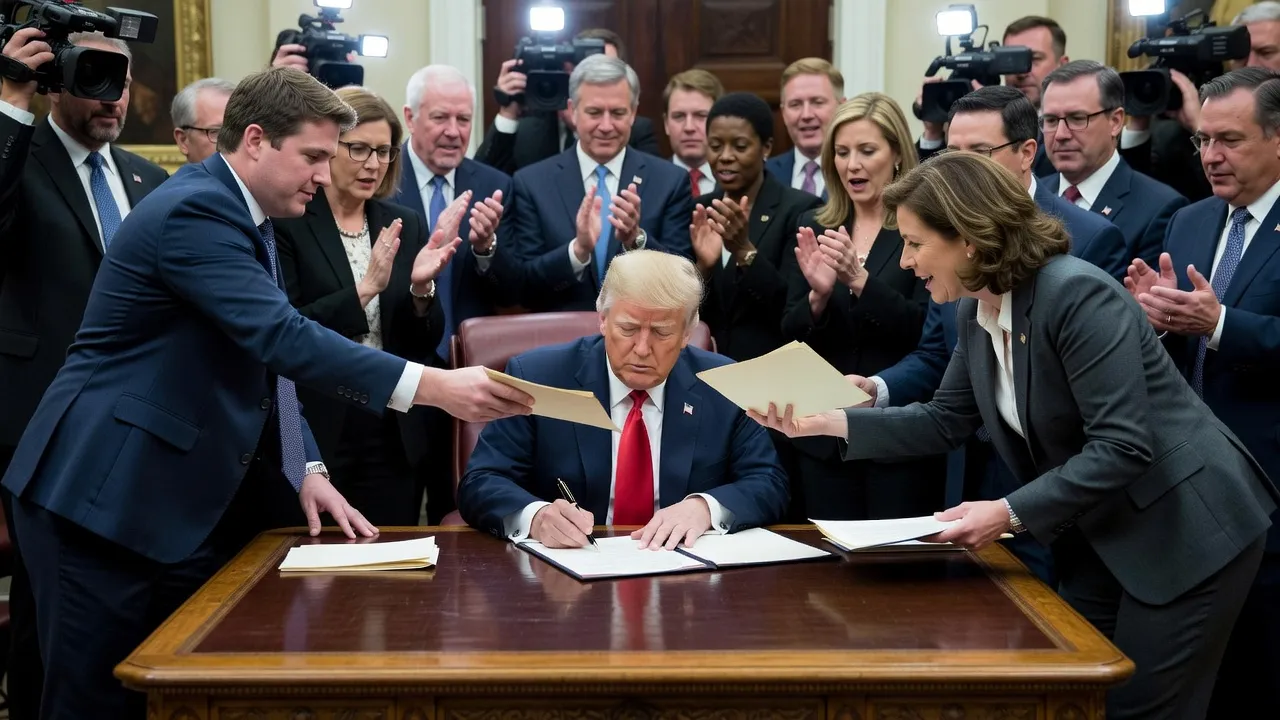
The Observador news journal, at 4 am, presents a Donald Trump who "takes a step back in economic pressure on Russia." By executive order, the American president invokes national interest and postpones the application of sanctions provided for by the Graham law, voted on by Congress with the support of Republicans and Democrats and promulgated by himself about a month ago. The text provided for customs duties of up to 100% on products from the main buyers of Russian oil and gas, in order to limit the revenue that finances the war. The Observador links the measure to the agreement announced a week earlier with Vladimir Putin on the purchase of Russian diesel, presented as a means of lowering energy prices in the United States.
SAPO Notícias highlights the European response. This Saturday, October 17, the European Commission asserts that the sanctions "exert pressure on the Russian economy" and that it is necessary to "do more," through the voice of its spokesperson Thomas Reigner. Brussels is preparing a 22nd package of restrictive measures, recalls a total aid of 230 billion euros to Ukraine, and Ursula von der Leyen repeats that the sanctions will not be lifted as long as the war lasts. European leaders regret the suspension, which the text describes as temporary.
The Jornal Económico gives the floor to Volodymyr Zelensky, back from the European summit in Brussels held on Friday. He fears that the agreement on diesel will be "the first step" in a broader easing: "you can't stop Putin that way." According to him, the Russian president "feels joy and satisfaction" in the face of such support, and the lifting of sanctions "only helps the Russians" without stopping the war. He thanks the "friends in Congress" for a law that had bipartisan support, judges the decision to block it "erroneous," and hopes that Trump will do everything to get Putin to stop the attacks on the Ukrainian energy sector.
Overall, the Portuguese media treat the case mainly as a subject of Atlantic diplomacy: Washington is moving away from a common line that Brussels and Kiev say they want to maintain. The dimension of American domestic policy remains in the background, limited to the reminder of the bipartisan vote.