
DOMINANT ANGLE
Ottawa is tempering the diplomatic enthusiasm on display in New York: as long as the strikes continue on energy infrastructure, the Canadian press judges the resumption of dialogue to be more symbolic than effective on the ground.
Dominant angle identified — does not reflect unanimity of this country’s media
KEY POINTS
- 01
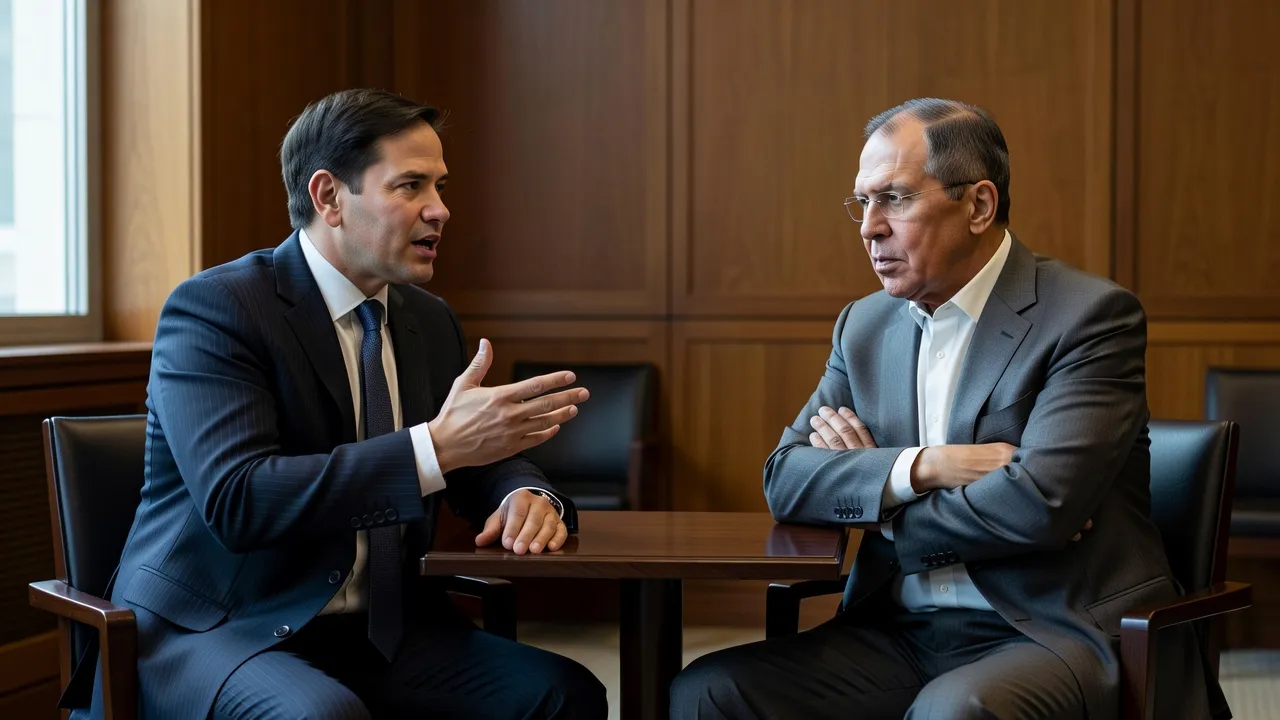
Rubio met with Lavrov in New York on Wednesday, September 23, 2026, as the Kremlin believed there were "for now no preconditions" for peace talks.
- 02
Trump and Zelensky spoke for 40 minutes on Tuesday, September 22, 2026, without a signed agreement, Kyiv demanding more Patriot missiles in the face of an expected Russian winter campaign against its power grid.
- 03
The strikes continued on both sides on Wednesday: two dead and about twenty injured in Kyiv, while Ukraine bombed two Russian refineries.
ANALYSIS
Ottawa, September 24, 2026. In New York, Secretary of State Marco Rubio met with his Russian counterpart, Sergei Lavrov, on Wednesday, September 23, 2026, on the sidelines of the United Nations General Assembly, as Ukrainian President Volodymyr Zelensky addressed the assembly. CBC News recalls that the Kremlin had warned, even before this meeting, that there were "for the time being no preconditions" for moving towards a path of peace negotiations. This caution displayed by Moscow contrasts, for the Canadian press, with the optimistic tone of Donald Trump, who had assured on Tuesday, September 22, 2026, during his meeting with Zelensky, that "we will conclude an agreement".
According to the Globe and Mail and CBC News, no agreement was signed during this 40-minute meeting: Kyiv requested more Patriot missiles to protect itself from a Russian winter campaign targeting its power grid, and discussed a possible bilateral ceasefire limited to energy targets. Trump had claimed the previous week that such an agreement had been reached between Kyiv and Moscow, before the truce collapsed the next day, when gas stations in Kyiv were hit and Ukraine bombed a Russian refinery in response.
The facts reported by the Canadian press illustrate this gap between diplomatic discourse and the reality on the ground. On the night of Tuesday to Wednesday, Russia struck Kyiv with drones, killing two people and injuring about twenty, one of the heaviest attacks since summer, according to municipal authorities cited by CBC News. At the same time, Ukraine hit two Russian refineries, while Moscow targeted an oil and gas facility in southern Ukraine, now deemed irreparable.
Before the General Assembly, Zelensky warned that Kyiv would make the winter "deeply painful" for Russia if no energy ceasefire was concluded before the cold weather, while evoking the role that Xi Jinping could play with Vladimir Putin. Putin, absent from the General Assembly - Lavrov represented Moscow - remains accused by Western governments of sabotage and espionage, recalls the Globe and Mail. For the Canadian press, the diplomatic relaunch is therefore more of a gesture of openness than a verifiable step towards a ceasefire.
SOURCES (2)
- Globe and MailMEDIUM