
DOMINANT ANGLE
Tallinn is gauging the invitation extended to Vladimir Putin in light of warnings from its own intelligence services: a Russia that could test NATO in the coming months, while Washington mentions a limited pause regarding grains and energy.
Dominant angle identified — does not reflect unanimity of this country’s media
KEY POINTS
- 01
Marco Rubio announced on Wednesday that Putin was invited to the G20 in Miami in December, after meeting Sergei Lavrov at the UN
- 02
The head of the Czech security service, Michal Koudelka, told the Guardian that Russia could test NATO's defense with a limited incursion "in months, not years"
- 03
The Twenty-Seven extended on Tuesday for six months to three years the sanctions targeting nearly 3,000 individuals and entities linked to Russian aggression, with national sanctions being applied to Usmanov and Fridman, who were removed from the common list
ANALYSIS
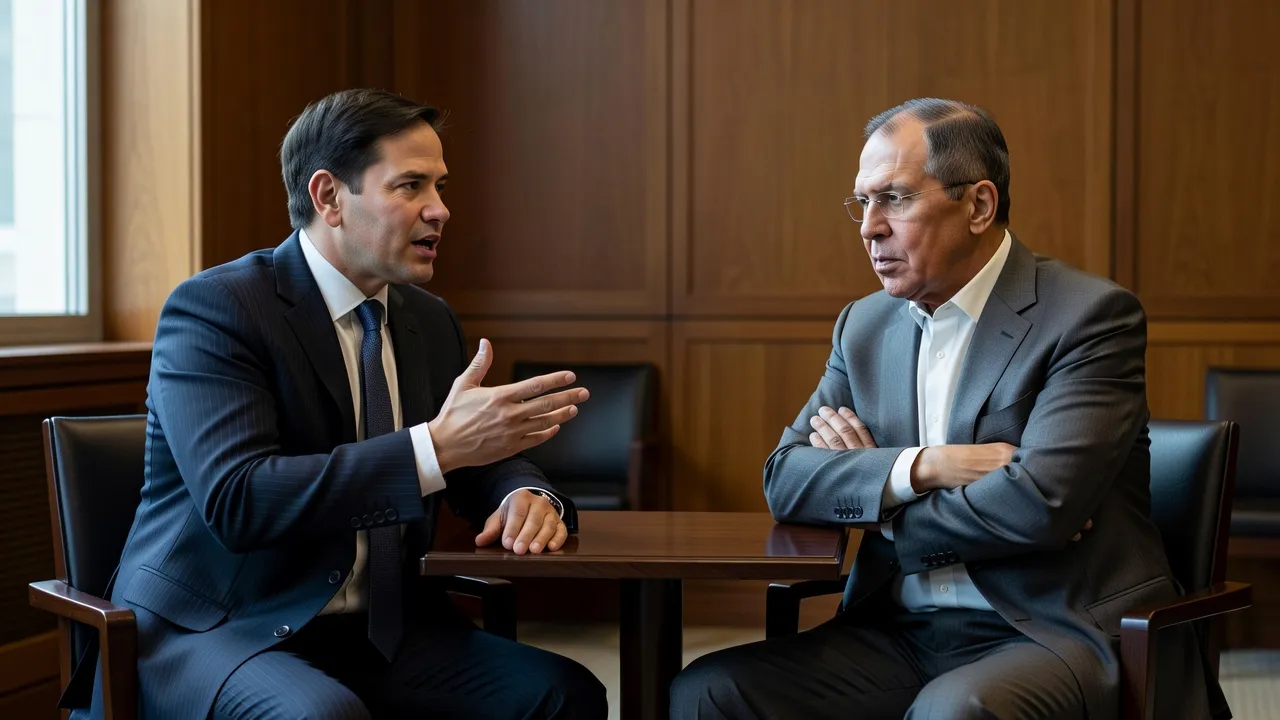
Tallinn, September 24, 2026. On Wednesday, US Secretary of State Marco Rubio announced, after meeting his Russian counterpart Sergey Lavrov on the sidelines of the United Nations General Assembly, that the United States was inviting Vladimir Putin to the G20 summit in December in Miami. The Estonian press reports this soberly: Russia remains a member of the G20, despite its exclusion from the G8 after the illegal annexation of Crimea in 2014. If Putin were to attend, it would be his second visit to the United States since the return of Donald Trump, after the Alaska summit in August 2025, which had not led to any major breakthrough.
But the Miami agenda is read in Tallinn through a closer calendar: that of European intelligence warnings. The head of the Czech internal security service, Michal Koudelka, told The Guardian that Russia could, "in months, not in years", test NATO's defense with a limited incursion into a neighboring country, provocations or fake operations. For a country bordering Russia, this warning carries more weight than Rubio's promise that "to solve problems, you have to meet with people you don't agree with".
The invitation coincides with concrete news for Estonia: on Tuesday, the Twenty-Seven agreed to extend for six months to three years the sanctions targeting nearly 3,000 individuals and entities linked to Russian aggression. To obtain this compromise, oligarchs Alisher Usmanov and Mikhail Fridman were removed from the list — Estonia announced that it would apply its own national sanctions to them. Washington also informed Tallinn that the rotational presence of US troops in Estonia would continue, with a new unit arriving in November.
The Estonian press also relays Volodymyr Zelensky, who is ready to meet with Putin and willing to negotiate with Moscow a moratorium on strikes against energy infrastructure, a proposal that Washington must transmit to the Kremlin. Trump, on Tuesday at the UN, estimated that the war would end "faster than people think", citing 25,000 deaths per month and his law on Russian oil sanctions carried by Senator Lindsey Graham. Zelensky warned on the same day that Russia is preparing a new large-scale attack, after a security meeting with British Prime Minister Andy Burnham in New York.