
DOMINANT ANGLE
Bucharest fears that the diplomatic opening between Washington and Moscow will overshadow the most concrete warning of the week: the risk, highlighted by Marco Rubio, that the war will spread through sabotage or mistake to Ukraine's neighboring countries.
Dominant angle identified — does not reflect unanimity of this country’s media
KEY POINTS
- 01
Marco Rubio warned that the war could "metastasize and spread to other places" through hybrid attacks, sabotage, or miscalculation, after his meeting with Lavrov in New York.
- 02
Dmitri Peskov confirmed that Putin "remains ready" for a new meeting with Trump, without concrete details, and reiterated that Zelensky could "come to Moscow".
- 03
Lavrov told the UN Security Council that Russia "will not pause" its military operation, while Kiev noted that 14 of the 15 Council members support partial ceasefires on energy and grain.
ANALYSIS
Bucharest, September 24, 2026. As Washington mentions an invitation from Vladimir Putin to the G20 summit in Miami in December and the Kremlin says it is "grateful", the Romanian press mainly retains, from the diplomatic week in New York, the most direct warning for its own neighbors: that of Marco Rubio on the risk of conflict extension.
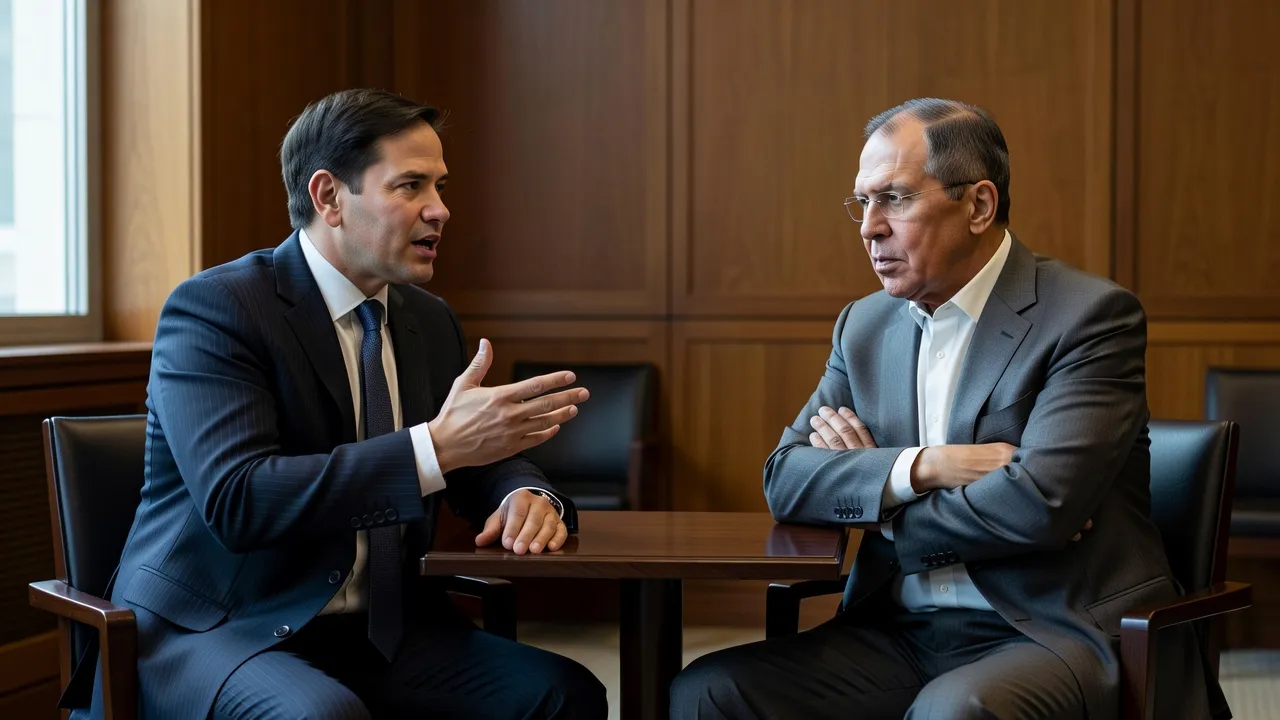
Received on the sidelines of the United Nations General Assembly by Russian Foreign Minister Sergei Lavrov, the US Secretary of State warned against a war that could "metastasize and spread to other places" through a hybrid attack, sabotage, or "a simple mistake". Asked about the attempted sabotage that Berlin attributes to Russia after the discovery of an explosive drone near a Ukrainian transport plane at Leipzig airport, Rubio did not "directly address this case" in his response, according to Digi24 - a sign, for Bucharest, that the file remains open without a firm American response.
On the diplomatic front, Kremlin spokesman Dmitry Peskov confirmed that Vladimir Putin "remains ready" for a new meeting with Donald Trump, but without "concrete details" at this stage; he reiterated that Volodymyr Zelensky could, if he wished, "come to Moscow". Peskov also accused the United Kingdom of "fueling Russophobic sentiments", joined, in his view, by Germany and France.
At the UN Security Council, Lavrov ruled out any pause: "we will not make a pause in our special military operation", he said, accusing Europe of wanting a respite to rearm Kiev. Across from him, Ukrainian Foreign Minister Andrii Sybiha reiterated that Kiev was ready for a complete and immediate ceasefire, recalling that 14 of the 15 members of the Security Council, including the United States and China, support partial truces targeting energy and grain.
At the podium, Zelensky also called on 47 countries to prevent their citizens from fighting for Russia, and proposed a maritime armistice in the Black Sea based on options presented by Egypt, India, and Turkey.
For Romania, a border state of Ukraine and a NATO member, these statements weigh more than the protocol of a December summit: they confirm that no pause is guaranteed on the ground, while the hypothesis of a cross-border incident remains, in Washington's own words, a "real" concern.