
DOMINANT ANGLE
Berlin is receiving the invitation extended to Vladimir Putin with caution, focusing less on the diplomatic gesture than on Marco Rubio's warning of a risk of the conflict spreading to other countries, including Germany itself.
Dominant angle identified — does not reflect unanimity of this country’s media
KEY POINTS
- 01
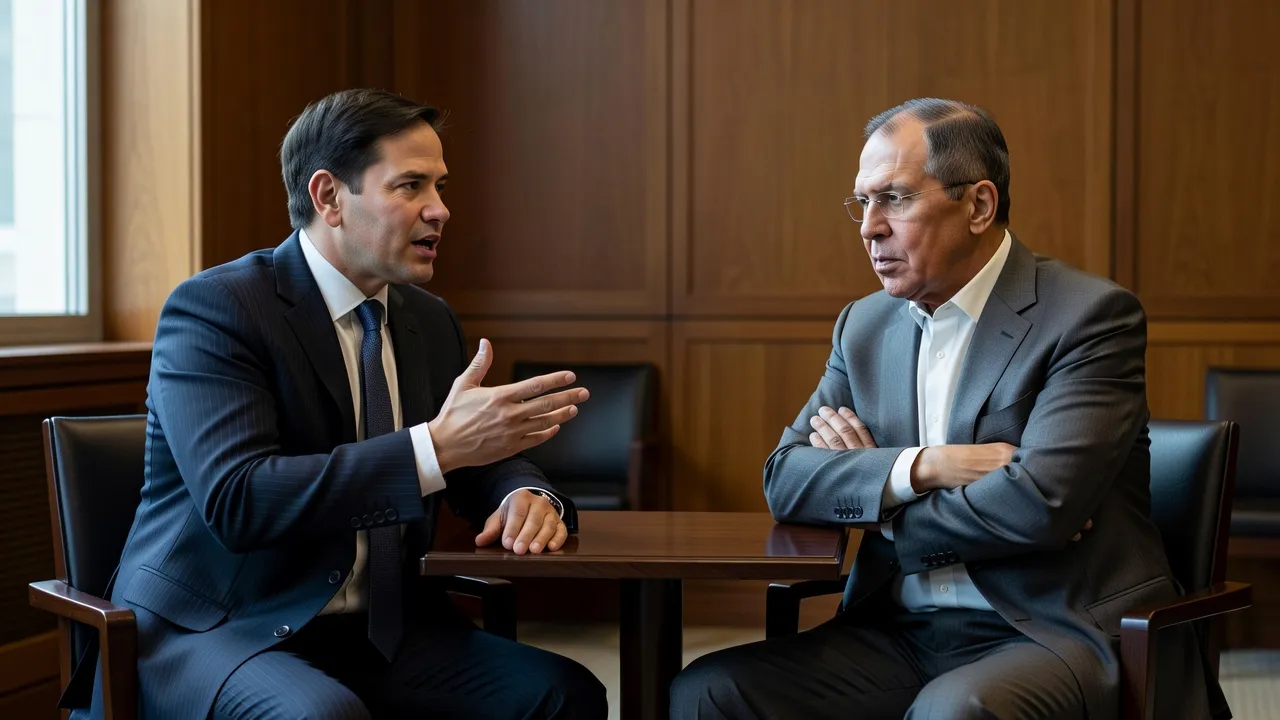
Rubio announced on Wednesday the invitation to Putin to the December G20 summit in Miami, at the Trump National Doral, after a meeting with Lavrov in New York.
- 02
Peskov stated that Russia was grateful for the invitation, which will be followed up through diplomatic channels.
- 03
Lavrov rejected any idea of a ceasefire before the UN Security Council, claiming that only Europe would want a pause to continue arming Ukraine.
ANALYSIS
Berlin, Thursday, September 24, 2026. German diplomacy surrounding the war in Ukraine is dominating the German press, between a surprise invitation and persistent mistrust in the face of an uncertain ceasefire. From New York, where the United Nations General Assembly was held, Secretary of State Marco Rubio announced on Wednesday that Washington was inviting Vladimir Putin to the G20 summit scheduled for December in Miami, at the Trump National Doral, according to the FAZ. Rubio justified the move with a phrase repeated by the press: "To solve problems, you also have to meet with people you don't agree with." Kremlin spokesman Dmitri Peskov said that Moscow was grateful for the invitation, which would be followed up through diplomatic channels.
The Tagesschau, however, emphasizes that the prospect of a ceasefire remains vague. Rubio expressed confidence that a limited pause in combat was possible, focusing on attacks on grain deliveries and energy facilities, as Ukraine and Russia had, according to him, shown a common interest after his meeting with Sergei Lavrov. But the Russian minister dampened this optimism shortly afterwards before the Security Council, rejecting any idea of a ceasefire: only Europe, he claimed, would want such a pause to continue arming Ukraine. Volodymyr Zelensky, who was received by Trump the day before, reiterated his willingness to stop strikes on Russian energy facilities, a gesture that Washington must transmit to Moscow; Peskov has already dismissed this partial proposal, saying he prefers a comprehensive settlement of the conflict.
The FAZ is focusing on another, more sensitive issue for Berlin: Rubio said he fears an extension of the Russian conflict to other countries, citing hybrid attacks or acts of sabotage, without explicitly mentioning the drone incident in Leipzig. It is this risk of contagion, rather than the summit protocol, that the German press is highlighting, also describing the atmosphere of the General Assembly as "cynical routine". Zelensky has also announced an agreement with Finland on joint drone production, which he said is open to other countries like Canada or Australia, while Lavrov was the sole representative of Russia at the UN podium, as Putin did not attend.