
DOMINANT ANGLE
Warsaw denounces the invitation extended to Vladimir Putin for the G20 in Miami as a concession offered to Moscow, while Russia refuses any pause in the fighting beyond grain and energy.
Dominant angle identified — does not reflect unanimity of this country’s media
KEY POINTS
- 01
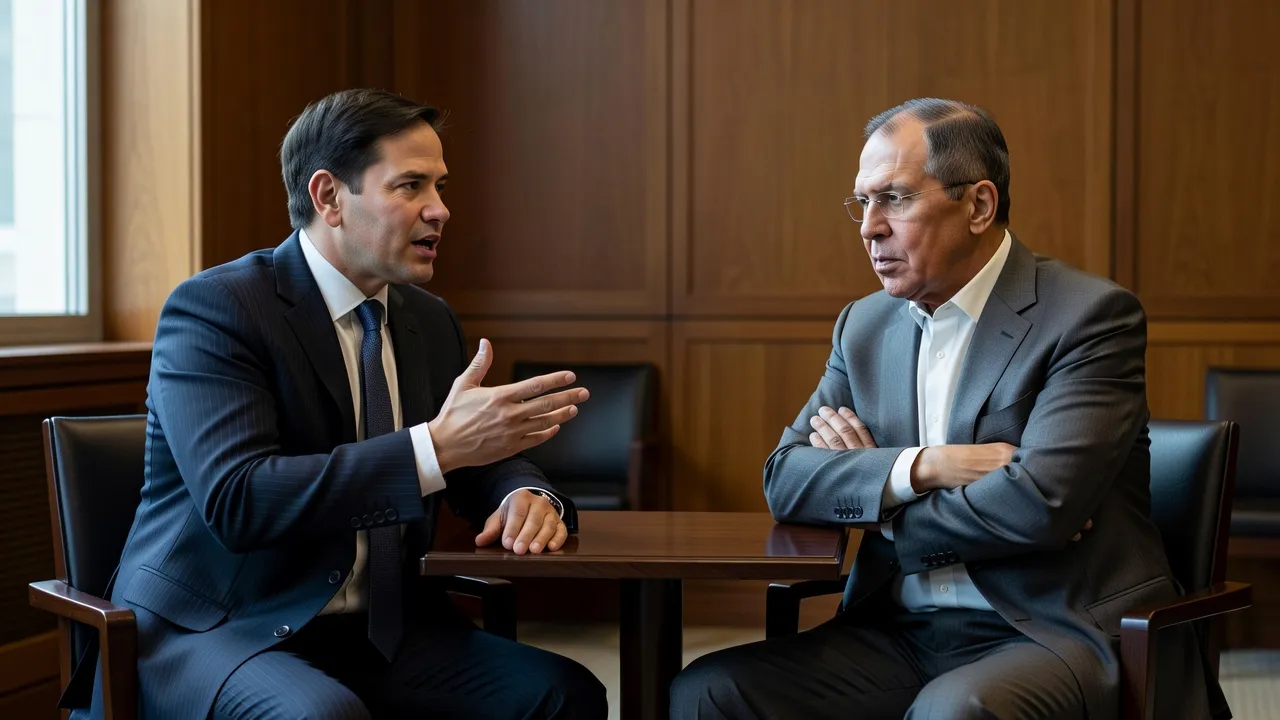
Marco Rubio announced Vladimir Putin's invitation to the G20 summit in Miami in December, after meeting with Sergey Lavrov on the sidelines of the UN General Assembly.
- 02
According to Rubio, Russia and Ukraine have expressed interest in a limited ceasefire solely regarding attacks on wheat and energy.
- 03
Before the UN General Assembly, Polish Minister Radosław Sikorski addressed Lavrov: "Siergieju, powiedz swojemu szefowi, że już wystarczy".
ANALYSIS
Warsaw, September 24, 2026. Poland is receiving with evident mistrust the invitation issued by Washington to Vladimir Putin for the G20 summit in Miami, in December. On Wednesday, after meeting with Russian Foreign Minister Sergey Lavrov on the sidelines of the United Nations General Assembly, Secretary of State Marco Rubio announced that Russia and Ukraine "have expressed their interest" in a limited ceasefire, concerning attacks on grain and energy. He warned that the war could spread to other regions, through a hybrid act, sabotage, or misunderstanding.
This announcement comes as Sergey Lavrov, at the UN Security Council podium, ruled out any pause in the "special military operation", accusing Europeans of wanting to take advantage of a truce to rearm Kiev. It is in this climate that Polish Foreign Minister Radosław Sikorski spoke before the General Assembly, addressing Lavrov directly: "Siergieju, tell your boss that's enough". He recalled that Poland, with half of Russia's GDP, and NATO, with twenty-five times this GDP, would not let Moscow win: "You can still kill many people, but you cannot win."
President Karol Nawrocki delivered a speech in the same vein, stating that "Poland is not seeking confrontation" but is strengthening its alliances and modernizing its army to avoid war, not to wage it. He denounced Russian hybrid operations, sabotage, and cyberattacks as elements of a long-term destabilization strategy, and called on the international community for a firm and common response.
For Warsaw, the invitation to Putin changes nothing in the analysis: Moscow has made no concessions on the ground, and the ceasefire mentioned by Rubio only concerns grain and energy, not the cessation of combat. The Polish press is extensively relaying Rubio's warnings about the risk of conflict escalation, echoing Polish concerns about a hybrid war targeting NATO's eastern flank. The Kremlin, through Dmitry Peskov's voice, is grateful for the American invitation — a gesture that Warsaw reads as a diplomatic victory offered to Moscow without any counterpart on the battlefield.
SOURCES (3)
- RMF24MEDIUM
- Gazeta PrawnaMEDIUM
- Dziennik.plMEDIUM