
DOMINANT ANGLE
Vilnius is gauging the invitation extended to Vladimir Putin in light of the front line: on the same day, Sergey Lavrov refused in front of the UN to stop the war, and Kyiv is demanding guarantees before any summit.
Dominant angle identified — does not reflect unanimity of this country’s media
KEY POINTS
- 01
Marco Rubio announced on Wednesday the invitation of Vladimir Putin to the G20 summit in Miami, just after meeting with Sergey Lavrov in New York
- 02
Sergey Lavrov stated to the UN Security Council that Russia "does not intend to stop its special military operation" after more than four years of war
- 03
Volodymyr Zelensky said he is ready to stop strikes on Russian energy facilities if Moscow does the same, while ignoring the Kremlin's position on this point
ANALYSIS
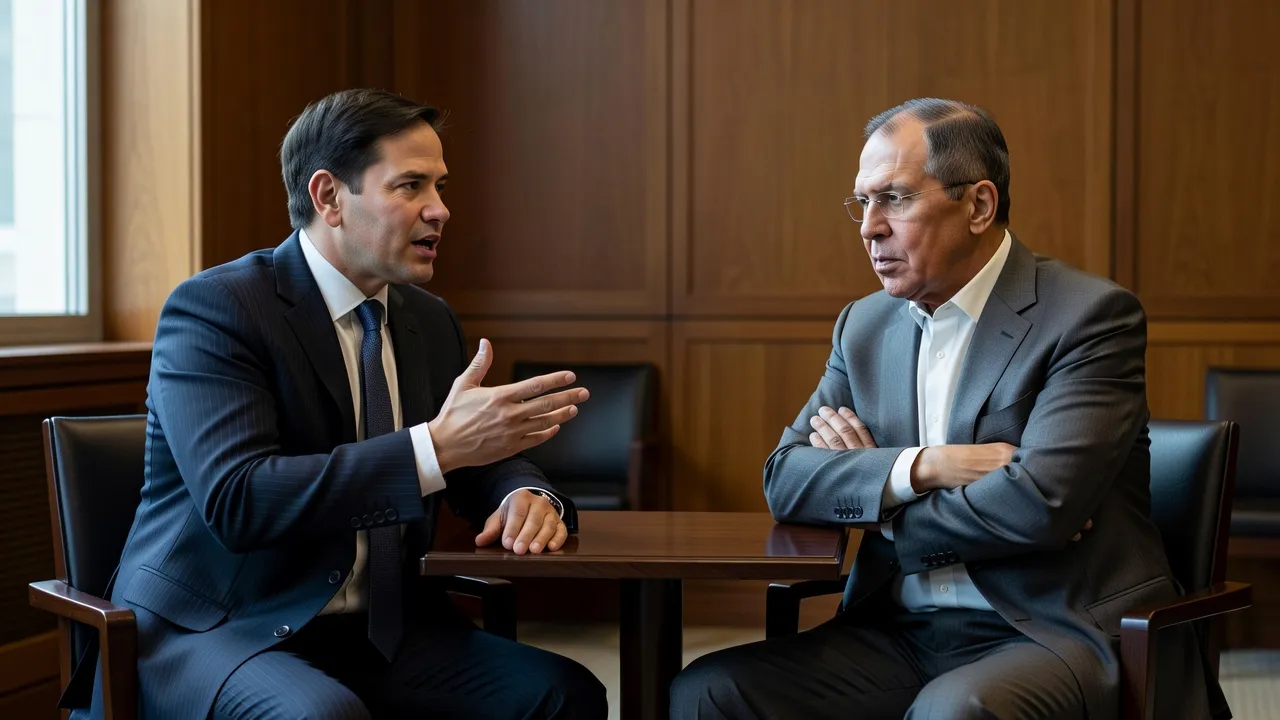
Vilnius, September 24, 2026. The Lithuanian press reported on Wednesday the announcement by US Secretary of State Marco Rubio: Vladimir Putin is invited to the G20 summit to be held later this year in Miami. "To resolve problems, you have to meet with people you disagree with," Mr. Rubio said to New York journalists, just after meeting with Russian Foreign Minister Sergei Lavrov at a hotel in Manhattan, on the sidelines of the United Nations General Assembly. "We hope he will accept this invitation," he added, presenting the summit as an opportunity for the Russian president to dialogue with the American president and other world leaders.
Lithuanian headlines (15min, Kauno diena, Verslo žinios) placed this announcement just after the statement made the same day by Sergei Lavrov before the UN Security Council: Russia "does not intend to stop its special military operation," he affirmed, accusing Europe of wanting to take advantage of a pause in the fighting to arm Kyiv. Ukrainian Foreign Minister Andrii Sybiha responded to him, saying that this phrase "said it all," adding: "Russia's war against Europe is no longer hybrid. Instead of preserving peace, Russia is spreading war. This is everyone's problem."
Mr. Rubio also urged Moscow and Kyiv to agree on a limited energy truce, stating that both sides had shown interest. This would not put an end to the war, he specified, but could lay the groundwork for a broader agreement. Ukrainian President Volodymyr Zelensky had said on Tuesday that he was ready to stop striking Russian energy facilities if Moscow did the same, while acknowledging that he was unaware of the Kremlin's position on this point.
Before the General Assembly on Wednesday, Zelensky recalled that Vladimir Putin was, in his opinion, willing to lose 248 soldiers for every square kilometer conquered this year, or a little over 1,000 square kilometers in eight months, of which Kyiv has already retaken a significant part. He also mentioned the sending of North Korean troops to reinforce the most fragile Russian lines.
In Vilnius, this juxtaposition - a cordial invitation on one side, Russia's refusal to cease fire on the other - fuels the usual caution of the Baltic media towards any prospect of a Trump-Putin meeting without a clear commitment from Moscow on the ground.