
DOMINANT ANGLE
Brasília is analyzing the Panamanian earthquake by the numbers: revised magnitude from 8.0 to 7.7, shallow depth, comparison to the largest earthquakes in history, and tsunami alert lifted.
Dominant angle identified — does not reflect unanimity of this country’s media
KEY POINTS
- 01
The USGS initially estimated the magnitude at 8.0, then at 7.6, before setting it at 7.7, with an epicenter 10 km from Pitaloza Arriba (Estadão, G1).
- 02
According to civil protection cited by G1, no deaths were confirmed but injured people had been hospitalized; a hotel in Penonomé partially collapsed.
- 03
The Canal Authority announced normal operations; Veja notes that the waterway handles 5% of international maritime trade.
ANALYSIS
Brasília, October 10, 2026. For the Brazilian press, the earthquake that struck Panama on Friday, October 9, is first and foremost an event to be explained. G1 published an analysis titled "entenda o que significa a magnitude 7,7": an earthquake of 7.0 to 7.9 is "large" and can cause severe damage, but magnitude alone does not tell the whole story, as depth, distance from the epicenter, and soil type are also factors. The media emphasizes the depth of around 12 kilometers, which increases the intensity felt on the surface.
The revision of the magnitude is mentioned in almost all the articles: the USGS initially announced 8.0, then 7.6, and finally 7.7. Another G1 article puts the event into historical perspective: Valdivia (Chile, 1960, magnitude 9.5, around 1,655 deaths), Alaska in 1964 (9.2), and Chile in 2010 (8.8, 523 deaths). According to this text, the Panamanian earthquake remains "distant from the destructive power" of the largest recorded earthquakes.
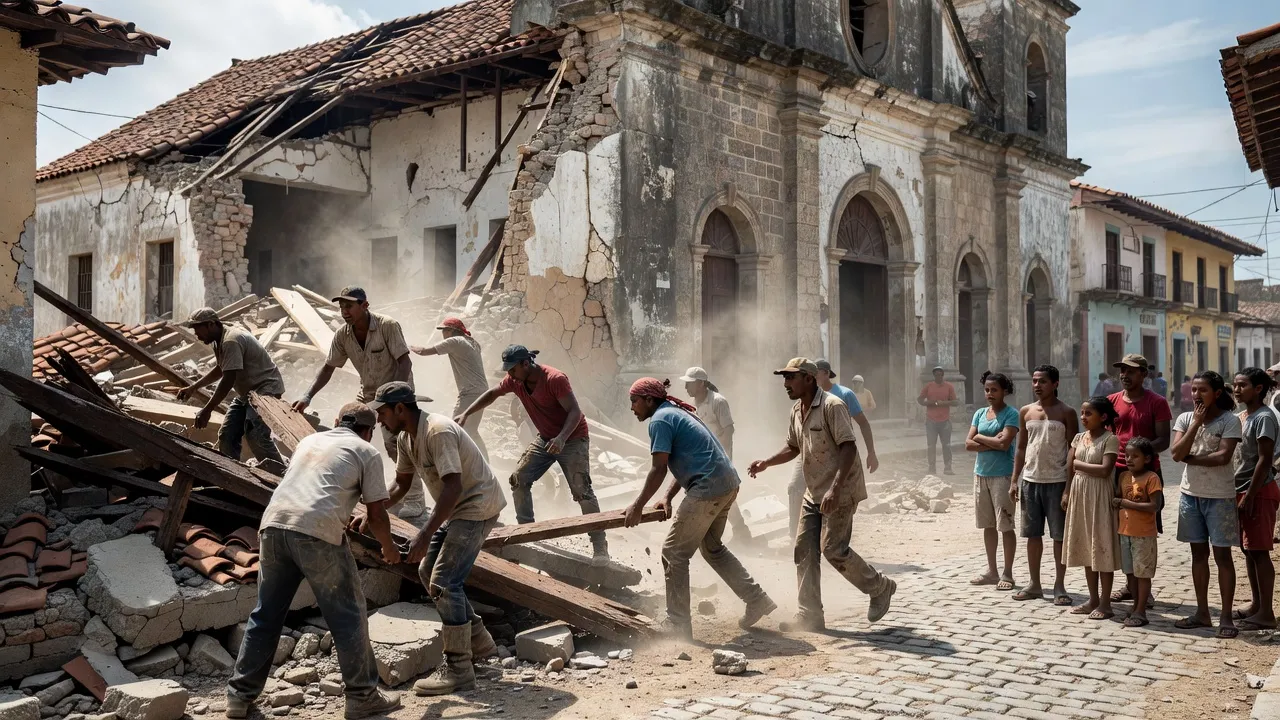
Damage is reported through images and eyewitness accounts. Veja and Estadão describe a partially collapsed hotel in Penonomé, the San Juan Bautista cathedral affected, and power outages in six provinces. Veja quotes President José Raúl Mulino: "O desastre que estamos enfrentando é grande", with roads "totally destroyed". Folha also reports his call for calm on X: "Não se deve usar o ocorrido para gerar alarme e desordem". According to the civil protection bulletin cited by G1, no deaths were confirmed, but injured people were taken to the hospital.
The national angle focuses on Brazilians on the ground. G1 gives a voice to Roque Freitas, a guide who has been living in the capital for 16 years, who describes fallen awnings in the Casco Antiguo and evacuated buildings, and to journalist Laís Gomes, who was evacuated from a restaurant: "Todos começaram a gritar".
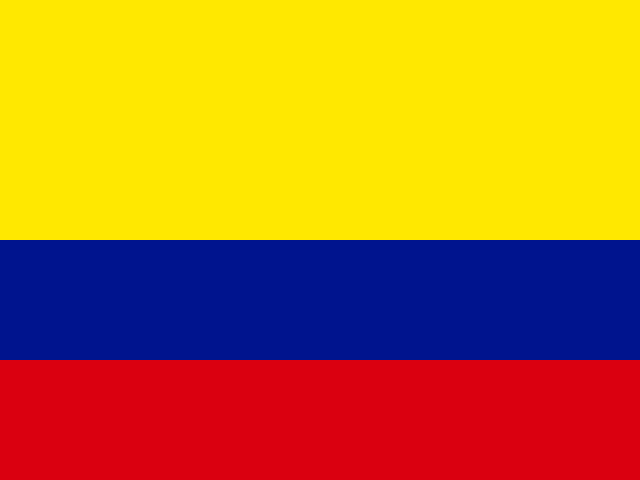
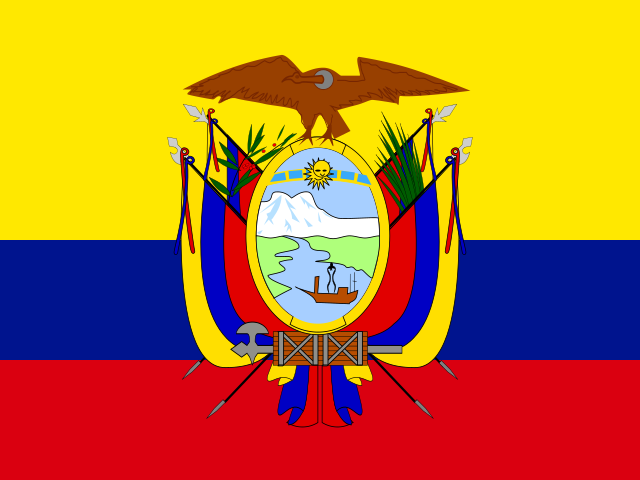
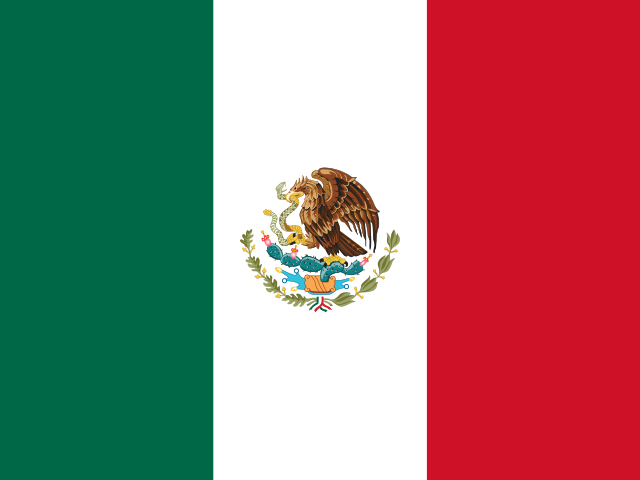
From an economic perspective, the canal is mentioned in a factual manner. Agência Brasil and Jornal de Brasília report the Canal Authority's statement that operations are normal; Veja specifies that the waterway handles 5% of international maritime trade. The media finally relays the tsunami alert: the American system targeted the coasts of Panama, Colombia, Costa Rica, Ecuador, Peru, Nicaragua, Guatemala, El Salvador, and Mexico, before withdrawing the alert. Jornal de Brasília recalls that earthquakes are not common in the Panamanian capital, which is more exposed in the province of Chiriquí.
SOURCES (4)
- G1 Globo MundoMEDIUM
- Agência BrasilMEDIUM
- VejaMEDIUM
- EstadãoMEDIUM