
DOMINANT ANGLE
Bern is gauging the Panamanian earthquake by the numbers and the tsunami alert: revised magnitudes, threatened coastlines and then the threat lifted, before the damage assessment.
Dominant angle identified — does not reflect unanimity of this country’s media
KEY POINTS
- 01
The USGS revised the magnitude from 7.6 to 7.7, while the Honolulu Alert Center had announced 8.0 and a depth of 33 km (SRF News).
- 02
The tsunami alert targeted the coasts of nine countries, from Panama to Mexico, before being lifted (SRF News).
- 03
According to Le Temps, earthquakes in the Panamanian capital are unusual, with seismic activity mainly concentrated in the province of Chiriquí.
ANALYSIS
Berne, October 10, 2026. The Swiss press is covering the Panamanian earthquake of Friday, October 9, from the angle of measurement and alert rather than destruction. SRF News leads with the "Tsunami-Warnung": a 7.7 magnitude earthquake struck the southern coast of Panama at 12:56 local time, according to the USGS, with its epicenter about ten kilometers from Pitaloza Arriba, at a depth of ten kilometers, in the south-central part of the country.
The editorial offices are emphasizing the discrepancies in measurement. The USGS initially estimated the magnitude at 7.6 before revising it to 7.7, while the Pacific Tsunami Warning Center in Honolulu had announced 8.0 and a depth of 33 kilometers. Le Temps, which relies on AFP, notes a similar initial estimate of 8, revised to 7.6 and then to 7.7. This instability in the numbers structures the narrative, as does the chronology of the alert: SRF lists the affected coasts (Panama, Colombia, Costa Rica, Ecuador, Peru, Nicaragua, Guatemala, El Salvador, Mexico), then specifies that the threat has been lifted.
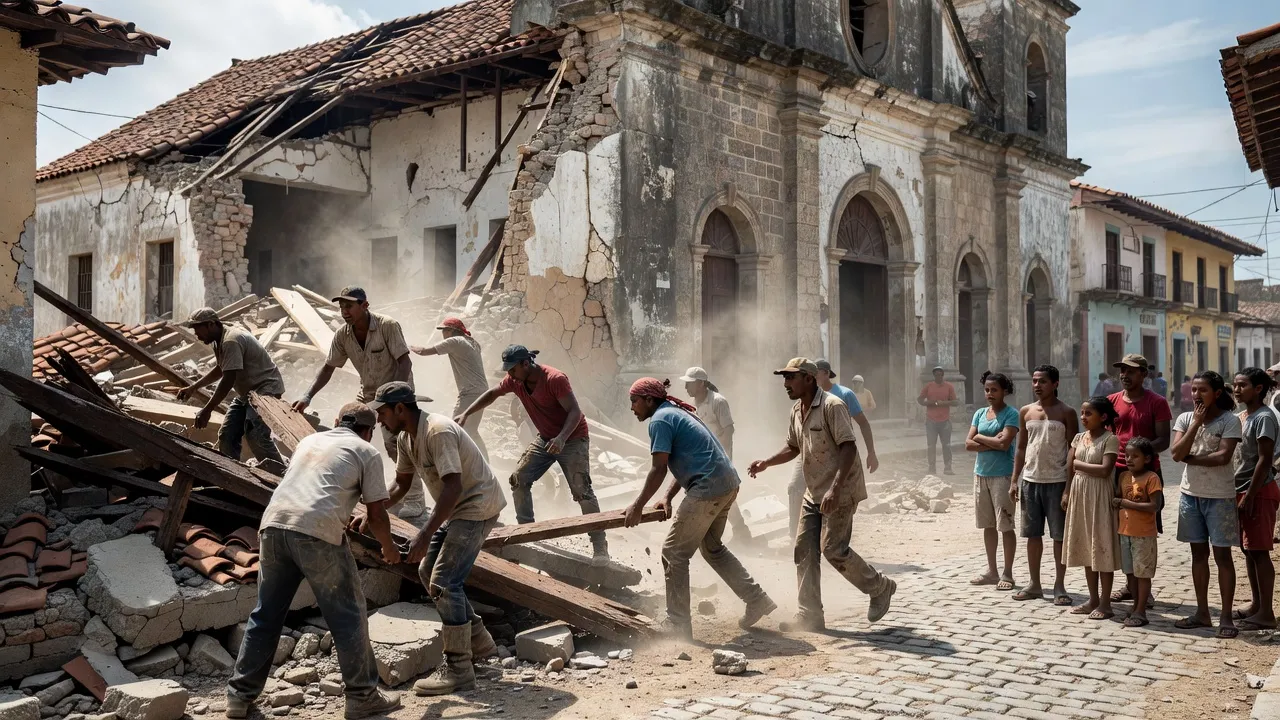
The human toll remains in the background. SRF writes that, according to initial reports, there were "no deaths and no major destruction," and Le Temps notes that no victims have been reported. The damage cited is sporadic: the San Juan Bautista cathedral in Penonomé was damaged, according to "La Prensa," a hospital was evacuated where a nurse was caring for patients, and there were power outages in several provinces. The government suspended afternoon classes throughout the country, and Tocumen airport interrupted its activity.
The testimonies are brief. SRF quotes Rosendo Domínguez, 60, from the province of Herrera, who was contacted by the Associated Press: objects fell in the kitchen, "everyone is outside and afraid." Le Temps reports that hundreds of people evacuated buildings in Panama, according to AFP.
The seismic context is recalled by Le Temps: earthquakes in the capital are unusual, with most seismic activity concentrated in the province of Chiriquí, in the west. The newspaper mentions several significant aftershocks, including one of magnitude 6, and authorities assessing damage in Herrera, Azuero, Veraguas, and Los Santos. Neither article discusses the canal or the economic consequences.