
DOMINANT ANGLE
Rome is closely monitoring the emergency in real time: the Italian press reports on damaged buildings, panic, and disrupted services, and assistance to nationals through the Farnesina.
Dominant angle identified — does not reflect unanimity of this country’s media
KEY POINTS
- 01
Earthquake of magnitude 7.6 according to the USGS (ANSA, La Repubblica), 14 km southwest of Pitaloza Arriba, followed by a second shock of magnitude 6.
- 02
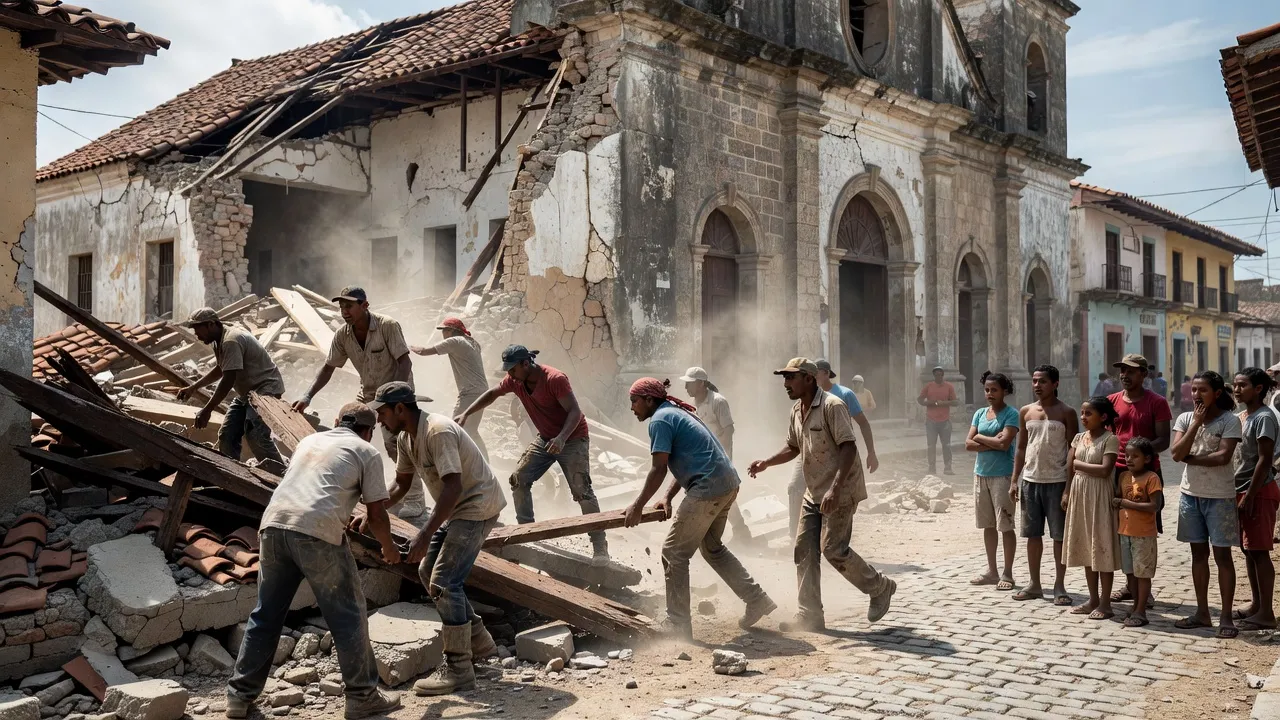
In Penonomé, a town of around 20,000 inhabitants, several buildings with collapsed facades; the main water plant of the capital is operating at 20% of its capacity (La Repubblica).
- 03
The Farnesina and the Italian embassy are monitoring the situation; Antonio Tajani is following developments and the Crisis Unit can be reached (Adnkronos).
ANALYSIS
Rome, October 10, 2026. The Italian press is covering the earthquake that struck Panama on Friday, October 9, in real-time, using reports from the USGS and AFP. ANSA and La Repubblica report a 7.6-magnitude earthquake, located 14 kilometers southwest of Pitaloza Arriba, followed by a second shock of magnitude 6, according to Panamanian TV station RPC.
The first hours are described as scenes of panic. La Repubblica mentions hundreds of people leaving their homes, and according to images from local media, several buildings with collapsed facades in Penonomé, a town of around 20,000 inhabitants, the capital of the province of Coclé, presented as one of the most affected areas. ANSA mentions cracked buildings and debris in the streets. No victims have been reported at this stage in the three articles.
Essential services occupy a significant place. The international airport has suspended its activities as a precaution, schools are closed, and firefighters are checking the solidity of buildings in Coclé, Veraguas, and Azuero. La Repubblica also reports power outages and indicates that the water agency, Idaan, signals that the main water treatment plant in the capital is operating at 20% of its capacity, a situation repeated in other facilities in the country.
On the political level, ANSA quotes President José Raúl Mulino, who has requested a report from his ministers and called for calm: "There is no reason to use the event to generate alarm and disorder." The authorities are urging the population not to saturate phone lines to allow for rescue efforts.
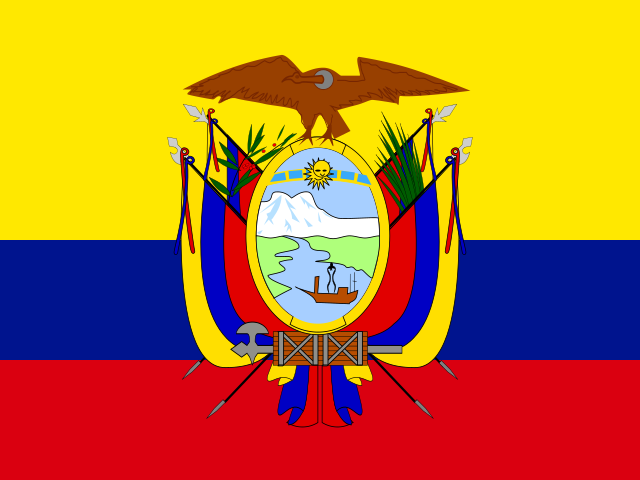
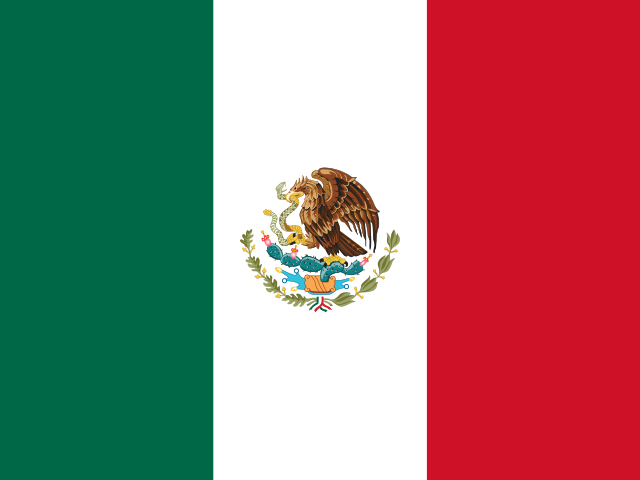
The tsunami alert forms a second part of the story. The American system had signaled a potential threat to nine countries in the eastern Pacific, from Ecuador to Mexico, before withdrawing it; ANSA's headline states that the United States excludes the risk of a tsunami.
The Italian angle comes from Adnkronos: the Farnesina and the Italian embassy in Panama are monitoring the situation, Foreign Minister Antonio Tajani is following developments, and the embassy's and Crisis Unit's phone numbers are published for the attention of Italian citizens. The articles do not mention the canal or a human toll beyond the reported absence of victims.