

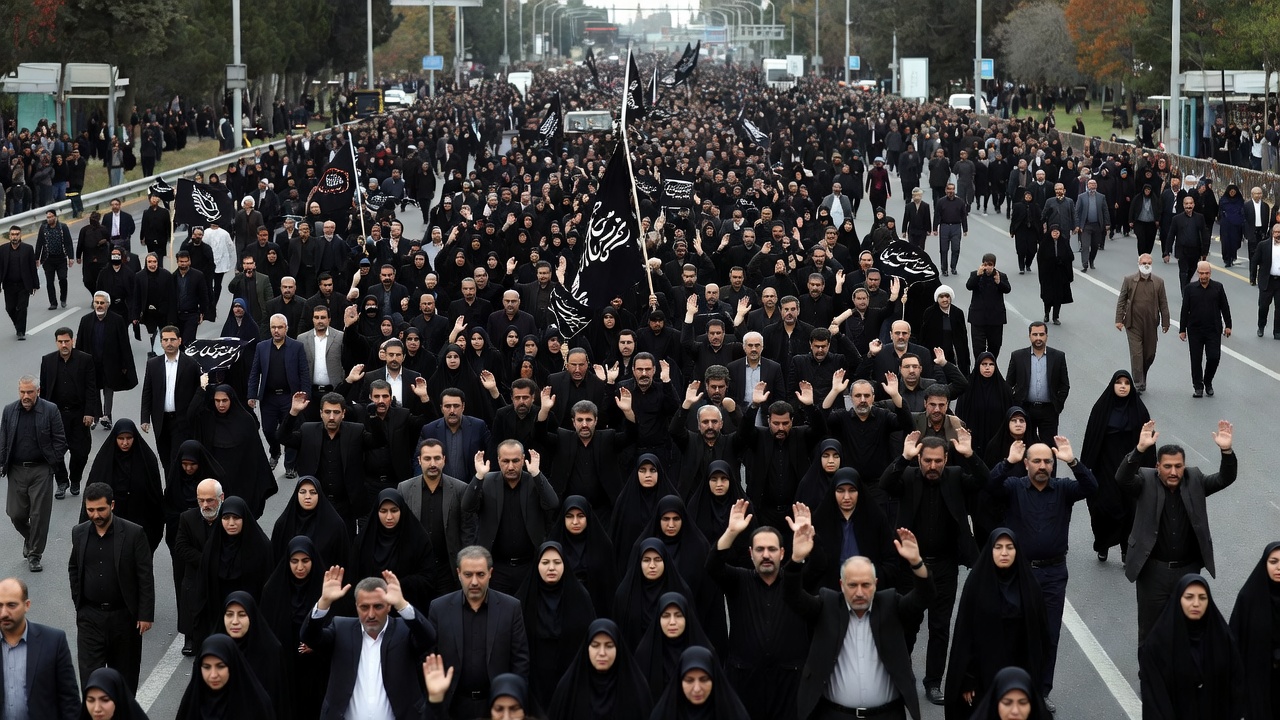
DOSSIERONGOING
THE WAR ON IRAN 2026
Tracking the Iran-Israel-US crisis since the first strikes in March 2026. Strait of Hormuz, global reactions, economic and diplomatic consequences.
122ARTICLES
45COUNTRIES
140DAYS
49/100FRAMING GAP
 AU
AU IQ
IQ RU
RU EG
EG UA
UA PL
PL IT
IT CO+37 more
+15
Click a flag to see blind spots
CURRENT SITUATION
The US-Iran war enters its sixth week with accelerating global economic consequences. The Strait of Hormuz remains closed, oil prices exceed $114 per barrel, and at least 12 countries in Asia and Africa have imposed energy rationing measures. The IRGC has expanded its threats to American universities and officials' residences in Iraq, while Washington faces a command crisis: Defense Secretary Hegseth fired the Army Chief of Staff during active military operations. Trump tells allies to go find their own oil, as South Korea prepares to ban private vehicles if oil reaches $120 per barrel.
Updated on July 16, 2026
LATEST DEVELOPMENTFrappes russes sur Odessa : la bataille de la mer Noire s'intensifie
THE ESSENTIALS
CONSENSUS POINTS
- +Russian missile and drone strikes hit Odessa and Kiev, marking a fifth consecutive day of strikes on the Odessa region, resulting in civilian casualties.
- +The UN (Human Rights Monitoring Mission, HRMMU) reported at least 293 civilians killed and 1,990 injured in Ukraine in June 2026, the deadliest monthly toll since April 2022.
- +The Black Sea battle is escalating: Ukrainian naval drones struck several dozen Russian ships, while Russia hit cargo ships supplying Ukrainian forces.
- +The chief engineer of the Zaporizhzhia nuclear power plant was killed in a drone attack, with Russia attributing responsibility to Ukraine.
THE CAMPS
Western factual pressuk, fr, de
These countries document the intensification of strikes on Odessa and the Ukrainian naval campaign, relying on official Ukrainian and UN sources, with a marked focus on the civilian toll and economic consequences of the maritime blockade.
Official Russian narrativeru
Moscow frames its strikes as legitimate responses to Ukrainian military logistics and characterizes Ukrainian attacks in the Black Sea, as well as the death of a nuclear engineer, as terrorist acts.
Ukrainian positionua
Kiev describes a deliberate escalation against civilians and maritime traffic, citing regional authorities and UN assessments to condemn the ongoing worsening of the conflict.
FRAMING DIFFERENCES
Legitimacy of Naval Strikes
Russia frames Ukraine's strikes on its ships as 'terrorism' and presents its own strikes on ports and cargo ships as legitimate military responses, while other countries cover these Ukrainian attacks as a defensive response to Russian aggression.
Responsibility for Nuclear Engineer's Death
Russia attributes the death of the chief engineer at the Zaporijjia nuclear plant to a Ukrainian terrorist act and calls for a reaction from the IAEA, without any direct Ukrainian contradiction appearing in the corpus consulted by other countries.
Diplomatic vs Military Priority
Turkey emphasizes its role as a mediator between Kiev and Moscow and the need for a negotiated peace, while other countries cover the event primarily from the angle of military and human toll, without relaying this diplomatic dimension.
WHAT NOBODY SAYS
RUUN civilian toll for June 2026 (293 dead, 1,990 injured), Firsthand accounts from Ukrainian civilian victims in Odessa
DEUN-reported civilian casualty toll for June 2026
TREconomic consequences for Turkey of the maritime blockade (grains, Black Sea transit)
The escalation of the Black Sea battle illustrates a war of attrition that now extends to civilian maritime traffic and energy infrastructure, with cross-strikes on the ports of Odessa and on Russian and Ukrainian commercial fleets. The civilian toll reported by the UN for June 2026, the highest since 2022, highlights the worsening human impact of the conflict, while the death of the chief engineer of the Zaporijjia nuclear plant revives concerns over nuclear safety. Between Western accounts focused on Ukrainian civilian losses, the official Russian version framing its strikes as legitimate responses, and Turkish mediation seeking to preserve regional stability, coverage reflects nationally driven interpretations of the same theater of operations that are difficult to reconcile.
PERSPECTIVE EVOLUTION
FILTER BY COUNTRY
122 articles
Russian Strikes on Odesa as the Black Sea Battle Intensifies
Moscow condemns the assassination of the chief engineer of the Zaporizhzhia plant as a coordinated terrorist act with the West, while framing its strikes on the ports of Odessa as legitimate responses to Ukrainian military logistics.TASS Berlin views the escalation in the Black Sea as a symptom of a war of attrition that is now spreading to civilian maritime traffic, caught between the blockade of European sanctions and growing alarm on NATO's northern flank.Tagesschau
 Turkey is gauging the risks of a Black Sea in turmoil and is pushing its diplomatic mediations between Kiev and MoscowDaily Sabah

Trump Drops Strait of Hormuz Toll as Blockade and Strikes on Iran Resume
 Singapore is gauging the maritime fallout from the issue with the caution of a city-state that thrives on trade passing through its strategic straits.Channel News Asia
 Brasília views Trump's retreat on the Ormuz toll as a symptom of a bogged-down war, between a surge in oil prices and Gulf allies facing headwinds.G1 Globo MundoAnkara is gauging the fallout of a blockade that threatens the freedom of navigation in strategic straits, a sensitive issue for a country that guards the Bosphorus.Bianet+13
Gulf crisis: Washington reinstates Hormuz blockade as oil surges
 New Delhi is gauging the oil shock as much as the human risk to its vast diaspora in the Gulf, as the Strait of Hormuz reels from the strikes.The Hindu Business Line
 Seoul is first assessing the energy and trade impact of the Strait of Hormuz crisis, amid soaring oil prices and an unprecedented US surtax on freight.Korea Herald
 Pakistan's capital, Islamabad, is gauging the risk at its doorstep: as a direct neighbor of Iran and a supplier of millions of expatriate workers to the Gulf, Pakistan fears a surge in oil prices and a direct threat to its diaspora, as well as the potential for regional military contagion.Dawn

 +4
+4Third wave of US strikes on Iran as Gulf states are hit
The United States government sees a calculated escalation: the White House frames this third wave of strikes against Iran as a proportionate response to the closure of the Strait of Hormuz, while maintaining diplomatic pressure on Tehran.Fox NewsParis is gauging the risk of escalation in the Strait of Hormuz, where the closure announced by Tehran threatens a vital route for global energy supply and undermines the last remaining channels of mediation.France 24Moscow denounces a planned escalation by Washington and relays the Iranian thesis of legitimate defense, while emphasizing the collapse of the June agreement on the Strait of Hormuz.RT
 +2
+2Russia strikes Ukraine with missiles and drones: dead and wounded
Moscow attributes the responsibility for the escalation to Kyiv, defending its strikes as targeting Ukraine's military industry while highlighting its own civilian losses.TASSKyiv is methodically assessing the damage from a combined Russian assault overnight and is calling for the swift delivery of the promised Patriot batteries from the NATO summit.UkrinformFrance is gauging the diplomatic urgency on the eve of hosting, on Monday, a meeting of the coalition of volunteers with Volodymyr Zelensky and around twenty heads of state, following a new wave of Russian strikes that have killed at least eight people in Ukraine.France 24+1The United States strikes Iran again as Tehran declares the Strait of Hormuz closed
Israel weighs its options between showing support for the US and avoiding direct involvement with IranJerusalem PostBrasília is assessing the economic fallout of a prolonged Gulf War, caught between targeted sanctions from Washington and uncertain mediation efforts by Oman to reopen the Strait of Hormuz.G1 Globo MundoParis views the escalation as proof that the June 17 truce never held, amid repeated American strikes and Iranian reprisals against the Gulf.RFI+2Alleged Iranian plot to assassinate Donald Trump
New Delhi is viewing the Israeli alert with caution, noting that US officials themselves are questioning whether there is an intention to influence Trump's decision regarding Iran.The Hindu Business LinePakistan's capital, Islamabad, fears that the alleged plot by Tehran against Donald Trump could undermine its role as a regional mediator, which it has painstakingly built around the Islamabad Memorandum between Washington and Tehran.DawnBeijing downplays the alert over an Iranian plot targeting Donald Trump, seeing it mainly as a symptom of an already ongoing military escalation between the US and Tehran rather than an isolated incident.CGTN+5Military escalation between the United States and Iran
Tehran condemns an American aggression described as a "war crime" and promises a crushing response while blocking the Strait of HormuzIran International Riyadhh is gauging the risks of an escalation that directly threatens navigation and oil prices in the Gulf.Asharq Al-AwsatNew Delhi views the escalating exchange of strikes between Washington and Tehran as a direct threat to its energy security, with the Strait of Hormuz being crucial for its crude oil imports.Times of India+5
United States strikes Iranian targets after attacks in the Strait of Hormuz
Singapore is first gauging the ripple effect on maritime traffic in the Strait of Hormuz, a vital artery for its own Asian energy flowsChannel News AsiaBerlin is assessing the risks of a collapse of the fragile ceasefire in the Gulf, amid US strikes and tanker attacks in the Strait of Hormuz.DW GermanFrance fears a new escalation in the Gulf, where the resumption of hostilities between the US and Tehran threatens a barely concluded ceasefire and undermines a vital artery of global energy trade.Le Monde +7
+7New wave of Russian strikes on Ukraine as Kyiv hits a Russian oil terminal
Warsaw weighs escalation risks spreading to its own soil, caught between Russian accusations targeting Baltic states and alerts over a possible limited attack on Poland.RMF24London reads the escalation as economic warfare cutting both ways, where Ukrainian strikes on Russian oil match Moscow's bombardments while American mediation stalls.The Independent Helsinki anticipates a sharp increase in drone incidents near its own territory, having temporarily restricted air and maritime traffic over the Gulf of Finland following Ukrainian drone strikes on Saint Petersburg.YLE Uutiset+3
Iran: State Funeral for Supreme Leader Ali Khamenei
Jerusalem is closely watching the cross-cutting threats surrounding Khamenei's funeral, finding itself at the center of a triangle of tensions between Tehran, Washington, and Tel Aviv, as the health status of the new Supreme Leader Mojtaba remains uncertain.HaaretzAnkara views Khamenei's funeral as a two-fold challenge: a display of strength for the post-war government and a diplomatic reboot, set against the backdrop of an opaque succession process surrounding Mojtaba, the new Supreme Leader who was absent from the ceremonies.Daily SabahIslamabad is weighing in on the Iranian crisis: as a mediator for the ceasefire signed under its name, Pakistan is sending its prime minister and army chief to Khamenei's funeral to show its foremost solidarity.Dawn+6US-Iran Talks Wrap Up in Doha: 'Progress' on Hormuz, War on Hold
 Manila analyzes the gap between Trump's triumphant statements on nuclear issues and the reality of the Doha sessions, while examining the legal limits of Iran's ambitions in the Strait of Hormuz.Rappler
 Doha consolidates its status as a central mediator between Washington and Tehran, displaying 'positive progress' on the Islamabad memorandum - but the Iranian military threat to routes in the Strait of Hormuz, formulated the day after the discussions, tempers the surrounding optimism.Al JazeeraAnkara scrutinizes the contradictory signals from Doha: diplomatic progress displayed on the same day Tehran hardened its warnings on the Strait of Hormuz.Daily Sabah
Massive Russian Strike on Kyiv: At Least 11 Dead Under Missiles and Drones
Paris assesses the scope of the humanitarian disaster in Kiev, unanimously described as the worst Russian attack since 2022, and documents the limitations of air defenses against a barrage of 74 missiles and 496 drones.Le MondeBrasília is closely examining the Russian offensive in its technical details: Geranium-2 drones, hypersonic Tsirkon missiles, Tu-95 and Tu-160 bombers identified article by article - with a human toll still uncertain between 8 and 18 deaths.Folha de S.PauloCanberra assesses the scope of an unprecedented strike on Kyiv and views the Patriot missile shortage as a warning sign for collective defense, with the Australian government taking a keen interest in the situation.Sydney Morning Herald+5Massive Russian strikes hit Ukraine
Moscow systematically distinguishes its own strikes—presented as targeting military infrastructure—from Ukrainian attacks on Russian soil, which the Kremlin frames as «terrorist acts».TASSSingapore methodically scrutinizes the intensification of cross-strikes between Moscow and Kyiv, documenting Ukrainian human casualties and counter-strikes on Russian energy and military industry, in a conflict now in its fifth year along a 1,200-kilometer front.Channel News AsiaKyiv reports a systematic air campaign: ballistic missiles targeting the capital, drone waves across 15 regions, and urgent calls to allies ahead of the NATO summit in Ankara.Ukrinform+5Iranian drones over Bahrain: Egypt and Gulf monarchies condemn the attacks
Moscow reads the Gulf escalation as a sequence of mutual escalations: Iranian drones on Bahrain, US strikes, IRGC counter-attack—each side invoking self-defense to justify the next move.MeduzaDoha views with alarm the unraveling of the US-Iran ceasefire, as Iranian drone strikes on Bahrain and a tanker attack in the Strait of Hormuz directly threaten the regional stability upon which the Gulf economy depends.Al JazeeraFrance measures the scale of the diplomatic earthquake: the Versailles agreement, signed on June 17 between Washington and Tehran, falters in its first fortnight under successive drone strikes and cross-fired missiles.France Info+1Ukraine strikes a Russian weapons plant in Volgograd with Flamingo missiles
Berlin measures the strategic reach of Ukrainian strikes on Volgograd: for the German press, the attack against the Titan-Barrikady factory illustrates Kiev's growing deep-strike capabilities, while raising questions about escalation risks.Deutsche WelleParis views the Titan-Barrikady strike as demonstrating Ukraine's capacity to reach military-industrial sites over 1,000 kilometers behind the front lines, fundamentally reshaping the war's strategic calculus.France 24Rome assesses the strategic reach of Ukraine's strike on Volgograd: for Italian press, the attack on the Titan-Barrikady weapons complex signals a new phase in Kyiv's capacity to strike deep into Russia's military-industrial infrastructure.ANSA +2
+2The United States strikes Iran after a cargo ship attack in the Strait of Hormuz
Moscow reads the Iran-US escalation as the progressive collapse of a memorandum of understanding that was never truly honored, presenting both parties as co-responsible for the security degradation in the Gulf.TASSNew Delhi watches with growing concern each escalation at the Strait of Hormuz, a critical chokepoint through which a large share of its petroleum imports transit, and closely monitors the spiraling military exchanges between Washington and Tehran.Times of IndiaJerusalem monitors the American-Iranian escalation in the Strait of Hormuz with acute concern: each US strike, each IRGC counterstrike, is deciphered through the lens of the fragile ceasefire memorandum signed just two weeks ago—a document familiar to Israeli strategists who know the costs of direct confrontation with Tehran's Revolutionary Guard.Jerusalem Post+4Cargo Ship Attacked in the Strait of Hormuz: UN Pauses Evacuation, Iran Suspected
Canberra renders the contradictory US-Iran accounts and the threat to the peace dealABC News AustraliaWashington blames Iran and worries for its already-fragile 60-day peace memorandumCNBCJerusalem flatly attributes the attack to the Revolutionary Guard and reads it as proof of Iranian duplicityJerusalem Post+2US Senate votes to end Iran involvement: an institutional rebuke for Trump
Sydney evaluates the scale of institutional rebuke that Trump endured in the US Senate—parsing a 50-48 vote that marks the first clear bipartisan breach on Iran policy, while underscoring its limited legal reach and the fragile state of the emerging ceasefire.ABC News AustraliaBrasilia watches a rare institutional rebuke of Trump: the Senate's 50-48 vote, with four dissenting Republicans, stands as a historic precedent on presidential war powers, wielding symbolic force but real political significance as midterm elections approach.Folha de S.PauloNew Delhi reads the Senate's push to curtail Trump's Iran war powers as a window into American institutional tensions with far-reaching implications for regional stability, energy flows, and strategic alignments in Asia.Times of India+6US-Iran talks conclude: Strait of Hormuz deal and asset release
Washington navigates between diplomatic engagement and maximum pressure: the Burgenstock agreement is framed as a tactical victory for the Trump administration, but U.S. intelligence harbors doubts that a definitive nuclear accord is truly within reach.CNBCTehran claims strategic victory in Swiss negotiations, presenting US concessions as the direct result of the Islamic Republic's combined soft and hard power approach.Iran InternationalMoscow frames the Burgenstock accord as a pragmatic reconfiguration of Middle Eastern power dynamics: Washington trades economic ground to Tehran in exchange for Strait of Hormuz stabilization, while Russia documents each development as an observer rather than a principal actor.RT+7La Chine sanctionne des entreprises américaines et durcit ses contrôles à l'export
Singapore closely monitors the economic fallout from escalating US-China trade tensions and energy market volatility around the Strait of Hormuz, two direct threats to its open economy and maritime trade dependency.Channel News AsiaBerlin reads the escalating Sino-American trade dispute as symmetric economic warfare: Beijing retaliates methodically against Washington's blacklists, targeting 56 US firms across defense and rare earth sectors.ZEIT OnlineWashington gauges the true scope of Chinese retaliatory measures: framed as largely symbolic by analysts, yet revealing a persistent technological and defensive escalation that shows no sign of slowing despite commitments made during Trump's May visit to Beijing.NPRUS-Iran : percée en Suisse, un mémorandum en 14 points et une feuille de route de 60 jours
Washington assesses the Lake Lucerne summit as a claimed diplomatic triumph yet exposing deep fractures: a 14-point accord and 60-day roadmap, but the Strait of Hormuz reopening amid threats, and billions in frozen Iranian assets whose fate remains contested.Fox NewsSeoul evaluates the Burgenstock agreement through the lens of its immediate maritime interests: two South Korean vessels have transited the Strait of Hormuz, while twenty-two others remain trapped, converting the 60-day roadmap into an urgent economic test for Korean commerce.Korea Times Tokyo measures the US-Iranian accord signed in Switzerland through the lens of structural energy dependence: the Strait of Hormuz is not an abstract geopolitical question, but a vital artery whose repeated closure directly affects the supply of oil and naphtha to a resource-poor nation.Kyodo News+8
Iran Closes the Strait of Hormuz and Declares the Nuclear Deal 'in Danger'
Tokyo monitors with concern the impact of the Strait of Hormuz closure on its energy supply, scrutinizing every development in Iran-US negotiations from a position of structural vulnerability.Kyodo NewsParis measures the precarious balance between Iran's closure of the Strait of Hormuz and the survival of the Iran-US nuclear accord, signed just three days before the crisis erupted.Le Monde InternationalJerusalem views the US-Iran agreement with caution: Tel Aviv fears that the memorandum grants strategic breathing room to a regime that has financed decades of hostile proxies along its borders.Haaretz+20The US-Iran Nuclear Deal Wavers as Tehran Postpones Talks
Paris observes the fragility of an accord signed amid the grandeur of Versailles and already wavering two days after its conclusion, caught between Israeli airstrikes and the surprise cancellation of Swiss negotiations.Le MondeWashington confronts the gap between a historic memorandum's signature and the fragility of a cease-fire that sixty days must convert into a durable accord—with no certainty of success.CNBCLondon reads the failed Swiss negotiations as a stark strategic loss for Washington rather than a capitulation by Tehran. The viability of the fragile 60-day framework now emerges as the central unknown—and each Israeli airstrike risks unraveling the entire mechanism before substantive nuclear talks even begin.BBC+6Israel Strikes Southern Lebanon, Straining the Ceasefire With Hezbollah
Tehran condemns Israeli strikes on Lebanon as a direct violation of the Iran-US memorandum of agreement signed June 18, 2026, and warns of their impact on ongoing nuclear negotiations.Mehr News EnglishRome watches a paradox unfold: while Washington and Tehran finalize a memorandum and reopen the Strait of Hormuz, Israeli airstrikes in southern Lebanon kill at least sixteen civilians and threaten to shatter the fragile diplomatic framework barely constructed. Italian outlets connect the deadly strikes to destabilization of the US-Iran accord, U.S. Vice President Vance's warning to Israel, and Prime Minister Meloni's cautious stance at the G7.La RepubblicaTokyo measures Israeli strikes in southern Lebanon through the lens of its vital energy interests: a fragile ceasefire with Hezbollah reignites anxiety over the stability of the Strait of Hormuz, an indispensable artery for Japan's oil supply.Kyodo News +7
+7US-Iran Peace Deal Finalized: End of Operations and Hormuz Reopening
 Cape Town weighs the economic fallout of the US-Iran accord with acute attention to oil markets and maritime transport flows, a top priority for an economy structurally exposed to energy price swings.Daily MaverickLondon scrutinizes the US-Iran agreement with caution: while the memorandum of understanding marks the end of military operations and reopens the Strait of Hormuz, the nuclear question remains unresolved and implementation details remain sparse.BBCWashington celebrates a historic agreement with Tehran ending 107 days of military operations, lifting the American naval blockade, and announcing the reopening of the Strait of Hormuz, framed as a personal diplomatic victory for Trump.Fox News+12
Trump Says Iran Deal to Be Signed 'Sunday' and Hormuz to Reopen — Tehran Pushes Back
Washington swings between Trump's victory claim and the press's skepticism over a 60-day dealNew York TimesParis dissects the draft deal and flags the gap between American optimism and Iranian cautionRFIBerlin sets the Pakistani timeline against the Iranian denial and stresses unresolved issues, including LebanonDW German+11Trump threatens to seize Kharg Island, then calls it all off: the rollercoaster war over Iran's oil
New Delhi reads the Kharg threat first through its oil bill, in non-aligned pragmatism attentive to its energy securityNDTVWashington swings between the Kharg seizure threat and a deal announcement, reading the sequence as a domestically driven gambleWashington PostTehran denounces a US 'miscalculation' and receives the Venezuela parallel as a confession of neocolonial resource predationIran International+12026 World Cup under high tension: Somali referee denied entry, Mexico protests, Iranian tribute
France puts the World Cup under a geopolitical lens: sport cannot stand apart from realityLe MondeBrazil watches Miami: White House defends denying entry to Somali referee and IraniansJornal de BrasíliaLondon between sport and politics: the Somali referee detained, cartels at the stadiumThe Guardian+2US Apache helicopter downed, CENTCOM strikes Iran: escalation at the Strait of Hormuz
France between strikes and diplomacy: the escalation alarming Gulf statesBFMTV InternationalTel Aviv between satisfaction and strategic uncertainty: striking and negotiating — is that coherent?Jerusalem PostMoscow reads US strikes as aggression and sees negotiations under bombardment as incoherentTASS+2Trump Promises Total Victory Over Iran in Two Weeks — Netanyahu Keeps Striking Despite Presidential Order
New Delhi measures the damage : 100 days of war weighing on Indian markets as the Trump-Netanyahu relationship fracturesNDTVWashington oscillates between commander-in-chief and impotence : Trump orders halt to strikes, Netanyahu continuesTimeParis reads a two-level war : missiles on the ground and a narrative battle between Washington and Tel AvivFrance 24+2First direct Iran-Israel strike since April: missiles on Galilee after Beirut bombing, Trump explodes at Netanyahu over the phone
Tel Aviv reads the Iranian volley as the 'grave mistake' justifying retaliation, but must contend with an American president who explicitly demands a stopJerusalem PostTehran frames the volley as a 'warning' and demands an end to Israeli strikes on Lebanon, or a second wave will followFrance 24Washington pivots from referee to coercive broker: Trump demands Israeli restraint and sets the course for a forced nuclear dealSwarajya +4
+4Day 100 of the Iran-USA war: Iranian missiles on Bahrain and Kuwait, U.S. drones in Hormuz, the April ceasefire in tatters
Washington documents the failure of the ceasefire in figures and interceptions — without naming any political exit from the warCNBCTehran frames the retaliation as a minute-by-minute military chronicle, with the full closure of Hormuz held as the next escalation if Washington continuesIRNA EnglishParis tracks the mechanics of the two retaliatory rounds and folds in the Lebanese crisis as an acknowledged side-effectLe Monde+5Iran Hits Kuwait Airport: 13 Missiles, 17 Drones, One Killed, 63 Injured as April Truce Cracks Open
Tokyo reports the facts with technical precision and watches oil: a second tanker via Hormuz has dockedJapan TodayAnkara relays the categorical Kuwaiti denial of the Iranian accusations and watches the Gulf crisis from a distanceDaily SabahCairo condemns any 'violation of sovereignty' and stands expressly with Kuwait and BahrainEgypt Independent +12
+12Rain of fire on Kyiv: 73 missiles, 656 drones, 22 dead — and Zelensky demands a European shield
Warsaw calls for NATO Article 4 activation after the Romanian incident — Kyiv is now a Polish matterNotes from PolandWashington documents the Ukrainian suffering but Trump stays silent — silence has become policyNPRMoscow pivots attention to Crimea's fuel shortage and the planned autumn mobilizationMoscow Times+2New Glenn Explodes: Cape Canaveral Marks a Major Setback for Blue Origin and Jeff Bezos
Brasilia assesses the scope of the Blue Origin catastrophe against its own space ambitions: the New Glenn explosion reignites debate over Brazil's reliance on a launch market dominated by fragile players.Folha de S.PauloWashington draws a stark conclusion: New Glenn's failure on the pad exposes both the fragility of Blue Origin as a second player in US commercial spaceflight and the Pentagon's deepening dependence on SpaceX for launch capability.CNBCBerlin measures the industrial fallout from New Glenn's explosion through the lens of European space sovereignty, highlighting vulnerabilities in a sector overly dependent on a US-dominated duopoly.Deutsche Welle+5US-Iran Accord: 60-Day Ceasefire Extension Awaits Trump Approval
Istanbul follows the fragile US-Iran 60-day deal with the eyes of a double-exposed actor: NATO member, direct neighbor of Tehran, and dependent on the Strait of Hormuz for energy supplies.BianetTehran makes it clear: Trump's ceasefire post reflects his personal wishes, not agreed terms, and Iran will formalize its sovereignty over the Strait of Hormuz through law.Mehr News EnglishWashington hangs in the balance: a deal of principle exists, but Trump demands several days of reflection before signing, leaving the diplomatic process in limbo.LA Times World+9Iran/US: May 27-28 escalation and rupture of the April truce
Moscow denounces US escalation in the Gulf as a demonstration of a power that 'believes in peace through force, not diplomacy', according to the very words of an Iranian diplomat received in the Russian capital.RTNew Delhi weighs with concern the consequences of a US-Iran escalation that directly hits its energy, logistical, and human interests in the Gulf region.The Hindu Business LineTokyo Anticipates Direct Consequences on Energy Supplies: With a Fifth of Global Oil and LNG Transiting Through the Strait of Hormuz, Each Additional Strike in Hormozgan Province Immediately Translates to Higher Bills for Japanese Industries and Households.Japan Today+12Toward a deal to end the U.S.-Iran war
New Delhi tracks each development in US-Iran negotiations carefully, aware that reopening the Strait of Hormuz directly conditions its oil supply and the future of the strategic Chabahar port.SwarajyaOttawa weighs the real scope of a USA-Iran accord announced as 'largely negotiated,' yet the most sensitive points—starting with the nuclear issue—remain deliberately postponed.National PostLondon reads with skepticism the contours of a still-fragile USA-Iran agreement: between declarations of 'substantial' progress and deep Republican divisions, Britain weighs the distance between announcement and treaty.BBC+1Pakistan's army chief in Iran as US's Rubio says 'slight progress' in talks
Doha places at the center the Pakistani mediation and its own role of support, presenting the ongoing dialogue as a fragile but decisive turning point in a conflict with unresolved nuclear parameters.Al Jazeera Athens closely follows US-Iran negotiations, seeing Pakistani mediation as a concrete opportunity to stabilize a region crucial to Eastern Mediterranean navigation.Greek ReporterOttawa frames US-Iran talks through the prism of global energy shock, highlighting that the impasse on the Strait of Hormuz and enriched uranium maintains markets in uncertainty.Globe and Mail+14
Cuba warns of 'bloodbath' as US imposes new sanctions amid rising tensions
Singapore puts human face on Cuban crisis: Amid Washington's diplomatic escalation and sanctions, Singapore's press documents the daily reality of millions of Cubans without electricity, fuel, and a future.Buenos Aires views the Cuba-US crisis as a multidimensional escalation where military posturing and diplomatic overtures coexist dangerously in the Caribbean.MercoPressBerlin views the Cuba-US crisis through the lens of strategic asymmetries and humanitarian risk, arguing that the confrontation is more about politics than military might.+3Trump threatens fresh Iran strike despite ongoing talks
New Delhi takes a keen interest in the escalating tensions between Washington and Tehran, particularly sensitive to the fate of the Strait of Hormuz, through which a significant portion of India's energy imports pass.NDTVPretoria views the Iran-US crisis primarily as a global economic shock: rising oil prices threaten the continent's economic recovery, while the BRICS fracture around Iran complicates diplomatic ambitions.News24Washington oscillates between military threat and diplomatic pressure on Iran, seeking a way out of war that eludes it, as the fragile six-week truce wavers under a new escalation.New York Times+14Trump says Xi agreed Iran must reopen the Strait of Hormuz
Jerusalem monitors Trump-Xi talks on Iran closely, navigating between hopes for increased international pressure on Tehran and concerns that Sino-American diplomacy could sideline Israeli interests.Jerusalem PostKyiv reads the Strait of Hormuz crisis through the lens of its own military survival: each dollar extracted from Russian or Iranian oil converts into drones and missiles striking Ukrainian cities.Kyiv PostSingapore tracks the Strait of Hormuz blockade with careful attention, as this maritime passage underpins Southeast Asia's direct energy supplies, while observing a deadlocked US-Iran dialogue despite Chinese mediation efforts.Straits Times+9Drone strike causes fire near Barakah nuclear plant in UAE
Cairo closely monitors the incident at the Barakah nuclear facility, an event that resonates in a region marked by persistent tensions and shared civil nuclear ambitions.Egypt IndependentSydney watches with sharp concern as the escalation around Barakah nuclear facility threatens broader Middle East stability, viewing the incident as a turning point that extends beyond Iran-UAE frictions to signal fundamental regional instability.Sydney Morning HeraldOttawa watches with concern as tensions escalate around Barakah, viewing the incident as a critical warning sign about the fragility of the Iran ceasefire and the cascading global energy risks it poses.Globe and Mail+10Iran-US ceasefire on life support: Hormuz sealed, global oil shock deepens
Washington reads the situation as trump caught between total victory and an overheating economyNDTVOttawa reads the moment as Trump no longer holding all the cards — the Canadian analysis is unsparing about the limits of US leverage as Iran consolidates its negotiating position.Globe and MailBeijing as indispensable arbiter of a war it did not startSouth China Morning Post+7Project Freedom Buried in 48 Hours: Trump Suspends Operation Hormuz and Announces 'Great Progress' Toward Iran Deal
Pretoria: Trump retreats on Hormuz, sailors remain prisonersNews24London maps the contradiction: war 'ended' by decree, missiles active by realityThe IndependentNew Delhi: Pakistan requests, Trump obeys — Islamabad confirms its new statusTimes of India+3Iran Strikes Fujairah and ADNOC: First Direct Attack on UAE Since Ceasefire
The Independent documents Trump's annihilation rhetoric with critical distance: this is the nth iteration of the threat to erase Iran from the map, voiced while American forces test Iranian defenses at Hormuz—and Iran responds by attacking the UAE, a Washington ally, rather than the U.S. directly.The IndependentDaily Sabah covers the attack with military precision: four cruise missiles launched at Fujairah with three intercepted by Emirati air defenses. Turkey, a straits power controlling the Bosphorus and Dardanelles, reads the Hormuz escalation as a test of international norms on freedom of navigation.Daily SabahIslamabad covers the ceasefire breach as a blow to Pakistan's diplomatic role: having facilitated talks and hosted negotiations, the return to military escalation erases weeks of diplomatic investment. Geo News reports Trump citing an Iranian attack on a South Korean vessel.Geo News+3Iran's 14-Point Peace Plan vs Trump's 'Not Acceptable': The Impossible Peace
A 3-phase plan: war first, nuclear later — Tehran demands guarantees against renewed strikesIRNA (Islamic Republic News Agency)Trump: 'I cannot imagine this plan being acceptable — they haven't paid a big enough price'ABC News AustraliaWhat's in Iran's plan — and what's notably missing: the nuclear programABC News Australia+6Hormuz Showdown: Trump's 'Project Freedom' vs Iran's Unyielding Grip on the Strait
Indian LPG tanker crosses Hormuz on May 2: Indian neutrality rewarded — or just lucky?NDTVOPEC+ avoids commenting on UAE's exit while voting a production hike that remains virtualVanguard NigeriaTrump announces Hormuz ship escorts as Iran confirms receiving US peace response via PakistanFolha de S.Paulo+9Trump Pulls 5,000 US Troops from Germany — and Threatens 'A Lot Further': The NATO Fracture Deepens
Merz downplays the Trump dispute and denies any link to troop withdrawal, but confirms Tomahawk cancellationThe Local GermanyTransatlantic split widens: Berlin pushes for European rearmament, Trump signals deeper cutsDawnSeoul watches: if Trump punishes Germany for verbal criticism, what value do US security guarantees hold?Korea Times+6Cuba: Trump Tightens Sanctions and Threatens Military Intervention — Havana Warns of "Dangerous and Unprecedented" Escalation
Singapore reads the Cuba sanctions as a real-world test of US financial extraterritorialityStraits TimesTrump tightens sanctions and threatens intervention — Havana speaks of 'dangerous and unprecedented level'Le MondeUS sanctions hit ordinary Cuban people, not just the regimeBBC+4Pentagon Signs 7 AI Military Contracts, Blacklists Anthropic in Ethical Standards Showdown
Pentagon militarizes AI without Anthropic — raising questions about laws of armed conflictDeutsche WelleUS military AI and the ethics question: deals signed in the context of the Iran warAl JazeeraWashington builds an AI army without ethical oversight — a global threat according to MoscowRT+2Trump's Iran War Hits Day 60: Congress Fights Back Over Nuclear Standoff
Moscow: sovereign Iran vs. declining empire — RT amplifies resistance narrativeRTLondon: Hegseth before the Senate, the Royal Navy warns on HormuzBBCBeijing: Iran oil sanctions, military denials, and Korean naphtha realignmentSouth China Morning Post+9UAE Quits OPEC: The End of Gulf Solidarity
London reads the Gulf rupture as a symptom of a global energy order in full reconfigurationBBCDoha sees in the UAE's exit the collapse of a Gulf solidarity model it tried to rejoin after its own blockadeAl JazeeraSingapore maps how OPEC's disintegration reshapes energy security across Southeast AsiaChannel News Asia+8Hegseth Before Congress: $25 Billion Spent, No End Date in Sight
Ottawa notes Hegseth accused of lying — confirmation that the Iran war is fracturing American domestic consensusGlobe and MailLondon follows the Hegseth hearing knowing its own troops absorb Iranian attacks 28 times dailyBBCWashington finally puts a price on the Iran war — $25 billion spent, no end date, no exit strategyNPR+4Iran proposes reopening Hormuz strait in exchange for end to US naval blockade
Kyiv closely watches Iran-Russia dynamics: Moscow backs Tehran while Russian superyacht breaks through Hormuz blockade unchallengedUkrainska PravdaWashington rejects Iran's three-stage proposal and asserts that Tehran is negotiating from a position of weaknessNDTVTehran presents its three-step proposal as a show of strength, not weakness, and signals it still holds unrevealed cardsIRNA English+11Iran-Strait of Hormuz: Tehran Plays Moscow Card While Trump Awaits a Phone Call
Canberra seeks fuel supplies while Sydney diagnoses the war as most 'purposeless' in modern historySydney Morning HeraldKyiv documents the Tehran-Moscow pivot as direct security threat to UkraineUkrainska PravdaMerz against Washington: Berlin assumes rupture over Iranian conflict managementDeutsche Welle+1140 Years Since Chernobyl Amid War: Zelensky Accuses Russia of Nuclear Terrorism
Zelensky accuses Russia; Grossi calls for urgent containment structure repairsUnknown40 years of Chernobyl reignite nuclear debate in Germany: between historical trauma and energy pragmatismUnknown16 dead in strikes during commemorations: nuclear risks underscoredUnknown+2Pentagon Threatens to Suspend Spain from NATO and Reconsider Falklands Support: The Alliance Fractures Over Iran
Paris takes the offensive: Macron groups Trump with Putin and Xi, a first for a French presidentLe MondeMoscow lets Macron do the work: TASS relays without comment that the French president considers the USA an unreliable allyTASSSingapore alerts to diplomatic collapse: Rubio absent, Trump delegates to his son-in-law and a billionaire friendStraits Times56 days of war and 1,100 Tomahawks fired: American arsenals running dry, NATO fractures
Moscow methodically documents American arsenal depletion as evidence of NATO disintegrationTASSSingapore assembles four articles into a devastating picture: empty stocks, fractured NATO, Iranian speedboat fleet intactStraits TimesJerusalem reads contingency plans as an ally whose anti-missile shield depends on American stockpilesJerusalem PostLufthansa cuts 20,000 flights, France subsidizes fuel, EU launches emergency plan: Kerosene crisis hits European summer
Moscow observes Europe suffering an energy crisis caused by American war, not Russian actionRT Madrid measures the jet fuel crisis through the lens of its tourism industry, Europe's most exposedEl PaisLondon transforms the geopolitical kerosene crisis into a daily life and purchasing power crisisBBC
Iran Seizes Two Ships at Hormuz Amid Ceasefire, Trump Fires Navy Secretary: Standoff Hardens
Doha provides the most exhaustive synthesis because Qatar's fortune depends on this straitGulf TimesSingapore observes the Hormuz impasse with the anxiety of a maritime hub whose vital routes are disruptedChannel News AsiaJerusalem writes the official military history of the war: Israel convinced a reluctant AmericaJerusalem PostJapan Lifts Ban on Lethal Weapons: 80 Years of Constitutional Pacifism Swept Away in a Single Vote
Beijing cries 'militarism': Japan arms China's direct adversaries in the South China SeaSouth China Morning PostWashington welcomes with barely concealed relief an ally that can finally share the defense industrial burdenNPRMoscow sees Japan joining the ranks of belligerents: weapons for Ukraine in the backgroundRT
Iran shuts Hormuz again mid-talks: negotiations show progress but US blockade derails everything
Jerusalem celebrates Iran's strategic defeat and pushes for nuclear threat eliminationJerusalem PostTehran announces progress but re-closes Hormuz to force America's handIRNA EnglishBerlin sees Trump optimistic but Iran retaliates against blockade with new Hormuz closureDeutsche Welle+3North Korea fires ballistic missiles amid Iran war: Pyongyang exploits global chaos
Al Jazeera links North Korean launches to Iran tensions — Pyongyang exploits the chaosAl JazeeraSeoul on maximum alert: emergency meeting at Cheong Wa Dae and diplomatic leak on North Korean nuclear siteYonhapTokyo officially protests and monitors possible SLBM — direct threat to the archipelagoJapan TimesStrait of Hormuz Reopens Under High Tension: Iran Holds the Cards, Trump Sidelines NATO, Paris and London Launch Their Own Naval Mission
Doha mobilizes a coalition of 12 countries to secure navigation and positions itself as mediatorAl JazeeraIndia measures the concrete economic impact of the blockade on its small and medium enterprises and energy dependence on the straitNDTVBeijing calls for freedom of navigation while observing the retreat of American influenceSouth China Morning Post+5The USA Abandons Syria, Delays European Weapons, and Depends on Starlink: Anatomy of an Overextended Military Empire
India observes Western military weaknesses to justify its strategy of diversifying weapons suppliersNDTVThe United States is abandoning Syria and delaying weapons deliveries to Europe under the weight of the war against IranNew York TimesGermany proposes minesweepers for Hormuz but attaches so many conditions that the commitment remains theoreticalGeo NewsAsim Munir in Tehran: Pakistan positions itself as the pivot of US-Iran peace
Singapore methodically deconstructs Trump's victory narrative and exposes the actual balance of powerStraits TimesNew Delhi minimizes Pakistan's role and worries about growing US military deploymentsNDTVDoha reveals exclusive details about the expected nuclear breakthrough and positions itself in the diplomatic loopAl JazeeraSudan enters its fourth year of war: 150,000 dead, drones, famine, and the world's silence
Factual coverage connected to Turkish diplomatic role via the Antalya ForumDaily SabahBerlin connects Sudan to Hormuz through fuel and fertilizer pricesDeutsche WelleAl Jazeera connects Sudan to Hormuz and dismantles the "two generals" narrativeAl JazeeraThe Strait of Hormuz Blockade Put to the Test: Chinese Tankers, Round 2, and the Price of Defiance
Maritime urgency: blocked sailors and the search for alternative routesYonhapPentagon opacity and markets betting on a dealNew York TimesOfficial mediator, discreet disruptorCGTNIslamabad Talks Collapse: Trump Announces Naval Blockade of Strait of Hormuz
Jerusalem sees validation of its anti-negotiation doctrine but worries a naval quagmire would divert Washington from the nuclear fileJerusalem Post The Hague weighs tension between NATO solidarity and maritime law principles of which the Netherlands are historical guardiansNL TimesLagos sees Hormuz escalation as a direct threat to bread prices and naira stabilityPremium Times+11
Wartime inflation strikes the world: when filling up becomes a luxury from Tokyo to Toronto
Buenos Aires loosens currency controls against the grain of the world, protected by its Vaca Muerta reservesBuenos Aires HeraldSingapore documents daily adaptation: residents sharing bedrooms to save on air conditioningChannel News AsiaTokyo is trapped between imported inflation and recession risk while the crisis threatens Asian rice productionJapan Times+13The Strait of Hormuz Battle: Supertankers Force Passage, Iran Holds Global Energy Chokepoint
Kyiv gauges the Hormuz crisis by measuring its impact on American attention being diverted from UkraineKyiv PostLondon covers Hormuz through both nuclear and maritime dimensions, reflecting its dual standing as a naval and nuclear powerThe IndependentWashington frames the Hormuz crisis through the lens of its impact on American petrol prices at the pumpNew York Times+18Moment of Truth in Islamabad: The US and Iran Face Off, but They're Playing Different Games
Jerusalem claims a new strategic reality against Iran while playing both the diplomatic and military cards at IslamabadJerusalem PostAbuja gives voice to skeptical, frightened Iranians ahead of the Islamabad talksPremium TimesWashington projects force by sending Vance with no Plan B while dodging the debate over constitutional war limitsNPR+20Markets Jubilant, Oil Plummets: The Economic Fallout from the Ceasefire
Manila measures Middle East war fallout in absent tourists and expensive fuel, not stock chartsInquirerMoscow presents Hormuz reopening factually while masking the threat falling oil prices pose to its war financesRTKyiv views falling oil prices as indirect leverage against Russia's war chestUkrinform+6US-Iran Ceasefire: A Fragile Truce Contested From the First Hours
Beijing dissects American institutional mechanisms to demonstrate structural US incapacity to sustain warSouth China Morning PostWashington presents the ceasefire as a tactical success while avoiding debate over war powersFox NewsIslamabad claims a central role in ceasefire diplomacy to establish its international standingGeo News+6Energy Crisis in Asia: When the Iran War Strikes Daily Life
The 2,000 won threshold crossed: consumer anxiety and industrial opportunityKorea HeraldTaiwan turns to Australian coal: exporter profiting from the crisis it deploresBloombergCounter-measures unveiled as crude nears $150: planned resilience, not panicChannel News AsiaIran: Trump's ultimatum expires, strikes on Jubail and Kharg Island
Physical oil at $150: unprecedented dual supply shock since 1973Channel News AsiaJapan offers its mediation to save its own oil supplyMainichi ShimbunEach hour without agreement weakens Iran — Israel waits and strikesJerusalem Post+4Israel strikes South Pars and assassinates IRGC intelligence chief: economic warfare enters a new dimension
Cairo alerts to radiological risk from strikes near Bushehr nuclear facilityEgypt IndependentTel Aviv claims destruction of 85% of Iranian petrochemical capacity as a historic blowJerusalem PostOttawa sees the strikes torpedo the 45-day ceasefire before it even beginsGlobe and Mail+2The Oil Shock Hits Asia: Rationing, Curfews, and Free Transportation
Pakistan's structural fragility transforms an external shock into an existential crisisDawnThe Pakistani crisis as a mirror of India's energy vulnerabilityTimes of IndiaShort-term resilience, long-term vulnerabilities—the crisis as a strategic lessonChannel News Asia+5Hegseth fires US Army chief of staff amid full-blown conflict with Iran
Direct impact on Canada-US interoperability and NORAD commandCBC NewsInstability in US command as symptom of American declineSouth China Morning PostIdeological purge of military command during wartimeLe Monde+4"Go get your own oil": The global energy crisis strikes everywhere
Transactional logic: allies must pay or fight; the US no longer protects for freeBloombergFactual analysis of price impact on Canadian consumers and Trump's inconsistencyGlobe and MailChina navigates the crisis with privileged Hormuz access and energy cooperation offersSouth China Morning Post +6
+6Iran Threatens to Strike Universities and Homes of American and Israeli Officials
Universities targeted plus Lebanon equals total war, but Pakistan proposes mediationFrance InfoAn Iraqi university moves to remote learning — the Iranian threat has immediate consequencesIraqi NewsRT normalizes Iranian threat to officials' homes — the factual as a weaponRTCar bans if oil hits $120: the world prepares for rationing
Partial denial of weekend lockdowns — Pakistan caught between mediation and rationingDawn Malaysia absorbs the shock through subsidies — but for how long?The Star MalaysiaCar ban if oil hits $120 — South Korea pulls out crisis plans from the 1970sYonhap
North Korea Tests Intercontinental Missile Engine: Kim Escalates Nuclear Threat Amid Iran War
Military surveillance without panic — test complicates Seoul's plan to assume wartime commandKorea TimesWill an ICBM launch follow? — China poses the question others avoidSouth China Morning PostUS mainland targeted — UK documents a threat that does not directly target BritainSky News+2Zelenskyy sells Ukrainian war tech to the Gulf: the unexpected arms merchant
Fox validates Zelenskyy when he sells rather than asks — the war entrepreneurFox NewsA 'pact' not a 'deal' — DW gives Zelenskyy's arms sales historical dimensionDeutsche WelleCanada approves Zelenskyy's strategic diversification — the investment is paying offGlobe and MailPentagon Prepares Weeks of Ground Operations in Iran: The Point of No Return
"Everyone pays the price" — voice of the Global South refusing to be collateral damageThe Star MalaysiaThe Global South relays Tehran's word 'plotting' — refusal of Western framingVanguard NigeriaTurkey relays Iran's version and prevents Israel from using KurdsDaily Sabah+3The Houthis Enter the War: The Iran Conflict Expands to Yemen and Engulfs the Gulf
The conflict's widening validates Canada's refusal to blindly follow TrumpGlobe and MailFive Indians wounded in Abu Dhabi — the war threatens 9 million diaspora members in the GulfNDTVFactual accumulation of American defeats — propaganda through accountingTASS+2Energy Crisis: The Price of War in Iran Paid at the Pump
Global mapping of the crisis from London—Global Britain as chief commentatorThe GuardianEmergency fuel price laws and forced return to coal—the Energiewende in ruinsThe Local GermanyFrench relative comfort behind the TotalEnergies shield, but structural diesel vulnerabilityFrance 24+2India Faces Worst LPG Crisis in Its History: 330 Million Households Threatened
Qatar as mediator and supplier—seeking alternative logistical solutionsAl JazeeraIndia must undertake its own energy Zeitenwende—lessons from Germany's disengagementPress Information Bureau, IndiaThe Kingdom as a reliable partner for India amid Iranian destabilizationVCNowGlobal Energy Crisis: Asia on the Brink After Strait of Hormuz Closure
LNG exporter facing explosive Asian demand — between opportunism and solidarityUN NewsResource-less city-state facing existential shock — pragmatism and ASEAN coordinationThe NationalAsia reproducing Germany's Russian gas dependency mistakes — lessons and risksBruegel+4Trump Faces US-Iran Conflict: Foreign Policy Under Strain
Trump as an incompetent leader undermining international order and Australian economic interestsSydney Morning HeraldCritical analysis of Western alliance dysfunctions and British diplomacyBBCUS withdrawal from global leadership perceived as threat to international order and European economyDW German+10Middle East Tensions: Iran at the Center of Conflicts and Threats
Global economic impact and protection of Indian energy interestsThe HinduNeutral positioning amid a conflict threatening regional and economic stabilityDawnEgypt as regional mediator facing Iranian actions threatening global economyDaily News Egypt+18Middle East in Flames: Iran at the Heart of Regional Tensions
Iran as a regional destabilising force threatening economic stabilityFree Malaysia TodayEnergy and economic focus with measured geopolitical dramatisationLe MondeEuropean energy vulnerability and critique of unilateral American leadershipBBC+16Middle East War: Energy Tensions and Global Crises
Geopolitical pragmatism with focus on energy security and economic implicationsThe HinduFraming the Iran-US conflict through Ukraine's strategic interestsUkrinformGreek military capability framed as guarantor of European energy securityGreek Reporter+22Iran: Israeli Strikes and Humanitarian Consequences
Technical and neutral approach emphasising civilian and logistical impactsFree Malaysia TodayRegional economic vulnerability amid great power geopolitical escalationAl JazeeraEgyptian regional leadership focused on stability and balanced diplomacyDaily News Egypt+23Trump and Iran Tensions: A Head of State Isolated on the International Stage
Measured British resistance to Trump's diplomatic isolationBBCConcern over erosion of Western solidarity amid Iran crisisKyiv PostTrump's diplomatic isolation amid European refusals and internal media polarizationFox News+15Middle East Conflict: Iran at the Center of Strikes and Tensions
Critique of Western unilateralism combined with positioning Turkey as a responsible regional mediatorDaily SabahIsrael at a historic crossroads facing an existential global Iranian threatTimes of IsraelIraq as collateral damage seeking to preserve sovereignty amid external interferenceIraqi News +24
+24Strait of Hormuz Crisis: Trump Faces Allied Refusal to Intervene Militarily
Neutral commercial hub analyzing logistics and economic impactsChannel News AsiaAmerican isolation and legitimacy of Iranian resistance to Western hegemonyTASS Moroccan economic opportunity facing Middle Eastern geopolitical disruptionsMorocco World News+3
Military escalation in the Middle East: Israel launches ground operations in Lebanon
Factual neutrality masking complex Iraqi geopolitical stakesIraqi NewsConcern regarding foreign ideological influence on British societyBBCExclusive focus on internal political polarization to the detriment of international stakesColombia Reports+6Trump divides allies over securing Strait of Hormuz against Iran
Observing American cultural fractures as indicators of geopolitical instabilityDeutsche WelleTrump as symbol of oligarchic capture of American democracyEl País EnglishFraming Trump's NATO ultimatum on Strait of Hormuz security as a reasonable and proportionate demandFox News+8War in Iran: Global Divisions Over Military Intervention and Energy Crisis
Technocratic analysis of economic repercussions, sidestepping direct geopolitical debateLe MondePsychosocial humanitarian approach that sidesteps sensitive geopolitical questionsDeutsche WelleCriticism of US-Israeli interventionism through the lens of civilian casualtiesCGTN+11Military Escalation Iran-Israel: Sanctions and Divided International Reactions
Sports diversion avoiding geopolitical engagementMorocco World NewsNeutral hub prioritizing techno-economic issues over geopolitical tensionsStraits TimesComplete absence of conflict coverage, exclusive focus on British sportsNews24+7Trump threatens Iran and seeks a naval coalition to secure Hormuz
British pragmatism in the face of Trumpian erraticism over HormuzBBCStrategic neutrality in the face of crisis, emphasis on global economic issuesIraqi NewsSystemic Critique of Trump's Unilateralism and Geopolitical OverreachAl Jazeera+4Iran-Israel-United States War: Media Divergences on Escalation and Perspectives
Economic and security impacts at the regional level with calculated diplomatic neutralityEgypt IndependentTechno-military coverage legitimizing Israeli-American actionLe MondeGeopolitical Prudence and Priority to Domestic Economic ImpactsBBC+15Iran-Israel War: Global divisions over the legality of strikes
Prioritization of domestic issues with total absence of the Iran-Israel conflictPunch NigeriaDiversion towards internal security and Indian threat, avoidance of Iran-Israel conflictThe News InternationalDomestic Economic Impact of a Distant Geopolitical ConflictYonhap+9Trump Faces Iran: Military Escalation and Global Geopolitical Divisions
Diplomatic normalisation: Pakistan among 60 countries, not a problematic isolated caseDawnUS internal chaos: Trump-Musk rifts reveal systemic American declineRTSystemic critique of contradictions and institutional weaknesses in American governanceAl Jazeera+3Iran-Israel War: Military Escalation and Global Economic Impact
National economic protection and pragmatic neutrality in the Iran-Israel conflictDawnGlobal economic and energy impact from the perspective of a vulnerable island economyTaipei TimesPalestinian solidarity and Qatari mediation within an asymmetrical regional conflictAl Jazeera+17Middle East Conflict: Economic Impact and Global Diplomatic Responses
National security and economic impact of Middle East conflictYonhapExclusive focus on domestic politics and local urban developmentBogota PostAvoidance of Middle Eastern coverage in favour of US cultural issues and Latin American security concernsEl País English+8Strait of Hormuz tensions: Trump threatens Iran with military response
Strategic avoidance of Iran-US tensions in favour of European energy concernsAl JazeeraEuropean economic impact of geopolitical tensions through an energy lensANSADiplomacy of gratitude and alliance-building in response to Russian aggressionUkrinform+13Trump Facing Multiple Crises: Iran War, Immigration, and International Criticism
Strategic analysis of Republican electoral calculations without moral judgmentSydney Morning HeraldDefensive counter-narrative using American dysfunction to rehabilitate national imageNews24Threatened alliance: South Korea as victim of American diplomatic unpredictabilityYonhap+7Iran-US-Israel Conflict: The Strait of Hormuz at the Center of Global Tensions
Security impact on South Korea and redeployment of US military forcesYonhapStrategic observer prioritising regional stability over confrontationDaily SabahIraq as buffer state suffering repeated sovereignty violationsIraqi News+18Middle East escalation: European ministers evacuate, China and Iran denounce
Focus on local health scandal with complete absence of Middle East crisis coverageABC News AustraliaTechno-economic approach prioritising international financial expertiseIraqi NewsRussia as responsible mediator against destabilizing Western hegemonyRT+12Military Tensions in the Gulf: American Bases Face Iranian Ballistic Threats
Factual neutrality with geographical and emotional distance from the conflictPunch NigeriaIranian Internal Political Fractures and Opportunity for Diplomatic De-escalationThe GuardianDrone Attack on Saudi Ras Tanura Refinery: Tensions with Iran
Pakistan as regional mediator between alliance obligations and geopolitical balanceDawnNuanced diplomatic analysis of internal Iranian tensions and regional pressuresThe GuardianSurge in Oil Prices: Iran-Israel Tensions Threaten Global Economy
Competent government management in response to external crisisDawnTensions Between the United Arab Emirates and Iran: Missile Strikes Reported
Regional economic impact and outflow of Asian capitalDawnTrump reshapes his administration and intensifies military strategy toward Iran
Diplomatic pivot towards Europe amid American pressureUkrinformFragmentation narrative emphasising Western contradictions over Iran focusRTEnergy security and protection of national interests amid regional tensionsYonhap+17US-Iran Military Escalation: Sunken Ships, Air Strikes and Geopolitical Stakes
Diplomatic neutrality with humanitarian focus on civilian casualtiesANSAStrategic neutrality constrained by fragile regional geopolitical balanceIraqi NewsAlarmism in response to Iranian aggression threatening regional stabilityEgypt Independent+11Pakistan Facing Middle East Tensions: Economic and Diplomatic Impact
Complete depoliticization through sports prism, avoidance of geopolitical issuesChannel News AsiaRegional security perspective prioritizing geopolitical balance stabilityDaily SabahPromotion of Chinese leadership in global governance through multilateral initiativesCGTN+1Trump Threatens Spain with Trade Sanctions for Its Opposition to War in Iran
Egyptian diplomatic caution in the face of American-Israeli regional escalationEgypt IndependentInstrumentalization of USA-Spain tensions to criticize American unilateralismDaily SabahExploitation of Western Divisions to Delegitimize Atlantic UnityRT+11Iran-US War: Military Escalation and Khamenei's Succession in Question
Diplomatic neutrality with focus on energy security and trade routesDaily SabahEmbarrassed Western Ally Navigating Between Atlantic Solidarity and Legal ScruplesSydney Morning HeraldCritique of Western Interventionism with Focus on Global Economic ImpactsNews24+18