
DOMINANT ANGLE
Buenos Aires is tallying the bill for its external financing: the Fed's rate hike is closing, according to economists cited by the local press, the option of placing debt in dollars before the 2027 elections.
Dominant angle identified — does not reflect unanimity of this country’s media
KEY POINTS
- 01
The Fed raised its target rate by a quarter of a point to 3.75%-4.00%, the first increase since July 2023, unanimously voted by the 12 members of the FOMC
- 02
Economist Diego Piccardo (Fundación Libertad y Progreso) estimates that access to external financing is now "practically nullified"
- 03
The Argentine country risk hit a monthly high and the S&P Merval fell for the third consecutive session at the time of the announcement, according to Ámbito
ANALYSIS
Buenos Aires, Thursday, September 17, 2026. The US Federal Reserve raised its benchmark interest rate by a quarter of a point on Wednesday, to a range of 3.75% to 4.00%, its first increase since July 2023. For the Argentine economic press, the event is less significant as a turning point in US monetary policy than as an additional constraint on the financing of Javier Milei's government.
Perfil summarizes the issue: the decision "obliges the Argentine state to recalibrate its financing strategy" as the 2027 elections approach, which will decide whether Milei remains in the presidency. The chief economist of the Fundación Libertad y Progreso, Diego Piccardo, judges it straightforwardly: "the increase in the interest rate in the United States is bad news for Argentina." He specifies that the government's financial program did not depend on it directly, as access to international capital markets was only an option — "that option is now practically nullified." In the best-case scenario, the executive had hoped to place debt abroad to finance the $4.9 billion in foreign currency purchases planned from the Central Bank (BCRA), in order to preserve solid reserves before the election.
On local markets, nervousness was immediately apparent: the Dow Jones lost 1.2% at the time of the announcement, the S&P Merval in Buenos Aires fell for the third consecutive session, and the Argentine country risk reached a monthly high, according to Ámbito.
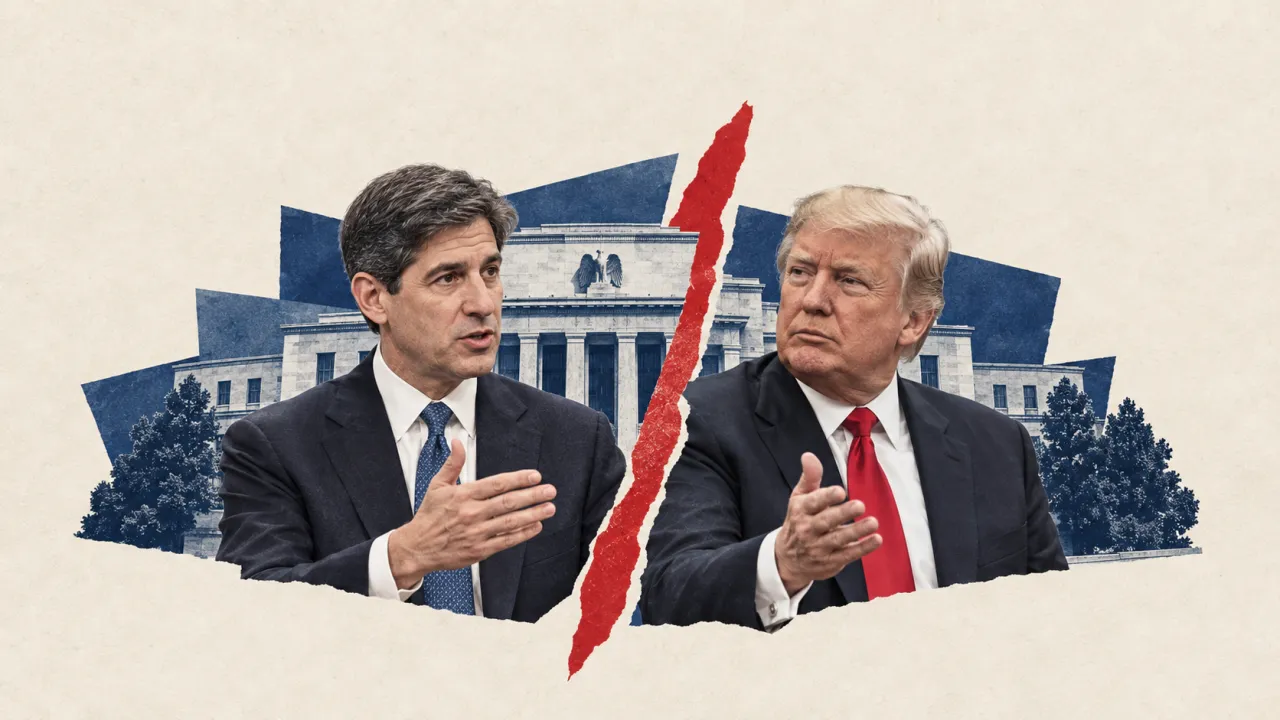
The committee's unanimous vote — all twelve members, including President Kevin Warsh — is presented as a victory for the "hawks" who had been calling for an increase since July. Warsh justified the decision by citing inflation that is "too high for too long" and a US economy that has regained strength since the summer. The committee forecasts another increase by the end of the year, to 4.1%.
Clarín, quoting an AP dispatch, recalls that the measure comes as American households are already suffering from high food, gas, and housing costs, just seven weeks before the midterm elections, and that it defies the demands for cuts made by Donald Trump.
For the Argentine press, the question posed is therefore not primarily geopolitical but budgetary: each additional American interest rate point increases the cost of the dollar for a country that structurally depends on external financing and its foreign currency reserves.
SOURCES (3)
- ClarínMEDIUM
- AmbitoMEDIUM
- PerfilMEDIUM