
DOMINANT ANGLE
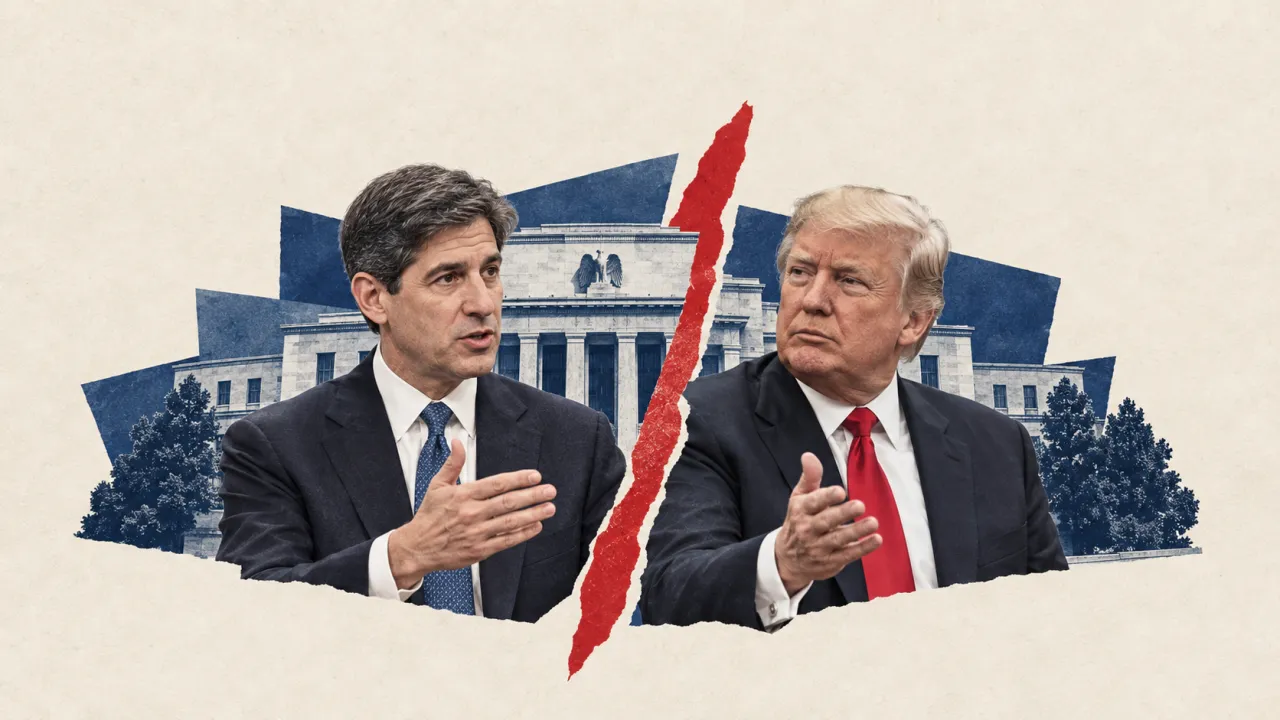
Pretoria is mainly gauging, in the dispatch relayed by its press, the balance of power between Donald Trump and the Fed boss he himself chose, without yet quantifying what the hike costs the rand or South African debt in dollars.
Dominant angle identified — does not reflect unanimity of this country’s media
KEY POINTS
- 01
The Fed raises its target rate by a quarter point to 3.75%-4.00%, its first hike since July 2023, by a unanimous vote including new president Kevin Warsh
- 02
16 of the 18 Fed officials expect at least one more rate hike by the end of 2026; the median forecast for the rate by the end of 2026 rises to 4.1% from 3.8% in June
- 03
The yield on two-year Treasury notes has risen to 4.71% and the 10-year yield to 4.97% after the announcement, according to Moneyweb
ANALYSIS
Pretoria, September 17, 2026. South African media outlets reported on Wednesday the decision of the US Federal Reserve, widely disseminated in the form of dispatches: the Fed raised its benchmark interest rate by a quarter of a point, to a range of 3.75% to 4.00%, its first increase since July 2023. The unanimous vote was the first to involve new President Kevin Warsh, chosen by Donald Trump in May in the hope that he would lower rates. The opposite occurred: "We removed a dose of accommodation so that financial and credit conditions are more consistent with our ultimate goals," Warsh said in a press conference, quoted by Moneyweb. He added that summer data "does not show significant improvement in underlying trends" of inflation.
The new quarterly projections show that 16 of the 18 officials anticipate at least one more quarter-point increase by the end of the year, compared to six in June who saw two. The median forecast for the end of 2026 rose to 4.1%, from 3.8% previously. In the bond market, the two-year yield, the most sensitive to the Fed's policy, rose to 4.71%, while the 10-year yield remained lower, at 4.97%.
The headlines relayed by SABC News, Moneyweb, TimesLIVE, and Business Day cite the same drivers of inflation: the tariffs decided by Trump, the energy shock related to the war between the United States, Israel, and Iran, and the expenditures related to the rise of artificial intelligence. None of these articles quantify what this increase means for the rand, the cost of South Africa's debt in dollars, or a potential response from the Reserve Bank. The dispatch, signed by Howard Schneider and published identically by two separate titles, describes a Fed opening the door to a more restrictive policy until 2027, without mentioning emerging markets. For South Africa, a net oil importer and indebted in strong currencies, the US tightening is still largely seen through the prism of Washington rather than its own transmission channels.