
DOMINANT ANGLE
Australia quantifies the shock in index points and dollar cents: the Fed's hike is first measured on the ASX, the Australian dollar, gold, and iron ore, before any debate on the RBA's domestic policy.
Dominant angle identified — does not reflect unanimity of this country’s media
KEY POINTS
- 01
ASX futures contracts indicated a 68-point (0.8%) drop at Thursday's opening, following a 631-point (-1.2%) decline in the Dow Jones (The Age).
- 02
The Australian dollar rose 0.01% to 70.87 US cents, while gold fell 0.71% to $4,262 an ounce and Brent dropped 2.88% to $105.62 a barrel (ABC News).
- 03
JP Morgan's chief economist, Bruce Kasman, notes a global shift towards higher interest rates, but emphasizes that this movement does not necessarily apply to Australia (ABC News).
ANALYSIS
Sydney, September 17, 2026. The US Federal Reserve raised its key interest rate by a quarter of a point on Wednesday, to a range of 3.75% to 4.00%, its first increase since 2023. The decision, voted unanimously (12-0) — a first since May 2025 —, immediately weighed on Australian markets. According to The Age, futures contracts on the ASX, at 6:21 AEST, indicated a drop of 68 points, or 0.8%, at the opening on Thursday, after a difficult night on Wall Street: the Dow Jones lost 631 points (-1.2%), the S&P 500 0.4%, and the Nasdaq remained almost stable.
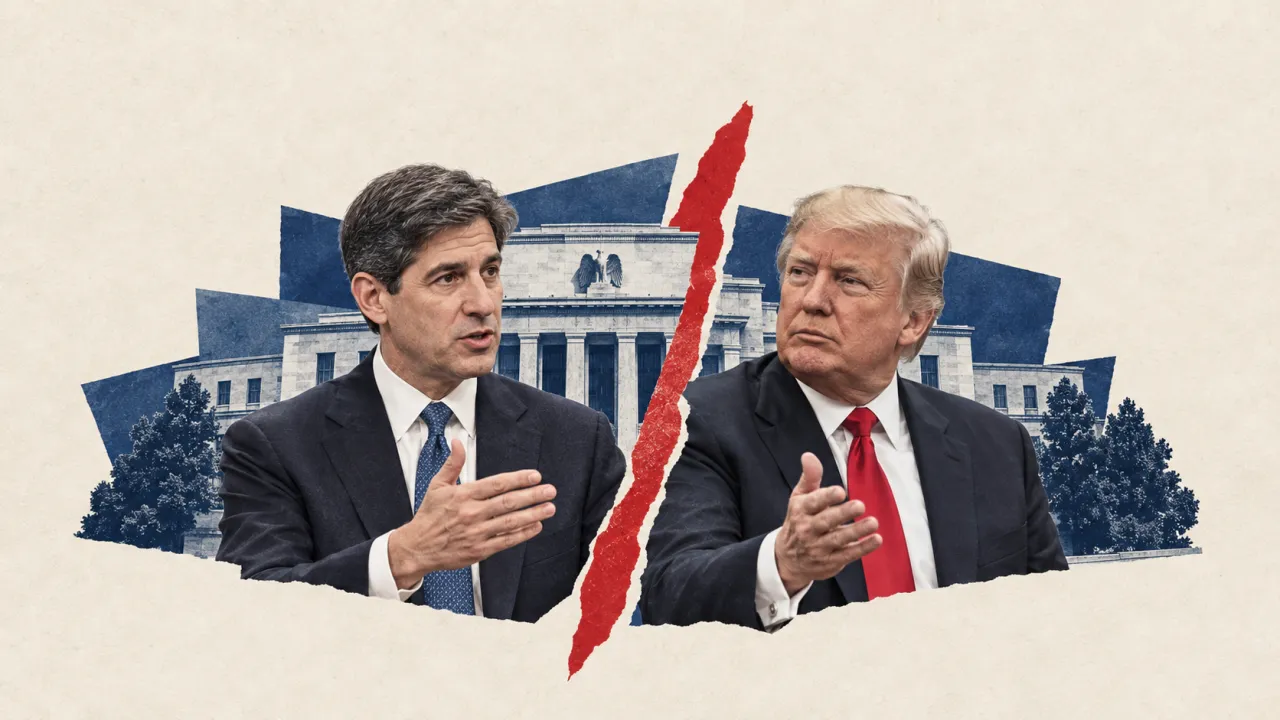
The President of the Fed, Kevin Warsh, appointed by Donald Trump with the expectation that he would lower rates, described the decision as "sober, serious, and responsible", emphasizing: "The fact is simple: inflation is too high, and has been for too long." Sixteen of the eighteen Fed officials anticipate at least one more rate hike before the end of the year.
Trump's response was not long in coming. On Truth Social, he demanded a rate "of 1% or less", arguing that the United States has "the best credit in the world, by far". The Sydney Morning Herald notes that the decision "openly defies" presidential pressure on his own choice to head the institution.
This exchange is part of a broader offensive: SBS News recalls that Trump has led an "unprecedented assault" on the Fed's independence since his return to power, going so far as to try to fire a governor and launch a criminal investigation targeting Warsh's predecessor, Jerome Powell. PerthNow also notes that the "hawkish" tone of the decision has put into perspective the calendar of other central banks: the Bank of England was to maintain its rates on the same day, while the Bank of Japan was preparing to raise them on Friday, September 18, 2026.
For Australian markets, the effect was felt on several fronts: the Australian dollar rose 0.01% to 70.87 US cents, spot gold fell 0.71% to $4,262 an ounce, and Brent oil fell 2.88% to $105.62 a barrel, according to the ABC's live update. Iron ore, on the other hand, rose 0.32% to $97 a tonne — a positive note for Australian exporters.
Bruce Kasman, chief economist at JP Morgan, cited by the ABC, observes a global shift towards rate hikes, but nuances: this movement may not necessarily concern Australia. Goldman Sachs, on the other hand, already anticipates another Fed rate hike in October.
SOURCES (5)
- ABC News AustraliaMEDIUM
- The AgeMEDIUM
- PerthNowMEDIUM
- SBS News AustraliaMEDIUM