DOMINANT ANGLE
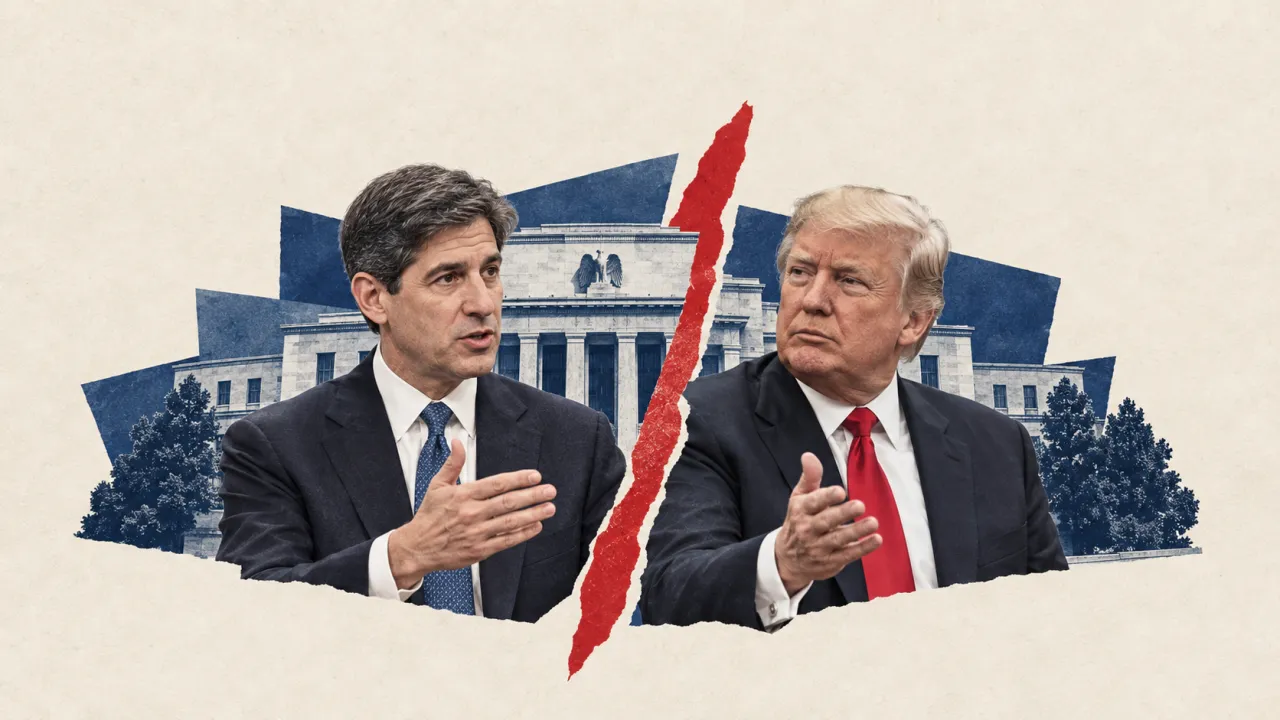
Santiago sees the confrontation between Trump and the Fed as a test of monetary independence, with the Chilean press highlighting that Kevin Warsh, appointed by the president himself, has chosen to defy him rather than give in to his pressure.
Dominant angle identified — does not reflect unanimity of this country’s media
KEY POINTS
- 01
The Fed raised its rate by 25 basis points to 3.75%-4.00%, unanimously, its first hike since July 2023, after three consecutive cuts that had set it at 3.50%-3.75% in December.
- 02
Kevin Warsh, appointed by Trump in May, stated that "this summer's inflation data do not indicate to me that the underlying trends have improved significantly".
- 03
Trump demanded on Truth Social a rate of "1% or less", claiming that the US has "the best credit rating in the world, by far".
ANALYSIS
Santiago, September 17, 2026. Chilean media is first focusing on the duel between Donald Trump and the central bank he himself chose to lead. On Wednesday, the Federal Reserve raised its benchmark rate by a quarter of a point, to a range of 3.75% to 4.00%, its first increase since July 2023. The decision, made unanimously, puts an end to three consecutive 25-point cuts that had brought the rate to 3.50%-3.75% in December. The committee also indicated that another rate hike could occur before the end of the year.
La Tercera sums up the episode in one word: the Fed "defies" Trump. The newspaper emphasizes that the institution, chaired since May by Kevin Warsh, appointed by the president himself, has chosen to contradict a representative who "has been pushing for months for an expansive monetary policy". Warsh justified the rate hike by pointing to persistent inflation: "this summer's data does not indicate to me that the underlying trends have significantly improved", he said in a press conference. The newspaper also recalls the oath of independence sworn by Warsh when he took office: the "guardian of the dollar" must lead the central bank without looking to the president or anyone else.
BioBioChile details the presidential response. Trump wrote that US rates "should be 1% or less, because we have the best credit rating in the world, by far!", adding that his country is experiencing an "investment boom" and that he could cut trade with countries with a trade surplus if the Fed does not lower its rates. The media recalls that this showdown comes six weeks before the US legislative elections, and that Trump had already called the former Fed president, Jerome Powell, a "moron" and "always behind" for his refusal to lower rates.
Chilean media does not explicitly link the episode to local markets: neither the peso nor the rates of the Central Bank of Chile are mentioned, with the focus on the institutional mechanics in Washington and the question of whether a central bank appointed by a president can, or should, resist him.