
DOMINANT ANGLE
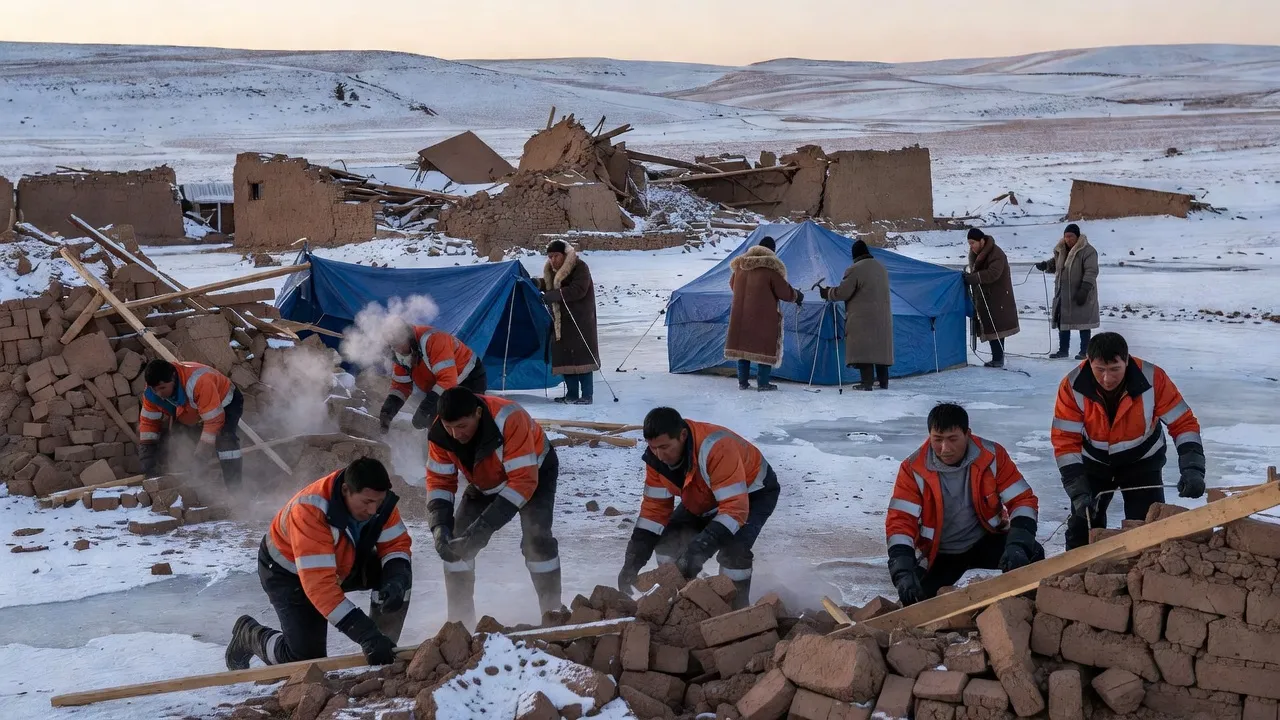
Brussels soberly relays the human toll of the Tibetan earthquake: two Belgian media outlets take up the Xinhua figures, 16 dead and 32 injured, and follow the ongoing rescue efforts.
Dominant angle identified — does not reflect unanimity of this country’s media
KEY POINTS
- 01
According to Xinhua, cited by La Libre Belgique, the magnitude 7 earthquake left 16 dead and 32 injured in Tibet.
- 02
The earthquake struck Thursday at 22:33 local time (16:33 in Brussels); more than 300 houses collapsed.
- 03
VRT NWS located the epicentre about 390 km northeast of Lhasa and recalled the 126 deaths in Tingri in January 2025.
ANALYSIS
Brussels, 23 October 2026. The Belgian press is treating the earthquake in northern Tibet as a wire service dispatch, sober and focused on the human toll. La Libre Belgique headlines "Earthquake in Tibet: 16 dead and 32 injured" and specifies that sixteen people were killed and 32 injured during a magnitude 7 quake, "as reported Friday morning by the official Xinhua news agency, citing local officials". The daily published the information on Thursday, 22 October at 23:07, just a few hours after the disaster.
The newspaper gives the time of the quake in both time zones: Thursday at 22:33 in China, or 16:33 in Brussels. This conversion reflex brings the Belgian reader closer to a distant event. More than 300 houses have collapsed, it adds, and the authorities are assessing the damage as rescue operations continue, according to the agency.
VRT NWS, on the Dutch-speaking side, reports the same toll, a minimum of 16 dead and 32 injured, also attributing it to Xinhua. It adds geographical details: the epicentre was located in a mountainous area of northern Tibet, about 390 kilometres northeast of Lhasa. More than 300 homes have collapsed and many buildings have cracks in their walls.
The channel also reports that electricity and telecommunications services are disrupted. The authorities are still mapping the damage and rescue operations are "still underway", according to official sources cited. VRT recalls that earthquakes are frequent in the region.
Both media outlets place the earthquake in recent memory: in January 2025, at least 126 people had died in the Tingri canton, Tibet, during a magnitude 6.8 earthquake. This comparison gives the scale of the drama without speculating on its evolution.
In these two articles, all the figures come from Xinhua and local officials; no witnesses, humanitarian organisations, or independent experts are cited. The Belgian coverage therefore remains brief and factual, without commentary on Beijing's response or the conditions of rescue efforts at high altitude.