
DOMINANT ANGLE
Brasília is particularly mindful of the scale of the relief operation launched by Beijing after the earthquake in Nagqu, at an altitude of more than 4,800 meters, and the human toll as reported by Xinhua.
Dominant angle identified — does not reflect unanimity of this country’s media
KEY POINTS
- 01
Magnitude 7 earthquake in Nagqu, northern Tibet, at 22:33 local time on Thursday, October 22, approximately 400 km from Lhasa and at an average altitude of 4,864 m (Cenc, via Folha and Agência Brasil).
- 02
Death toll of 16 attributed to Xinhua; injured increased from 32 to 76 according to Veja, with 339 houses collapsed or damaged and over 12,000 people put to safety.
- 03
Xi Jinping ordered intensive rescue operations, emphasizing the altitude and cold; more than 300 agents, including police, were sent (Veja, according to Xinhua).
ANALYSIS
Brasília, October 23, 2026. Brazilian media are treating the earthquake in northern Tibet as a high-mountain rescue disaster, documented almost exclusively by Chinese sources. Folha, Veja, Agência Brasil, and G1 report that a 7-magnitude quake struck the Nagqu region at 22:33 local time on Thursday, October 22, or 11:33 in Brasília, according to the China Earthquake Networks Center (Cenc).
The death toll is attributed to the state-run Xinhua agency: 16 dead, initially 32 injured, then 76 according to Veja after a press conference by authorities on Friday, October 23. Agência Brasil specifies, based on the Nagqu emergency management department, that 11 injured were in serious condition and 21 were lightly affected. Veja and Xinhua mention 339 houses collapsed or damaged and over 12,000 people put to safety.
Relief efforts are taking center stage. Folha and Agência Brasil locate the epicenter in a sparsely populated county, about 400 km from Lhasa, where the average altitude within a 5 km radius reaches 4,864 meters. Folha recalls that the region is exposed to the collision of the Indian and Eurasian plates. G1, citing the USGS, highlights the shallow depth of 10 km, which worsens the effects, and a 5.2-magnitude aftershock less than an hour later.
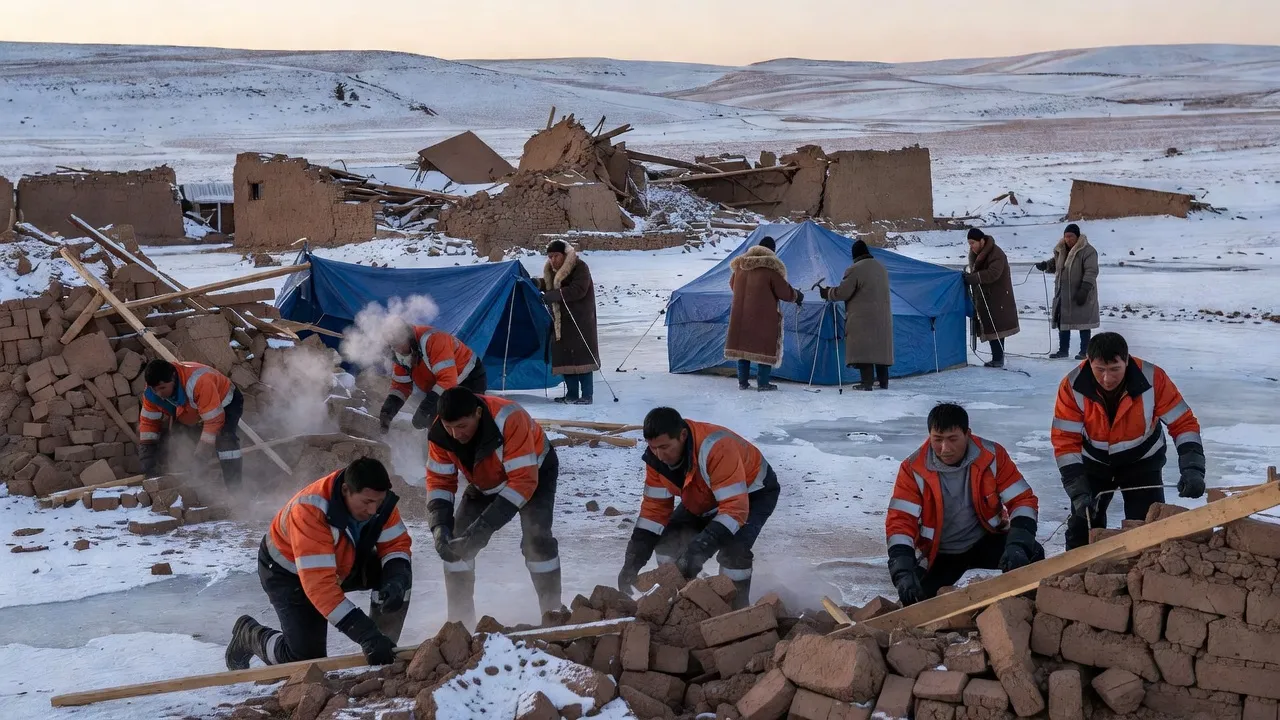
Veja headlines an "enormous rescue operation": Xi Jinping ordered intensive search and rescue operations, emphasizing the altitude and cold, and over 300 agents, including traffic police, were sent. State media images show residents outside or in their cars, and rescuers searching through rubble with flashlights.
The headlines put the event into perspective: Folha and Agência Brasil say it is the strongest in China since January 2024, when a 7.1-magnitude quake in Xinjiang killed three people. Agência Brasil also recalls Yushu in 2010, with at least 2,698 dead. G1, published earlier, still notes the absence of recorded victims and mentions the August avalanche on the Nepal-China border, which reportedly killed over 1,300 people.
The angle remains factual and largely apolitical: there is no debate about the Chinese state's preparedness or access for independent journalists to the area, with accounts following official statements.
SOURCES (4)
- G1 Globo MundoMEDIUM
- Agência BrasilMEDIUM
- VejaMEDIUM
- Folha MundoMEDIUM