
DOMINANT ANGLE
Ottawa is relaying the toll of the Tibetan earthquake through Chinese state media and relief logistics, without its own on-site reporting.
Dominant angle identified — does not reflect unanimity of this country’s media
KEY POINTS
- 01
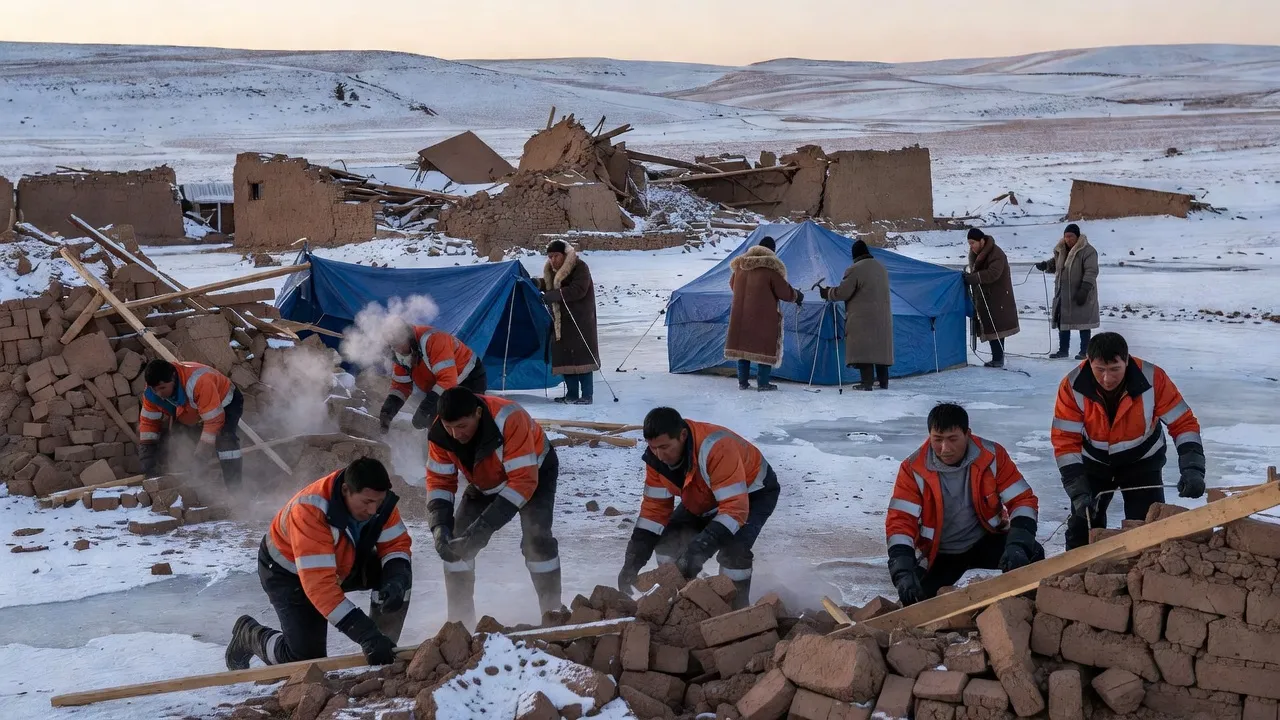
Magnitude 7 earthquake on Thursday at 22:33 local time near Nagqu: at least 16 dead, 339 homes collapsed (Nagqu media office).
- 02
More than 1,600 rescue workers mobilized; 1,000 prefabricated homes and around 3,000 tents and folding beds sent.
- 03
Section of National Highway 317 closed due to landslides, trains halted, communications cut off in some areas and intermittent snow expected for three days (Xinhua).
ANALYSIS
Ottawa, October 23, 2026. The Globe and Mail and CBC News are publishing the same report: a magnitude 7 earthquake struck the Tibet region on Thursday evening, killing at least 16 people in the city of Nagqu, according to Chinese official media. The Nagqu media office, cited by the two media outlets, reports 339 homes and 20 livestock shelters collapsed. CBC details the injured: 46, including 11 in critical condition and 35 lightly injured, while The Globe and Mail reports 54.
The two articles rely on the United States Geological Survey (USGS) for the location: the quake occurred at 22:33 local time, 191 kilometers east-northeast of Nagqu, in a sparsely populated high-altitude area, at a depth of 18 kilometers. The USGS recorded at least seven aftershocks of magnitude 4.3 to 5.2. CBC adds that Nagqu is located more than 300 kilometers north of Lhasa, the capital of Tibet.
The logistical aspect takes center stage. More than 1,600 people from the county have been mobilized for rescue efforts. 1,000 prefabricated homes, about 3,000 tents and folding beds, as well as flashlights and winter clothing, have arrived on site. According to Xinhua, communications are cut off in some areas, railway authorities have stopped trains in the region, and landslides have closed a section of National Highway 317, reserved for rescue vehicles and official vehicles. Intermittent snow is expected for three days.
The Globe and Mail reports that President Xi Jinping has called for maximum efforts for rescue and medical care, and that CCTV describes the quake as the strongest in the region in five years. The Canadian account remains highly attributed: "official media said", Xinhua, CCTV, and the Nagqu office are named in turn, without testimony from survivors or independent reporting. Neither article mentions a reaction from the Canadian government or an offer of international aid. Both media outlets place the event in the context of a high-mountain region where access remains difficult: The Globe and Mail and CBC both emphasize that only rescue and official vehicles can use the closed section of National Highway 317, until teams clear the debris.