
DOMINANT ANGLE
London is reporting the earthquake toll in Tibet, explicitly attributing it to Chinese state media, and cross-checking these figures with data from the US Geological Survey.
Dominant angle identified — does not reflect unanimity of this country’s media
KEY POINTS
- 01
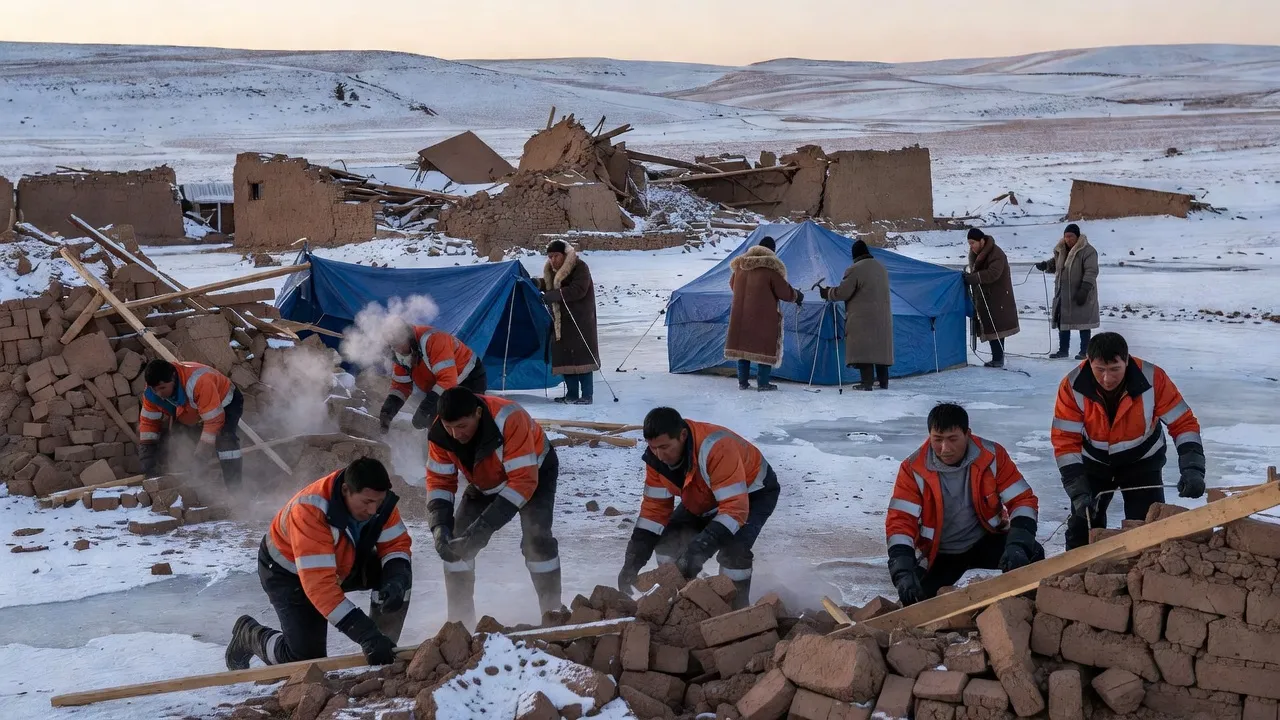
**Magnitude 7 earthquake in Baqên (Nagqu), Thursday at 22**: 33: at least 16 dead, 339 houses collapsed, more than 12,400 people relocated (BBC).
- 02
The USGS locates the epicenter 191 km east-northeast of Nagqu and records at least seven aftershocks of magnitude 4.3 to 5.2 (Guardian).
- 03
More than 1,600 people from the county, nearly 350 firefighters and more than 300 police officers mobilized; 1,000 prefabricated houses and 3,000 tents delivered (Guardian).
ANALYSIS
London, 23 October 2026. The British press is reporting on the magnitude 7 earthquake that occurred on Thursday, 22 October at 22:33 local time in northern Tibet, initially relying on Chinese state media. The BBC writes that it killed at least 16 people and injured dozens, "according to Chinese state media reports", according to the Xinhua agency, which cites the local emergency management office. The epicentre of the earthquake is located in Baqên County, Nagqu region, 400 km northeast of Lhasa.
The BBC provides the political context: the county is located in what China calls the Tibet Autonomous Region, after annexing it in the 1950s. The reported toll includes 65 injured, 11 of them seriously, 339 houses collapsed, and more than 12,400 people relocated. The power was cut off, partially restored on Friday morning, and rockfalls have closed roads, complicating access for rescuers to high-altitude areas.
The Guardian details the mobilisation: more than 1,600 people from the county are involved in the search, around 350 regional firefighters and rescuers, more than 300 police officers, as well as 1,000 prefabricated houses and some 3,000 tents and folding beds being transported. It notes that communications are cut off in some areas, trains have been stopped, and a section of National Highway 317 is only open to rescue teams and official vehicles.
The two publications supplement the Chinese information with independent data from the US Geological Survey. The survey locates the epicentre 191 km east-northeast of Nagqu, in a sparsely populated high-altitude area, at a depth of 18 km according to The Guardian. It has recorded at least seven aftershocks, with magnitudes ranging from 4.3 to 5.2. The BBC recalls that shallow earthquakes are more destructive than deep ones.
The account relies heavily on images from CCTV television, showing employees fleeing restaurants and collapsed roofs, and on testimonies collected by local press, such as that of a Nagqu resident quoted by Tibet Daily, who left her home barefoot. The coverage remains factual and without comment on the authorities' management.