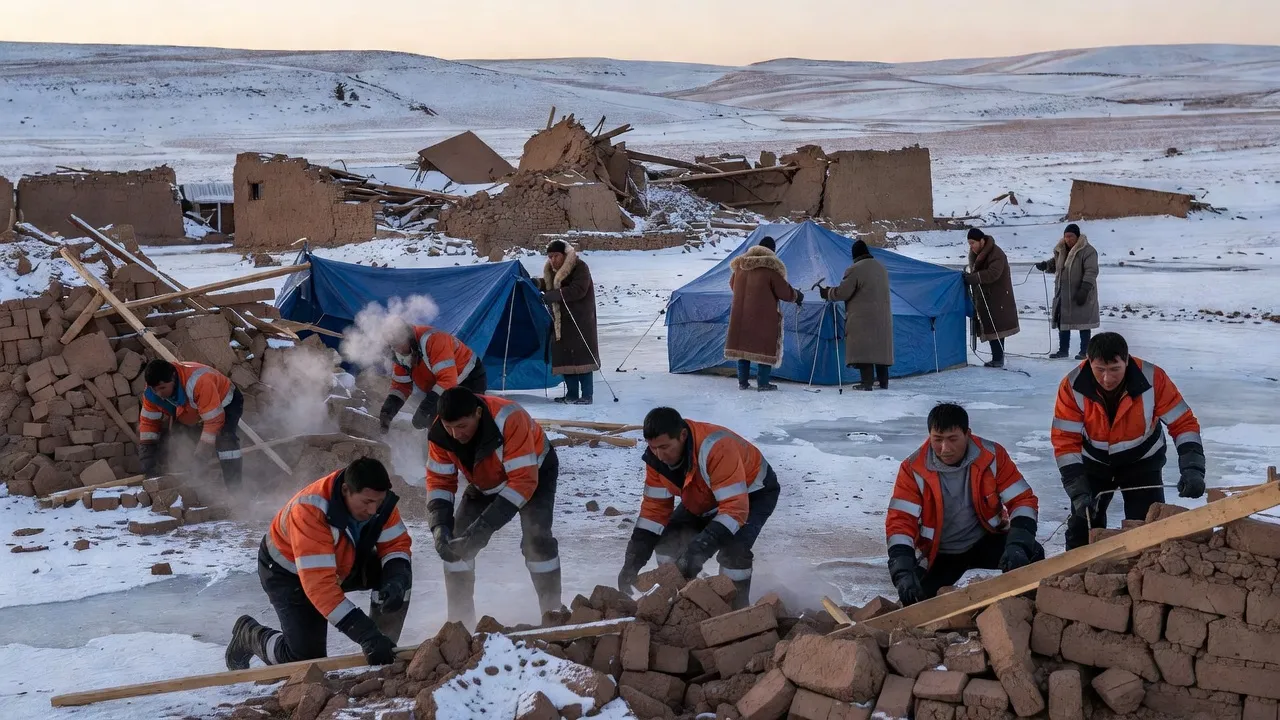

DOMINANT ANGLE
Moscow is relaying the Chinese toll from the Tibetan earthquake and is first addressing it as a consular matter: no Russians among the victims, according to the embassy in Beijing.
Dominant angle identified — does not reflect unanimity of this country’s media
KEY POINTS
- 01
TASS, citing Xinhua: at least 16 dead and 32 injured after a 7.0 magnitude earthquake in Tibet
- 02
RIA Novosti: the Russian embassy in Beijing says no foreigners, including Russians, are among the victims
- 03
RIA Novosti, citing local authorities: 16 dead, 65 injured and nearly 12,500 evacuated; epicenter at a depth of 10 km in Baqên (Nagqu) district
ANALYSIS
Moscow, October 23, 2026. The Russian press is covering the Tibet earthquake in brief reports, based on official Chinese sources. TASS, from Beijing, published an alert on October 22 titled "at least 16 dead" after a 7.0 magnitude earthquake in the Tibet Autonomous Region, citing the Xinhua agency. It also reports 32 injured. The agency does not provide details on the exact location or rescue operations: the text is only two sentences, repeated.
RIA Novosti, on October 23, provides the most detailed angle. Its article opens with consular information: the Russian embassy in China told the agency on Friday that no foreigners, including Russians, are among the victims. It relies on the foreign affairs office of the Tibet Autonomous Region, cited in the text: "at this stage, no foreign citizens have been identified among the victims."
The same article then reports the technical data. The European-Mediterranean Seismological Centre (EMSC) reported a magnitude of 7.1 on the evening of October 22. The Chinese Seismological Centre reports a magnitude of 7 for the Baqên district, in the Nagqu prefecture, with a focal depth of 10 kilometres. The differences in magnitude between institutions are reported as is, without commentary.
The human toll is that of the local Chinese authorities: 16 dead, 65 injured, and nearly 12,500 people evacuated, according to RIA. The number of injured differs between the two Russian agencies (32 at TASS, citing Xinhua, 65 at RIA, citing local authorities), which likely corresponds to different stages of the toll, without the articles explaining.
The coverage remains factual and without editorialization. Neither of the two texts mentions Beijing's reactions, the state of the roads, aftershocks, or weather conditions. The focus is on tracking the toll and protecting Russian nationals, a usual function of an agency report intended for the national public. The two media outlets, leading news agencies in Russia, stick to the chain of attribution: Xinhua, local authorities, seismological centres, embassy.