
DOMINANT ANGLE
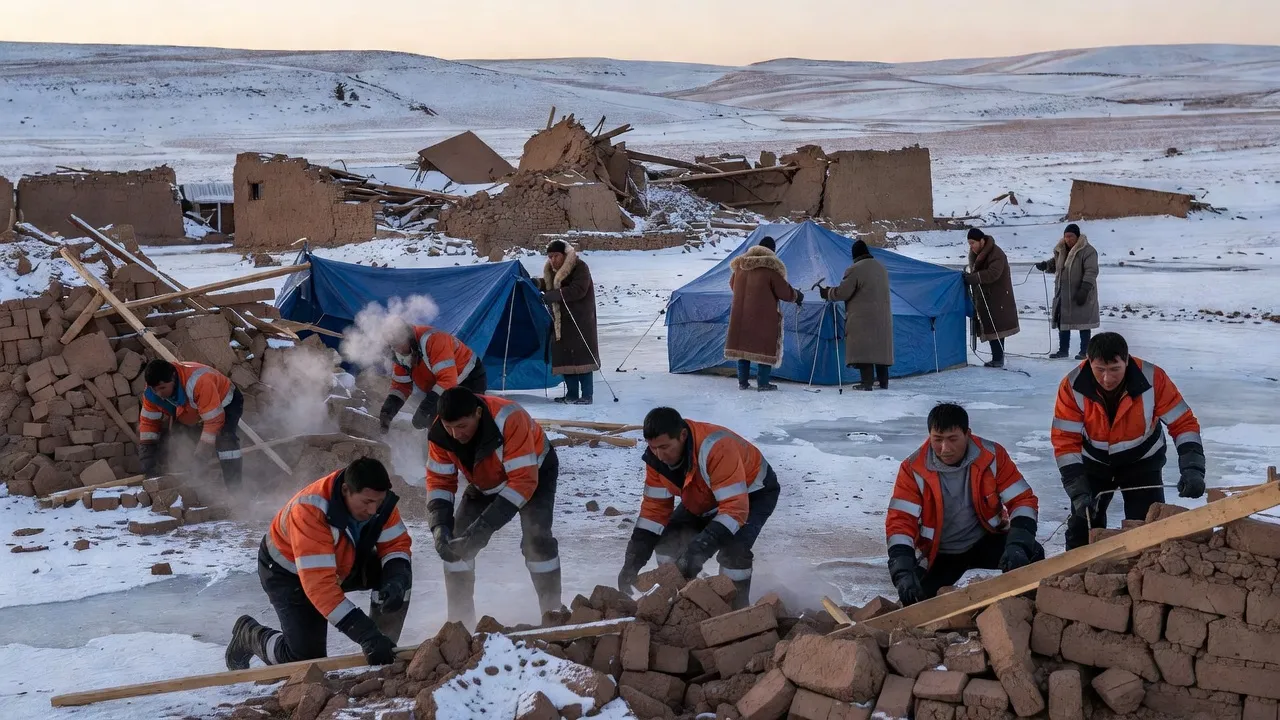
The United States is measuring the catastrophe by the scale of relief efforts: the American press is detailing the race against the cold, altitude, and aftershocks around Nagqu, based on the tolls from the Xinhua agency.
Dominant angle identified — does not reflect unanimity of this country’s media
KEY POINTS
- 01
Magnitude 7 earthquake at 22:33 local time Thursday near Nagqu, Tibet: at least 16 dead, 54 injured and 339 houses collapsed, according to Chinese state media cited by ABC News.
- 02
More than 5,000 people from three districts are mobilized for rescue efforts; 2,000 prefabricated homes, about 3,400 tents and 2,000 folding beds have arrived, according to Nagqu's acting mayor.
- 03
The USGS recorded at least seven aftershocks of magnitude 4.3 to 5.2; CCTV reports this as the strongest earthquake in the region in five years.
ANALYSIS
Washington, October 23, 2026. The US media are treating the earthquake in northern Tibet as a rescue operation in a hostile environment, first documented by the Chinese state media and corroborated by the US Geological Survey (USGS).
According to ABC News, quoting a dispatch from Beijing, rescuers searched an isolated area on Friday after a magnitude 7 earthquake killed at least 16 people, injured 54, and destroyed hundreds of homes. The quake struck the Nagqu region, a city located at an altitude of approximately 4,800 meters, north of Lhasa, on Thursday. At least 339 homes collapsed, and authorities fear further collapses due to aftershocks, as well as victims of landslides.
The account emphasizes logistics. Operations are complicated, officials say, by geography and low temperatures. Nagqu's acting mayor, Dunzhu, indicated at a press conference that three search parties had visited each household and village, and that more than 5,000 people from three districts were mobilized. Some 2,000 prefabricated homes, about 3,400 tents, and 2,000 folding beds, along with flashlights and winter clothing, have arrived on site. Xinhua also reported that communications were cut off in certain areas.
US sources carefully distinguish their information. The USGS located the event at 22:33 local time, 191 kilometers east-northeast of Nagqu, at a depth of 18 kilometers, and recorded at least seven aftershocks of magnitude 4.3 to 5.2. Xinhua, citing the Chinese Seismic Network Center, reported a depth of 10 kilometers. CBS noted a discrepancy of the same order and specified that, according to CCTV, this was the strongest earthquake in the region in five years.
CBS places the episode in a series: less than two months earlier, a border area between Nepal and Tibet had suffered devastating flash floods, which killed hundreds, attributed to the collapse of a glacier. ABC's initial report, published on Thursday evening, did not mention any damage or immediate victims, highlighting the slow access to information from a sparsely populated region.
The two media outlets report the facts without political commentary: neither judgment on China's crisis management nor diplomatic perspective. The toll remains presented as provisional and attributed to local authorities.