
DOMINANT ANGLE
Stockholm is relaying the Tibet earthquake through a news agency dispatch: a death toll of 16 attributed to the Chinese state press, with authorities still assessing the damage.
Dominant angle identified — does not reflect unanimity of this country’s media
KEY POINTS
- 01
At least 16 dead and around 30 injured, according to Chinese state media cited by TT (Svenska Dagbladet), following a magnitude 7 earthquake.
- 02
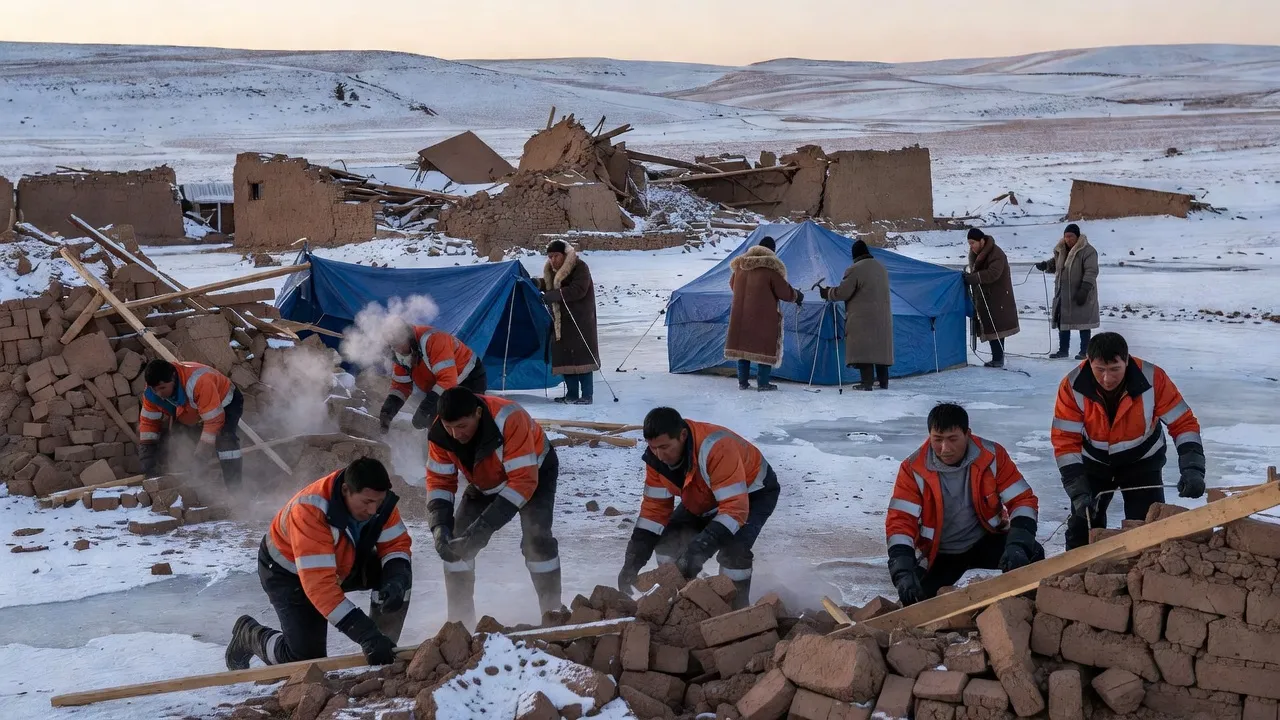
More than 300 houses collapsed; the epicentre is in Nagqu, about 400 km from Lhasa, at a depth of 10 km according to the CENC (Aftonbladet).
- 03
In January of last year, at least 126 people were killed in a hard-to-reach region of Tibet (Aftonbladet).
ANALYSIS
Stockholm, October 23, 2026. Sweden's coverage of the earthquake that struck northern Tibet is brief, but careful about the origin of the information. In its continuous news feed, Svenska Dagbladet writes that "at least 16 people have died in an earthquake in Tibet, according to Chinese state media, via TT," the Swedish news agency. The newspaper adds that about 30 people are believed to have been injured and that the earthquake had a magnitude of 7. The information appears amidst other news briefs of the day, including Vladimir Putin's statements on potential three-way talks and the long lines at Copenhagen Airport.
Aftonbladet, under the title "Several dead in Tibet after earthquake," provides more details. About 30 other people are believed to have been injured and over 300 houses are reported to have collapsed. The newspaper specifies that the authorities "are still getting a sense of the situation" and that rescue workers are on site. It relies on the Chinese geological organization CENC: the epicenter was located in Nagqu, in northern Tibet, about 40 Swedish miles (400 kilometers) from the regional capital Lhasa, at a depth of 10 kilometers.
The newspaper also reports the testimony of Lhawang Dagpo, a representative of the rural commune of Maru, located near the epicenter. He told the New China agency that the shock was clearly felt in the local administration building, which cracked.
Aftonbladet puts the event into a broader context by recalling that earthquakes are "relatively frequent" in China. It mentions the precedent from last January, when at least 126 people were killed in a hard-to-reach region of the Himalayas in Tibet.
The Swedish press does not dwell on Beijing's political response, nor on the conditions of the survivors, nor on access to the area. The death toll remains provisional, based on official Chinese sources relayed by an agency, without a special correspondent or independent verification.