
DOMINANT ANGLE
Bucharest is relaying the toll of the Tibet earthquake through the scope of the relief efforts and resources mobilized, linking it to the Himalayan floods of a few weeks earlier.
Dominant angle identified — does not reflect unanimity of this country’s media
KEY POINTS
- 01
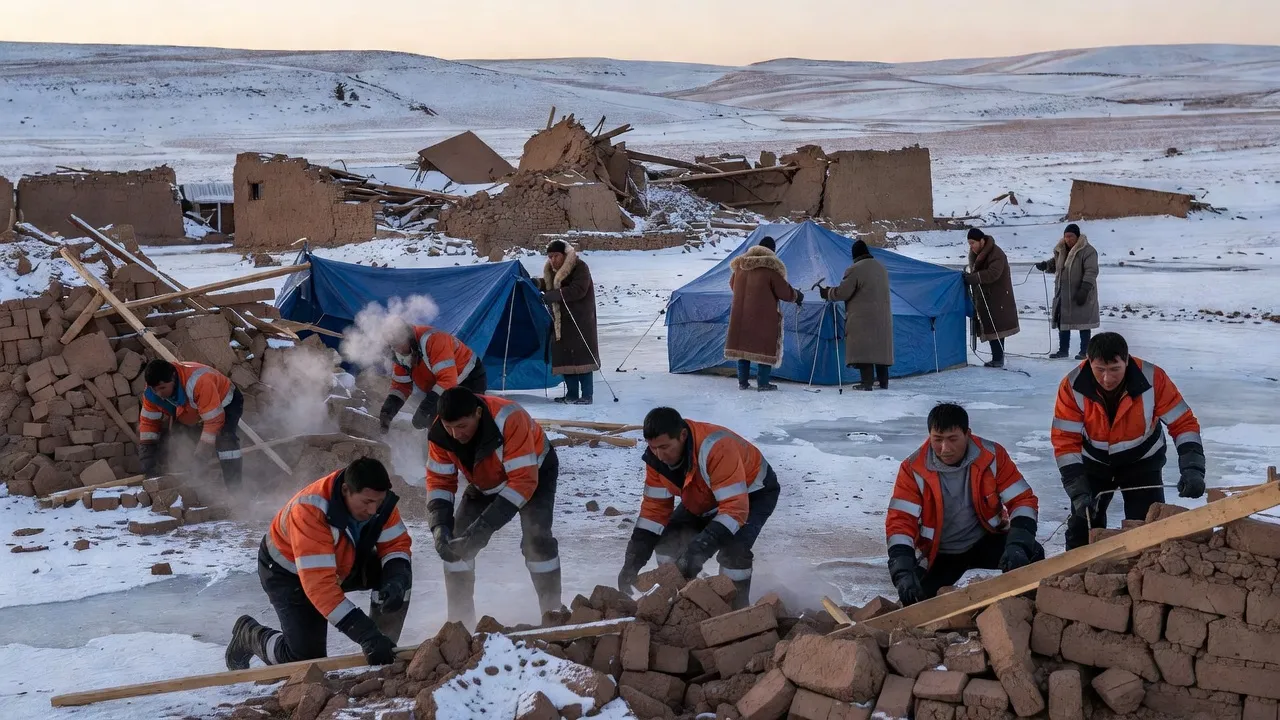
Magnitude 7 earthquake in Nagqu, northern Tibet: at least 16 dead, more than 50 injured and at least 339 houses collapsed (Digi24, according to the Chinese state press).
- 02
More than 1,600 people mobilized for rescue efforts; 1,000 prefabricated homes and around 3,000 tents and folding beds transported (Digi24).
- 03
Mediafax links the earthquake to the Himalayan floods of August 26, with more than 1,200 dead and thousands missing reported on the Nepalese side.
ANALYSIS
Bucharest, October 23, 2026. The Romanian press is covering the Tibet earthquake mainly through intermediary agencies. Digi24 relies on the Chinese state press "cited by The Guardian": a magnitude 7 earthquake killed at least 16 people, injured more than 50 people, and caused hundreds of houses to collapse in Nagqu. The city's press office reports at least 339 homes destroyed, and more than 1,600 people are involved in search and rescue operations.
The Romanian account emphasizes the logistics of the relief efforts. Digi24 lists the supplies that have arrived in the region: 1,000 units of prefabricated housing, around 3,000 tents and folding beds, lanterns, and winter clothing. It adds that more than 300 police officers have been sent, that the regional fire and rescue corps has mobilized nearly 350 people, and that Xinhua reports disrupted communications in some affected areas, while railway authorities have stopped trains crossing the region.
The technical data comes from foreign sources. According to the American Geological Institute (USGS), cited by Digi24, the quake occurred on Thursday at 22:33 local time, at a depth of 18 km, in a sparsely populated and high-altitude area; at least seven aftershocks of magnitude 4.3 to 5.2 have been recorded. G4Media, citing Reuters and the Chinese Earthquake Networks Center (CENC), reports a depth of 10 km, an average altitude of around 4,864 meters around the epicenter, located about 400 kilometers from Lhasa.
Mediafax gives the subject a broader context. Its title links the earthquake to the "devastating Himalayan floods", triggered by an avalanche of ice and rocks on August 26 near the border between Nepal and Tibet. The text recalls a death toll of over 1,200 and thousands missing on the Nepalese side, as well as the statement by Nepalese Prime Minister Balendra Shah on the link to climate change. Mediafax also notes a discrepancy in measurement: the Indian seismological center indicates a depth of 173 km, compared to 10 km for the CENC.
The three media outlets thus report the same event without a correspondent on the ground, referring to Reuters, The Guardian, the USGS, or Xinhua. The initial dispatches, such as Mediafax's, specified that no information about potential victims had yet been released; the numerical toll only appears in Digi24's article.